New HSK 3 Vocabulary List 2026: All 500 Words from the 2025 HSK 3.0 Syllabus
The complete vocabulary list for the new HSK 3 exam, based on the official 2025 HSK 3.0 syllabus (《新版HSK考试大纲》) released by CLEC in November 2025 and effective from July 2026.

What Is the New HSK 3 (HSK 3.0)?
The new HSK 3 is the third level of the revised Chinese Proficiency Test framework, released by the Center for Language Education and Cooperation (CLEC) under the Chinese Proficiency Grading Standards for International Chinese Language Education (《国际中文教育中文水平等级标准》).
The 2025 HSK 3.0 syllabus was published in November 2025 and officially takes effect on July 1, 2026, replacing the previous HSK 2.0 framework. Under the new structure, HSK expands from 6 to 9 levels, vocabulary requirements grow at every stage, and the test systematically links words, characters, syllables, grammar, and topics.
Upper end of CEFR A2, entry point of B1. Slightly higher than the old HSK 2.0 level 3.
Center for Language Education and Cooperation; Chinese Testing International administers the exam globally.
3 sections (Listening / Reading / Writing) · 80 questions · 300 max points · 180 to pass.
Foundational. The entry threshold for serious HSK 4 preparation and one-year university preparatory programs.
New HSK 3.0 vs Old HSK 2.0: What Changed at Level 3
The new HSK 3.0 made four major changes at level 3: a sharp vocabulary expansion, structured topic coverage, explicit character-writing requirements, and a more demanding cumulative testing scope.
| Metric | Old HSK 3 (HSK 2.0) | New HSK 3 (HSK 3.0) | Change |
|---|---|---|---|
| New words at this level | 300 | 500 | ↑ +67% |
| Cumulative vocabulary (HSK 1–3) | 600 | 1,000 | ↑ +67% |
| Must-write characters at this level | not defined | 150 | New |
| Recognition characters at this level | not defined | 284 | New |
| Topic categorization | general | 6 first-level · 22 second-level · 54 third-level | Structured |
| Sections in the test | 3 (Listening / Reading / Writing) | 3 (Listening / Reading / Writing) | — |
| Pass score | 180 / 300 | 180 / 300 | — |
Cumulative testing note. Under HSK 3.0, candidates sitting the new HSK 3 are expected to know all 1,000 cumulative words across HSK 1, HSK 2, and HSK 3 — not only the 500 new words at level 3 itself.
Which Characters Must You Write by Hand Under the New HSK 3.0?
One of the most significant changes in HSK 3.0 is the formal split between writing characters (书写字) and recognition characters (认读字). Writing characters must be reproduced by hand on the test; recognition characters need only be understood when reading.
书写字
认读字
The writing section of the new HSK 3 directly tests handwriting through short-answer and sentence-completion items. Knowing which characters to write by hand — versus only to recognize while reading — is a key planning question for any HSK 3.0 candidate.
Source: 《新版HSK考试大纲》, HSK 三级 书写字 (p.375) and 认读字 (p.356), published by CLEC, November 2025.
Commonly Confused HSK 3 Words: Insights from Our Beijing Classrooms
Since 2008, Mandarin Zone has taught HSK to thousands of students at our Sanlitun teaching center in Beijing. After 18 years of in-class observation, we've cataloged the word pairs that trip up HSK 3 learners most consistently. The five pairs below account for the majority of reading-section errors we see — and most are HSK 1–2 carry-overs that learners think they know.
才 vs 就
Same time on the clock, opposite implication. 才 (cái) marks something as happening later than expected; 就 (jiù) marks it as earlier than expected. The choice signals the speaker's judgment, not the actual time.
| Word | Function | Example |
|---|---|---|
| 才cái | "didn't until / not until" — late, delayed | 他八点才来。 Tā bā diǎn cái lái. He didn't come until 8. (= late) |
| 就jiù | "as early as / already" — fast, easy | 他八点就来了。 Tā bā diǎn jiù lái le. He came at 8 (already). (= early) |
还 vs 又
Both can translate as "again" in English, but they look in opposite directions. 还 (hái) = the action is still ongoing or yet to end (looks forward). 又 (yòu) = the action has happened before and is happening again (looks back).
| Word | Function | Example |
|---|---|---|
| 还hái | continuing, not yet ended | 他还在睡觉。 Tā hái zài shuìjiào. He is still sleeping. |
| 又yòu | repeated, happened before | 他又迟到了。 Tā yòu chídào le. He was late again. |
听见 vs 听说
听见 (tīngjiàn) = direct sensory perception — you physically heard a sound with your ears. 听说 (tīngshuō) = indirect information — you learned something through someone else's words, the Chinese equivalent of "I've heard that..."
| Word | Function | Example |
|---|---|---|
| 听见tīngjiàn | hear with ears (sensory) | 我听见了你的声音。 Wǒ tīngjiànle nǐ de shēngyīn. I heard your voice. |
| 听说tīngshuō | hear that... (rumor / report) | 我听说你要去北京。 Wǒ tīngshuō nǐ yào qù Běijīng. I heard you're going to Beijing. |
觉得 vs 认为
觉得 (juéde) = subjective feeling, soft, conversational — "it seems to me / I feel that..." 认为 (rènwéi) = considered judgment, formal, used after reflection — "I hold the view that..."
| Word | Function | Example |
|---|---|---|
| 觉得juéde | personal feeling, casual | 我觉得这部电影很有意思。 Wǒ juéde zhè bù diànyǐng hěn yǒu yìsi. I feel this movie is interesting. |
| 认为rènwéi | reasoned opinion, formal | 我认为这部电影是今年最好的。 Wǒ rènwéi zhè bù diànyǐng shì jīnnián zuì hǎo de. I consider this film the year's best. |
一直 vs 总是
一直 (yìzhí) = unbroken duration from a past point continuously up to now (or a defined endpoint). 总是 (zǒngshì) = recurring frequency — habits and patterns that happen every time without exception.
| Word | Function | Example |
|---|---|---|
| 一直yìzhí | continuously, without break | 他从早上一直工作到晚上。 Tā cóng zǎoshang yìzhí gōngzuò dào wǎnshang. He worked nonstop from morning till night. |
| 总是zǒngshì | always, habitually | 他总是迟到。 Tā zǒngshì chídào. He's always late. |
These confusing word pairs take months of guided practice to internalize. Our small-class new HSK 3 program at Mandarin Zone walks you through every distinction with native-speaker drills, weekly mock tests on the HSK 3.0 format, and personal feedback from teachers with 10+ years of HSK experience.
📅 Book a Free Placement Call →Complete New HSK 3 Vocabulary List (All 500 Words)
Every word below appears in the official 2025 HSK 3.0 syllabus published by CLEC. Tap any row to reveal the example sentence drawn from Mandarin Zone's HSK 3 teaching materials.
500 words shown
| # | Chinese | Pinyin | POS | English | Topic | Status | |
|---|---|---|---|---|---|---|---|
| 1 | 阿姨 | āyí | n. | maternal aunt; step-mother; childcare worker | Daily Life | ||
例句阿姨,您好! PinyinĀyí, nín hǎo! EnglishHello, Auntie! | |||||||
| 2 | 矮 | ǎi | adj. | (of a person) short; (of a wall etc) low; (of rank) inferior (to); lower (than) | General / Function | ||
例句这棵树很矮。 PinyinZhè kē shù hěn ǎi. EnglishThis tree is very short. | |||||||
| 3 | 爱人 | àiren | n. | spouse (PRC); lover (non-PRC) | Daily Life | NEW | |
例句他的爱人是医生。 PinyinTā de àiren shì yīshēng. EnglishHis spouse is a doctor. | |||||||
| 4 | 安静 | ānjìng | adj. | quiet; peaceful; calm | General / Function | ||
例句教室里很安静。 PinyinJiàoshì lǐ hěn ānjìng. EnglishThe classroom is very quiet. | |||||||
| 5 | 安全 | ānquán | adj. | safe; secure; safety; security | Daily Life | NEW | |
例句开车要注意安全。 PinyinKāichē yào zhùyì ānquán. EnglishPay attention to safety when driving. | |||||||
| 6 | 把 | bǎ | mw./prep. | to hold; to grasp; handle; handlebar | General / Function | ||
例句请把门关上。 PinyinQǐng bǎ mén guān shàng. EnglishPlease close the door. | |||||||
| 7 | 搬 | bān | v. | to move (i.e. relocate oneself); to move (sth relatively heavy or bulky); to shift | General / Function | ||
例句请帮我搬一下桌子。 PinyinQǐng bāng wǒ bān yíxià zhuōzi. EnglishPlease help me move the table. | |||||||
| 8 | 班级 | bānjí | n. | class (group of students); grade (in school) | Education | NEW | |
例句我们班级有四十个人。 PinyinWǒmen bānjí yǒu sìshí gè rén. EnglishOur class has forty people. | |||||||
| 9 | 搬家 | bānjiā | v. | to move house; to relocate; to remove (sth) | Daily Life | NEW | |
例句他下个月要搬家。 PinyinTā xià ge yuè yào bānjiā. EnglishHe's moving next month. | |||||||
| 10 | 办 | bàn | v. | to take care of (a matter); to deal with (a task, procedure etc); to organize (an event)… | General / Function | NEW | |
例句这件事怎么办? PinyinZhè jiàn shì zěnme bàn? EnglishWhat should we do about this? | |||||||
| 11 | 办法 | bànfǎ | n. | way of handling sth; means; measure; (practical) solution to a problem | General / Function | ||
例句我想不到好办法。 PinyinWǒ xiǎng bú dào hǎo bànfǎ. EnglishI can't think of a good solution. | |||||||
| 12 | 办公室 | bàngōngshì | n. | office; business premises | Workplace | ||
例句经理在办公室里。 PinyinJīnglǐ zài bàngōngshì lǐ. EnglishThe manager is in the office. | |||||||
| 13 | 半天 | bàntiān | num.mw. | half of the day; a long time; quite a while | General / Function | NEW | |
例句我等了半天了。 PinyinWǒ děng le bàntiān le. EnglishI've been waiting for a long time. | |||||||
| 14 | 帮助 | bāngzhù | v. | assistance; aid; to help; to assist | General / Function | ||
例句谢谢你的帮助。 PinyinXièxie nǐ de bāngzhù. EnglishThank you for your help. | |||||||
| 15 | 饱 | bǎo | adj. | to eat till full; satisfied | Daily Life | ||
例句我吃饱了。 PinyinWǒ chī bǎo le. EnglishI'm full. | |||||||
| 16 | 报纸 | bàozhǐ | n. | newspaper; newsprint | Contemporary Society | ||
例句爷爷每天看报纸。 PinyinYéye měitiān kàn bàozhǐ. EnglishGrandpa reads the newspaper every day. | |||||||
| 17 | 北 | běi | n. | north; (classical) to be defeated | General / Function | NEW | |
例句学校在城市的北边。 PinyinXuéxiào zài chéngshì de běi biān. EnglishThe school is in the north of the city. | |||||||
| 18 | 北方 | běifāng | n. | north; the northern part a country; China north of the Yellow River | Nature & Environment | ||
例句北方的冬天很冷。 PinyinBěifāng de dōngtiān hěn lěng. EnglishWinter in the north is very cold. | |||||||
| 19 | 被 | bèi | prep. | quilt; to cover (with); (literary) to suffer (a misfortune) | General / Function | ||
例句杯子被他打坏了。 PinyinBēizi bèi tā dǎ huài le. EnglishThe cup was broken by him. | |||||||
| 20 | 笔记 | bǐjì | n. | to take down (in writing); notes; a type of literature consisting mainly of short sketches | Education | NEW | |
例句上课要做笔记。 PinyinShàngkè yào zuò bǐjì. EnglishYou should take notes in class. | |||||||
| 21 | 比较 | bǐjiào | v./prep./adv. | to compare; to contrast; comparatively | General / Function | ||
例句今天比较冷。 PinyinJīntiān bǐjiào lěng. EnglishIt's relatively cold today. | |||||||
| 22 | 笔记本 | bǐjìběn | n. | notebook (stationery) (CL:本); (computing) laptop; notebook (abbr. for 筆記本電腦 | Education | NEW | |
例句我买了一个新笔记本。 PinyinWǒ mǎi le yí gè xīn bǐjìběn. EnglishI bought a new notebook. | |||||||
| 23 | 比如 | bǐrú | v. | for example; for instance; such as | General / Function | NEW | |
例句我喜欢运动,比如跑步和游泳。 PinyinWǒ xǐhuan yùndòng, bǐrú pǎobù hé yóuyǒng. EnglishI like sports, such as running and swimming. | |||||||
| 24 | 比赛 | bǐsài | v./n. | competition (sports etc); match; to compete | Contemporary Society | ||
例句明天有一场足球比赛。 PinyinMíngtiān yǒu yì chǎng zúqiú bǐsài. EnglishThere's a soccer match tomorrow. | |||||||
| 25 | 必须 | bìxū | adv. | must; have to; required | General / Function | ||
例句你必须按时来上课。 PinyinNǐ bìxū ànshí lái shàngkè. EnglishYou must come to class on time. | |||||||
| 26 | 变 | biàn | v. | to change; to become different; to transform | General / Function | NEW | |
例句天气变冷了。 PinyinTiānqì biàn lěng le. EnglishThe weather has turned cold. | |||||||
| 27 | 遍 | biàn | mw. | variant of 遍 | General / Function | NEW | |
例句请再说一遍。 PinyinQǐng zài shuō yí biàn. EnglishPlease say it one more time. | |||||||
| 28 | 变成 | biànchéng | v. | to change into; to turn into; to become | General / Function | NEW | |
例句小猫变成了大猫。 PinyinXiǎo māo biànchéng le dà māo. EnglishThe kitten has grown into a big cat. | |||||||
| 29 | 变化 | biànhuà | v./n. | (intransitive) to change; to vary; change; variation | General / Function | ||
例句这个城市变化很大。 PinyinZhège chéngshì biànhuà hěn dà. EnglishThis city has changed a lot. | |||||||
| 30 | 表演 | biǎoyǎn | v. | play; show; performance | Culture & Tradition | ||
例句孩子们在表演唱歌。 PinyinHáizimen zài biǎoyǎn chànggē. EnglishThe children are performing a song. | |||||||
| 31 | 别的 | biéde | pron. | else; other | General / Function | NEW | |
例句你还有别的问题吗? PinyinNǐ hái yǒu biéde wèntí ma? EnglishDo you have any other questions? | |||||||
| 32 | 别人 | biérén | pron. | other people; others; other person | General / Function | ||
例句不要说别人的坏话。 PinyinBúyào shuō biérén de huàihuà. EnglishDon't speak ill of others. | |||||||
| 33 | 宾馆 | bīnguǎn | n. | guesthouse; lodge; hotel | Daily Life | ||
例句我们住在那家宾馆。 PinyinWǒmen zhù zài nà jiā bīnguǎn. EnglishWe're staying at that hotel. | |||||||
| 34 | 冰 | bīng | n./(v.) | ice; to chill sth; (of an object or substance) to feel cold | Nature & Environment | NEW | |
例句冬天河里的水变成了冰。 PinyinDōngtiān hé lǐ de shuǐ biànchéng le bīng. EnglishIn winter, the water in the river turns to ice. | |||||||
| 35 | 冰激凌 | bīngjīlíng | n. | ice cream | Daily Life | NEW | |
例句孩子们都喜欢吃冰激凌。 PinyinHáizimen dōu xǐhuan chī bīngjīlíng. EnglishChildren all like eating ice cream. | |||||||
| 36 | 冰箱 | bīngxiāng | n. | refrigerator; (old) icebox | Daily Life | ||
例句把牛奶放在冰箱里。 PinyinBǎ niúnǎi fàng zài bīngxiāng lǐ. EnglishPut the milk in the refrigerator. | |||||||
| 37 | 病人 | bìngrén | n. | sick person; patient; invalid | Daily Life | NEW | |
例句医生在照顾病人。 PinyinYīshēng zài zhàogù bìngrén. EnglishThe doctor is taking care of the patient. | |||||||
| 38 | 不但 | búdàn | conj. | not only (... but also ...) | General / Function | NEW | |
例句他不但会说中文,而且会说英文。 PinyinTā búdàn huì shuō Zhōngwén, érqiě huì shuō Yīngwén. EnglishHe can speak not only Chinese, but also English. | |||||||
| 39 | 不见 | bújiàn | v. | not to see; not to meet; to have disappeared | General / Function | NEW | |
例句我的手机不见了。 PinyinWǒ de shǒujī bújiàn le. EnglishMy phone is missing. | |||||||
| 40 | 不用 | búyòng | adv. | need not | General / Function | NEW | |
例句不用谢。 PinyinBúyòng xiè. EnglishYou're welcome. | |||||||
| 41 | 不同 | bù tóng | adj. | different; distinct; not the same | General / Function | NEW | |
例句每个人的想法不同。 PinyinMěi gè rén de xiǎngfǎ bù tóng. EnglishEveryone thinks differently. | |||||||
| 42 | 不久 | bùjiǔ | adj. | not long (after); before too long; soon | General / Function | NEW | |
例句不久他就回来了。 PinyinBùjiǔ tā jiù huílái le. EnglishHe came back shortly after. | |||||||
| 43 | 不行 | bùxíng | v./adj. | won't do; be out of the question; be no good | General / Function | NEW | |
例句这样做不行。 PinyinZhèyàng zuò bùxíng. EnglishIt won't work this way. | |||||||
| 44 | 才1 | cái | adv. | just (now); only; not until; barely | General / Function | ||
例句他九点才来。 PinyinTā jiǔ diǎn cái lái. EnglishHe didn't come until nine o'clock. | |||||||
| 45 | 菜单 | càidān | n. | menu | Daily Life | ||
例句请给我看一下菜单。 PinyinQǐng gěi wǒ kàn yíxià càidān. EnglishPlease let me see the menu. | |||||||
| 46 | 参加 | cānjiā | v. | to participate; to take part; to join | General / Function | ||
例句我想参加比赛。 PinyinWǒ xiǎng cānjiā bǐsài. EnglishI want to participate in the competition. | |||||||
| 47 | 草 | cǎo | n. | variant of 草 | Nature & Environment | ||
例句草地上有很多花。 PinyinCǎodì shàng yǒu hěn duō huā. EnglishThere are many flowers on the grass. | |||||||
| 48 | 草地 | cǎodì | n. | lawn; meadow; sod | Nature & Environment | NEW | |
例句孩子们在草地上玩。 PinyinHáizimen zài cǎodì shàng wán. EnglishThe children are playing on the grass. | |||||||
| 49 | 层 | céng | mw. | to pile on top of one another; layer; stratum; floor (of a building) | General / Function | ||
例句我家在第五层。 PinyinWǒ jiā zài dì wǔ céng. EnglishMy home is on the fifth floor. | |||||||
| 50 | 查 | chá | v. | to research; to check; to investigate | General / Function | NEW | |
例句我查一下时间。 PinyinWǒ chá yíxià shíjiān. EnglishLet me check the time. | |||||||
| 51 | 差 | chà | adj./v. | different; wrong; mistaken; to fall short | General / Function | ||
例句他的成绩很差。 PinyinTā de chéngjì hěn chà. EnglishHis grades are very poor. | |||||||
| 52 | 差不多 | chàbuduō | adj./adv. | almost; nearly; more or less | General / Function | NEW | |
例句我们的年龄差不多。 PinyinWǒmen de niánlíng chàbuduō. EnglishWe are about the same age. | |||||||
| 53 | 尝 | cháng | v. | to taste; to try (food); to experience; (literary) ever | Daily Life | NEW | |
例句你尝尝这个菜。 PinyinNǐ chángchang zhège cài. EnglishTry this dish. | |||||||
| 54 | 常 | cháng | adv. | always; ever; often | General / Function | NEW | |
例句我常去那家店买东西。 PinyinWǒ cháng qù nà jiā diàn mǎi dōngxi. EnglishI often go to that store to buy things. | |||||||
| 55 | 常见 | cháng jiàn | adj. | commonly seen; common; to see sth frequently | General / Function | NEW | |
例句这是一个很常见的问题。 PinyinZhè shì yí gè hěn cháng jiàn de wèntí. EnglishThis is a very common question. | |||||||
| 56 | 常用 | cháng yòng | adj. | in common usage | General / Function | NEW | |
例句这些是常用的汉字。 PinyinZhèxiē shì cháng yòng de Hànzì. EnglishThese are commonly used Chinese characters. | |||||||
| 57 | 常常 | chángcháng | adv. | frequently; often | General / Function | NEW | |
例句他常常迟到。 PinyinTā chángcháng chídào. EnglishHe is often late. | |||||||
| 58 | 衬衫 | chènshān | n. | shirt; blouse | Daily Life | ||
例句他穿了一件白色的衬衫。 PinyinTā chuān le yí jiàn báisè de chènshān. EnglishHe wore a white shirt. | |||||||
| 59 | 成绩 | chéngjì | n. | achievement; performance records; grades | Education | ||
例句她的学习成绩很好。 PinyinTā de xuéxí chéngjì hěn hǎo. EnglishHer academic results are very good. | |||||||
| 60 | 城市 | chéngshì | n. | city; town | Contemporary Society | ||
例句北京是一个大城市。 PinyinBěijīng shì yí gè dà chéngshì. EnglishBeijing is a big city. | |||||||
| 61 | 迟到 | chídào | v. | to arrive late | General / Function | ||
例句上课不要迟到。 PinyinShàngkè búyào chídào. EnglishDon't be late for class. | |||||||
| 62 | 出发 | chūfā | v. | to set off; to start (on a journey) | Daily Life | NEW | |
例句我们明天早上八点出发。 PinyinWǒmen míngtiān zǎoshang bā diǎn chūfā. EnglishWe'll depart at eight tomorrow morning. | |||||||
| 63 | 出生 | chūshēng | v. | to be born | Daily Life | NEW | |
例句她在北京出生。 PinyinTā zài Běijīng chūshēng. EnglishShe was born in Beijing. | |||||||
| 64 | 出院 | chūyuàn | v. | to leave hospital; to be discharged from hospital | Daily Life | NEW | |
例句他明天就可以出院了。 PinyinTā míngtiān jiù kěyǐ chūyuàn le. EnglishHe can leave the hospital tomorrow. | |||||||
| 65 | 初中 | chūzhōng | n. | junior high school (abbr. for 初級中學 | Education | NEW | |
例句他的孩子在上初中。 PinyinTā de háizi zài shàng chūzhōng. EnglishHis child is in middle school. | |||||||
| 66 | 除了 | chúle | prep. | apart from; besides… | General / Function | ||
例句除了我,大家都去了。 PinyinChúle wǒ, dàjiā dōu qù le. EnglishEveryone went except me. | |||||||
| 67 | 船 | chuán | n. | variant of 船 | Daily Life | ||
例句我们坐船去那个地方。 PinyinWǒmen zuò chuán qù nàge dìfang. EnglishWe'll take a boat to that place. | |||||||
| 68 | 春天 | chūntiān | n. | spring (season) | Nature & Environment | NEW | |
例句春天来了,花都开了。 PinyinChūntiān lái le, huā dōu kāi le. EnglishSpring has come, and the flowers are blooming. | |||||||
| 69 | 词典 | cídiǎn | n. | dictionary; also written 辭典 | Education | NEW | |
例句我用词典查生词。 PinyinWǒ yòng cídiǎn chá shēngcí. EnglishI use a dictionary to look up new words. | |||||||
| 70 | 聪明 | cōngmíng | adj. | intelligent; clever; bright; acute (of sight and hearing) | General / Function | ||
例句这个孩子很聪明。 PinyinZhège háizi hěn cōngmíng. EnglishThis child is very smart. | |||||||
| 71 | 打扫 | dǎsǎo | v. | to clean; to sweep | Daily Life | ||
例句我们一起打扫教室。 PinyinWǒmen yìqǐ dǎsǎo jiàoshì. EnglishLet's clean the classroom together. | |||||||
| 72 | 打算 | dǎsuàn | v./n. | to plan; to intend; to calculate | General / Function | ||
例句你打算什么时候去? PinyinNǐ dǎsuàn shénme shíhou qù? EnglishWhen do you plan to go? | |||||||
| 73 | 大概 | dàgài | adj./adv./(n.) | roughly; probably; rough | General / Function | NEW | |
例句大概要三个小时。 PinyinDàgài yào sān gè xiǎoshí. EnglishIt takes about three hours. | |||||||
| 74 | 大人 | dàren | n. | adult; grownup; title of respect toward superiors | Daily Life | NEW | |
例句这件事让大人来做。 PinyinZhè jiàn shì ràng dàren lái zuò. EnglishLet an adult handle this. | |||||||
| 75 | 大小 | dàxiǎo | n. | large and small; size; adults and children | General / Function | NEW | |
例句这双鞋的大小合适吗? PinyinZhè shuāng xié de dàxiǎo héshì ma? EnglishIs the size of these shoes right? | |||||||
| 76 | 大熊猫 | dàxióngmāo | n. | giant panda (Ailuropoda melanoleuca) | Nature & Environment | NEW | |
例句大熊猫是中国的国宝。 PinyinDàxióngmāo shì Zhōngguó de guóbǎo. EnglishThe giant panda is China's national treasure. | |||||||
| 77 | 大衣 | dàyī | n. | overcoat; topcoat; cloak | Daily Life | NEW | |
例句冬天要穿大衣。 PinyinDōngtiān yào chuān dàyī. EnglishYou need to wear a coat in winter. | |||||||
| 78 | 带 | dài | v./(n.) | band; belt; girdle | General / Function | ||
例句出门别忘了带手机。 PinyinChūmén bié wàng le dài shǒujī. EnglishDon't forget to bring your phone when going out. | |||||||
| 79 | 担心 | dānxīn | v. | anxious; worried; uneasy | General / Function | ||
例句妈妈很担心你。 PinyinMāma hěn dānxīn nǐ. EnglishMom is very worried about you. | |||||||
| 80 | 蛋糕 | dàngāo | n. | cake | Daily Life | ||
例句今天是她的生日,我买了蛋糕。 PinyinJīntiān shì tā de shēngrì, wǒ mǎi le dàngāo. EnglishToday is her birthday, I bought a cake. | |||||||
| 81 | 当然 | dāngrán | adv. | only natural; as it should be; certainly | General / Function | ||
例句当然可以! PinyinDāngrán kěyǐ! EnglishOf course! | |||||||
| 82 | 到处 | dàochù | adv. | everywhere | General / Function | NEW | |
例句春天到处都是花。 PinyinChūntiān dàochù dōu shì huā. EnglishIn spring, there are flowers everywhere. | |||||||
| 83 | 得 | dé | v. | to obtain; to get; to gain | General / Function | ||
例句明天我得早点起床。 PinyinMíngtiān wǒ děi zǎo diǎn qǐchuáng. EnglishI have to get up early tomorrow. | |||||||
| 84 | 得到 | dédào | v. | to get; to obtain; to receive | General / Function | NEW | |
例句他得到了大家的帮助。 PinyinTā dédào le dàjiā de bāngzhù. EnglishHe received everyone's help. | |||||||
| 85 | 得分 | défēn | v./n. | to score a point (in a competition, test etc); score; rating; grade | Contemporary Society | NEW | |
例句他在比赛中得分最多。 PinyinTā zài bǐsài zhōng défēn zuì duō. EnglishHe scored the most in the competition. | |||||||
| 86 | 的话 | dehuà | part. | if (coming after a conditional clause) | General / Function | NEW | |
例句你想去的话,我跟你一起去。 PinyinNǐ xiǎng qù dehuà, wǒ gēn nǐ yìqǐ qù. EnglishIf you want to go, I'll go with you. | |||||||
| 87 | 得 | děi | v. | to have to; must; ought to | General / Function | ||
例句天太冷了,我得穿大衣。 PinyinTiān tài lěng le, wǒ děi chuān dàyī. EnglishIt's too cold, I have to wear a coat. | |||||||
| 88 | 灯 | dēng | n. | lamp; light; lantern | Daily Life | ||
例句请把灯打开。 PinyinQǐng bǎ dēng dǎkāi. EnglishPlease turn on the light. | |||||||
| 89 | 地 | dì | n. | earth; ground; field | Nature & Environment | ||
例句这块地很大。 PinyinZhè kuài dì hěn dà. EnglishThis piece of land is very big. | |||||||
| 90 | 地点 | dìdiǎn | n. | place; site; location | General / Function | NEW | |
例句比赛的地点在哪儿? PinyinBǐsài de dìdiǎn zài nǎr? EnglishWhere is the competition venue? | |||||||
| 91 | 地方 | dìfang | n. | place; location; area; space | General / Function | ||
例句这个地方很漂亮。 PinyinZhège dìfang hěn piàoliang. EnglishThis place is very beautiful. | |||||||
| 92 | 地图 | dìtú | n. | map | Daily Life | ||
例句我看一下地图。 PinyinWǒ kàn yíxià dìtú. EnglishLet me look at the map. | |||||||
| 93 | 电 | diàn | n./(v.) | lightning; electricity; electric (bound form) | Daily Life | NEW | |
例句家里没电了。 PinyinJiā lǐ méi diàn le. EnglishThe power is out at home. | |||||||
| 94 | 电梯 | diàntī | n. | elevator; escalator | Daily Life | ||
例句我们坐电梯上去吧。 PinyinWǒmen zuò diàntī shàngqù ba. EnglishLet's take the elevator up. | |||||||
| 95 | 电子书 | diànzǐshū | n. | electronic book; e-book; e-book reader | Daily Life | NEW | |
例句我喜欢看电子书。 PinyinWǒ xǐhuan kàn diànzǐshū. EnglishI like reading e-books. | |||||||
| 96 | 丢 | diū | v. | to lose; to put aside; to throw | General / Function | NEW | |
例句我把手机丢了。 PinyinWǒ bǎ shǒujī diū le. EnglishI lost my phone. | |||||||
| 97 | 东 | dōng | n. | east; host (i.e. sitting on east side of guest); landlord | General / Function | ||
例句太阳从东边出来。 PinyinTàiyáng cóng dōng biān chūlái. EnglishThe sun rises from the east. | |||||||
| 98 | 东北 | dōngběi | n. | northeast | Nature & Environment | NEW | |
例句他是东北人。 PinyinTā shì dōngběi rén. EnglishHe is from the northeast. | |||||||
| 99 | 东方 | dōngfāng | n. | east | Nature & Environment | NEW | |
例句中国在东方。 PinyinZhōngguó zài dōngfāng. EnglishChina is in the East. | |||||||
| 100 | 东南 | dōngnán | n. | southeast | Nature & Environment | NEW | |
例句学校在城市的东南。 PinyinXuéxiào zài chéngshì de dōngnán. EnglishThe school is in the southeast of the city. | |||||||
| 101 | 冬天 | dōngtiān | n. | winter | Nature & Environment | NEW | |
例句冬天经常下雪。 PinyinDōngtiān jīngcháng xià xuě. EnglishIt often snows in winter. | |||||||
| 102 | 懂得 | dǒngde | v. | to understand; to know; to comprehend | General / Function | NEW | |
例句他懂得很多事情。 PinyinTā dǒngde hěn duō shìqing. EnglishHe understands many things. | |||||||
| 103 | 动物 | dòngwù | n. | animal | Nature & Environment | ||
例句孩子们很喜欢动物。 PinyinHáizimen hěn xǐhuan dòngwù. EnglishChildren like animals a lot. | |||||||
| 104 | 动物园 | dòngwùyuán | n. | zoo | Daily Life | NEW | |
例句周末我们去动物园。 PinyinZhōumò wǒmen qù dòngwùyuán. EnglishWe're going to the zoo on the weekend. | |||||||
| 105 | 短 | duǎn | adj. | short; brief; to lack | General / Function | ||
例句她穿了一条短裤。 PinyinTā chuān le yì tiáo duǎnkù. EnglishShe wore a pair of shorts. | |||||||
| 106 | 短裤 | duǎnkù | n. | short pants; shorts | Daily Life | NEW | |
例句夏天大家都穿短裤。 PinyinXiàtiān dàjiā dōu chuān duǎnkù. EnglishEveryone wears shorts in summer. | |||||||
| 107 | 段 | duàn | mw. | paragraph; section; segment | General / Function | ||
例句请读课文的第一段。 PinyinQǐng dú kèwén de dì yī duàn. EnglishPlease read the first paragraph of the text. | |||||||
| 108 | 锻炼 | duànliàn | v. | to toughen; to temper; to engage in physical exercise | Daily Life | ||
例句每天锻炼身体很重要。 PinyinMěitiān duànliàn shēntǐ hěn zhòngyào. EnglishExercising every day is very important. | |||||||
| 109 | 对话 | duìhuà | v. | to talk (with sb); dialogue; conversation | Education | NEW | |
例句我们练习一下对话。 PinyinWǒmen liànxí yíxià duìhuà. EnglishLet's practice the dialogue. | |||||||
| 110 | 饿 | è | adj. | hungry; to starve (sb) | Daily Life | ||
例句我饿了,想吃饭。 PinyinWǒ è le, xiǎng chīfàn. EnglishI'm hungry, I want to eat. | |||||||
| 111 | 而且 | érqiě | conj. | (not only ...) but also; moreover; in addition | General / Function | ||
例句她很聪明,而且很努力。 PinyinTā hěn cōngmíng, érqiě hěn nǔlì. EnglishShe is smart, and also very hardworking. | |||||||
| 112 | 耳朵 | ěrduo | n. | ear; handle (on a cup) | Daily Life | ||
例句他的耳朵很大。 PinyinTā de ěrduo hěn dà. EnglishHis ears are very big. | |||||||
| 113 | 耳机 | ěrjī | n. | headphones; earphones; telephone receiver | Daily Life | NEW | |
例句我买了一个新耳机。 PinyinWǒ mǎi le yí gè xīn ěrjī. EnglishI bought a new pair of earphones. | |||||||
| 114 | 发 | fā | v. | to send out; to show (one's feeling); to issue | General / Function | NEW | |
例句我给你发一个消息。 PinyinWǒ gěi nǐ fā yí gè xiāoxi. EnglishI'll send you a message. | |||||||
| 115 | 发烧 | fāshāo | v. | to have a high temperature (from illness); to have a fever; (fig.) to be fascinated with… | Daily Life | ||
例句他发烧了,要去看医生。 PinyinTā fāshāo le, yào qù kàn yīshēng. EnglishHe has a fever and needs to see a doctor. | |||||||
| 116 | 发生 | fāshēng | v. | to happen; to occur; to take place; to break out | General / Function | NEW | |
例句这里发生了什么事? PinyinZhèlǐ fāshēng le shénme shì? EnglishWhat happened here? | |||||||
| 117 | 发现 | fāxiàn | v. | to notice; to become aware of; to discover; to find | General / Function | ||
例句我发现了一个好地方。 PinyinWǒ fāxiàn le yí gè hǎo dìfang. EnglishI discovered a nice place. | |||||||
| 118 | 发展 | fāzhǎn | v. | development; growth; to develop | Contemporary Society | NEW | |
例句这个城市发展得很快。 PinyinZhège chéngshì fāzhǎn de hěn kuài. EnglishThis city is developing very fast. | |||||||
| 119 | 方便 | fāngbiàn | adj. | convenient; suitable; to facilitate; to make things easy | General / Function | ||
例句坐地铁很方便。 PinyinZuò dìtiě hěn fāngbiàn. EnglishTaking the subway is very convenient. | |||||||
| 120 | 方便面 | fāngbiànmiàn | n. | instant noodles | Daily Life | NEW | |
例句我中午吃了方便面。 PinyinWǒ zhōngwǔ chī le fāngbiànmiàn. EnglishI ate instant noodles for lunch. | |||||||
| 121 | 方法 | fāngfǎ | n. | method; way; technique; procedure | General / Function | NEW | |
例句你有什么好方法? PinyinNǐ yǒu shénme hǎo fāngfǎ? EnglishDo you have any good methods? | |||||||
| 122 | 方向 | fāngxiàng | n. | direction; orientation | General / Function | NEW | |
例句你走错方向了。 PinyinNǐ zǒu cuò fāngxiàng le. EnglishYou went in the wrong direction. | |||||||
| 123 | 房子 | fángzi | n. | house; building (single- or two-story); apartment | Daily Life | NEW | |
例句他买了一个新房子。 PinyinTā mǎi le yí gè xīn fángzi. EnglishHe bought a new house. | |||||||
| 124 | 放 | fàng | v. | to put; to place; to release | General / Function | ||
例句请把书放在桌子上。 PinyinQǐng bǎ shū fàng zài zhuōzi shàng. EnglishPlease put the book on the table. | |||||||
| 125 | 放假 | fàngjià | v. | to have a holiday or vacation | Daily Life | NEW | |
例句下个星期学校放假。 PinyinXià ge xīngqī xuéxiào fàngjià. EnglishSchool has a holiday next week. | |||||||
| 126 | 放心 | fàngxīn | v. | to feel relieved; to feel reassured; to be at ease | General / Function | ||
例句你放心吧,没问题的。 PinyinNǐ fàngxīn ba, méi wèntí de. EnglishDon't worry, there's no problem. | |||||||
| 127 | 放学 | fàngxué | v. | to dismiss students at the end of the school day | Education | NEW | |
例句孩子们三点半放学。 PinyinHáizimen sān diǎn bàn fàngxué. EnglishThe children get out of school at 3:30. | |||||||
| 128 | 分开 | fēnkāi | v. | to separate; to part | General / Function | NEW | |
例句他们分开坐。 PinyinTāmen fēnkāi zuò. EnglishThey sat separately. | |||||||
| 129 | 风 | fēng | n. | wind; news; style | Nature & Environment | NEW | |
例句今天风很大。 PinyinJīntiān fēng hěn dà. EnglishThe wind is very strong today. | |||||||
| 130 | 封 | fēng | mw./(v.) | to confer; to grant; to bestow a title | General / Function | NEW | |
例句我收到了一封信。 PinyinWǒ shōudào le yì fēng xìn. EnglishI received a letter. | |||||||
| 131 | 夫妻 | fūqī | n. | husband and wife; married couple | Daily Life | NEW | |
例句他们是一对夫妻。 PinyinTāmen shì yí duì fūqī. EnglishThey are a married couple. | |||||||
| 132 | 服务 | fúwù | v. | to serve; service | Contemporary Society | NEW | |
例句这家饭馆的服务很好。 PinyinZhè jiā fànguǎn de fúwù hěn hǎo. EnglishThis restaurant's service is very good. | |||||||
| 133 | 附近 | fùjìn | n. | nearby; neighboring; (in the) vicinity (of); neighborhood | General / Function | ||
例句学校附近有超市吗? PinyinXuéxiào fùjìn yǒu chāoshì ma? EnglishIs there a supermarket near the school? | |||||||
| 134 | 复习 | fùxí | v. | to review; revision | Education | ||
例句考试前要好好复习。 PinyinKǎoshì qián yào hǎohǎo fùxí. EnglishReview well before the exam. | |||||||
| 135 | 该1 | gāi | v. | should; ought to; time to (do sth) | General / Function | NEW | |
例句该吃饭了。 PinyinGāi chīfàn le. EnglishIt's time to eat. | |||||||
| 136 | 干净 | gānjìng | adj. | clean; neat | General / Function | ||
例句房间打扫得很干净。 PinyinFángjiān dǎsǎo de hěn gānjìng. EnglishThe room was cleaned very well. | |||||||
| 137 | 感兴趣 | gǎn xìngqù | v. | to be interested | General / Function | NEW | |
例句我对中国历史很感兴趣。 PinyinWǒ duì Zhōngguó lìshǐ hěn gǎn xìngqù. EnglishI'm very interested in Chinese history. | |||||||
| 138 | 感到 | gǎndào | v. | to feel; to sense; to perceive | General / Function | NEW | |
例句听到这个消息我感到很高兴。 PinyinTīngdào zhège xiāoxi wǒ gǎndào hěn gāoxìng. EnglishI felt very happy hearing this news. | |||||||
| 139 | 感冒 | gǎnmào | n./v. | to catch cold; (common) cold; (coll.) to be interested in (often used in the negative) | Daily Life | ||
例句我感冒了,头很疼。 PinyinWǒ gǎnmào le, tóu hěn téng. EnglishI have a cold, my head hurts a lot. | |||||||
| 140 | 干 | gàn | v. | tree trunk; main part of sth; to manage | General / Function | NEW | |
例句今天的活儿干完了。 PinyinJīntiān de huór gàn wán le. EnglishToday's work is done. | |||||||
| 141 | 刚 | gāng | adv. | just (now); a moment ago; only just | General / Function | NEW | |
例句他刚走。 PinyinTā gāng zǒu. EnglishHe just left. | |||||||
| 142 | 刚才 | gāngcái | n. | just now; a moment ago | General / Function | ||
例句刚才谁来了? PinyinGāngcái shéi lái le? EnglishWho came just now? | |||||||
| 143 | 刚刚 | gānggāng | adv. | just recently; just a moment ago | General / Function | NEW | |
例句他刚刚出去了。 PinyinTā gānggāng chūqù le. EnglishHe just went out. | |||||||
| 144 | 高铁 | gāotiě | n. | high speed rail | Daily Life | NEW | |
例句坐高铁去上海很快。 PinyinZuò gāotiě qù Shànghǎi hěn kuài. EnglishTaking the high-speed train to Shanghai is very fast. | |||||||
| 145 | 根据 | gēnjù | v./prep./(n.) | according to; based on; basis | General / Function | ||
例句根据天气,我们决定明天去。 PinyinGēnjù tiānqì, wǒmen juédìng míngtiān qù. EnglishBased on the weather, we decided to go tomorrow. | |||||||
| 146 | 更 | gèng | adv. | more; even more; further | General / Function | ||
例句他比我更高。 PinyinTā bǐ wǒ gèng gāo. EnglishHe is even taller than me. | |||||||
| 147 | 公斤 | gōngjīn | mw. | kilogram (kg) | General / Function | ||
例句这个西瓜有五公斤。 PinyinZhège xīguā yǒu wǔ gōngjīn. EnglishThis watermelon weighs five kilograms. | |||||||
| 148 | 公园 | gōngyuán | n. | park (for public recreation) | Daily Life | ||
例句早上很多人在公园里锻炼。 PinyinZǎoshang hěn duō rén zài gōngyuán lǐ duànliàn. EnglishMany people exercise in the park in the morning. | |||||||
| 149 | 工作日 | gōngzuòrì | n. | workday; working day; weekday | Workplace | NEW | |
例句工作日我每天都上班。 PinyinGōngzuòrì wǒ měitiān dōu shàngbān. EnglishI go to work every day on weekdays. | |||||||
| 150 | 故事 | gùshi | n. | narrative; story; tale | Culture & Tradition | ||
例句妈妈给我讲了一个故事。 PinyinMāma gěi wǒ jiǎng le yí gè gùshi. EnglishMom told me a story. | |||||||
| 151 | 刮 | guā | v. | to scrape; to blow; to shave | General / Function | NEW | |
例句外面刮风了。 PinyinWàimiàn guā fēng le. EnglishIt's windy outside. | |||||||
| 152 | 关 | guān | v./(n.) | mountain pass; to close; to shut; to turn off | General / Function | ||
例句请把窗户关上。 PinyinQǐng bǎ chuānghu guān shàng. EnglishPlease close the window. | |||||||
| 153 | 关机 | guānjī | v. | to turn off (a machine or device); to finish shooting a film | Daily Life | NEW | |
例句上课的时候请关机。 PinyinShàngkè de shíhou qǐng guānjī. EnglishPlease turn off your phone during class. | |||||||
| 154 | 关系 | guānxì | n./(v.) | relation; relationship; to concern | General / Function | ||
例句他们的关系很好。 PinyinTāmen de guānxì hěn hǎo. EnglishThey have a good relationship. | |||||||
| 155 | 关心 | guānxīn | v. | to be concerned about; to care about | General / Function | ||
例句她很关心老人。 PinyinTā hěn guānxīn lǎorén. EnglishShe cares a lot about the elderly. | |||||||
| 156 | 关于 | guānyú | prep. | pertaining to; concerning; with regard to | General / Function | ||
例句关于这个问题,我想说几句。 PinyinGuānyú zhège wèntí, wǒ xiǎng shuō jǐ jù. EnglishAbout this issue, I'd like to say a few words. | |||||||
| 157 | 关注 | guānzhù | v. | to pay attention to; to follow sth closely; to follow (on social media); concern | General / Function | NEW | |
例句请关注我们的网站。 PinyinQǐng guānzhù wǒmen de wǎngzhàn. EnglishPlease follow our website. | |||||||
| 158 | 国家 | guójiā | n. | country; nation; state | Contemporary Society | ||
例句中国是一个很大的国家。 PinyinZhōngguó shì yí gè hěn dà de guójiā. EnglishChina is a very large country. | |||||||
| 159 | 过节 | guòjié | v. | to celebrate a festival; after the celebrations (i.e. once the festival is over) | Culture & Tradition | NEW | |
例句过节的时候全家人一起吃饭。 PinyinGuòjié de shíhou quán jiā rén yìqǐ chīfàn. EnglishThe whole family eats together during holidays. | |||||||
| 160 | 过去2 | guòqù | n. | (the) past; former times; previously | General / Function | ||
例句过去这里没有这么多楼。 PinyinGuòqù zhèlǐ méiyǒu zhème duō lóu. EnglishIn the past, there weren't so many buildings here. | |||||||
| 161 | 海 | hǎi | n. | ocean; sea; great number of people or things | Nature & Environment | NEW | |
例句我想去看海。 PinyinWǒ xiǎng qù kàn hǎi. EnglishI want to go see the ocean. | |||||||
| 162 | 害怕 | hàipà | v. | to be afraid; to be scared | General / Function | ||
例句小孩儿害怕一个人在家。 PinyinXiǎoháir hàipà yí gè rén zài jiā. EnglishThe child is afraid of being home alone. | |||||||
| 163 | 好多 | hǎoduō | num. | many; quite a lot; much better | General / Function | NEW | |
例句今天来了好多人。 PinyinJīntiān lái le hǎoduō rén. EnglishA lot of people came today. | |||||||
| 164 | 好久 | hǎojiǔ | adj. | (coll.) for a long time | General / Function | NEW | |
例句好久不见! PinyinHǎojiǔ bújiàn! EnglishLong time no see! | |||||||
| 165 | 好像 | hǎoxiàng | v./adv. | as if; to seem like | General / Function | NEW | |
例句他好像生病了。 PinyinTā hǎoxiàng shēngbìng le. EnglishHe seems to be sick. | |||||||
| 166 | 号码 | hàomǎ | n. | number | Daily Life | NEW | |
例句你的手机号码是多少? PinyinNǐ de shǒujī hàomǎ shì duōshao? EnglishWhat's your phone number? | |||||||
| 167 | 河 | hé | n. | river (CL:條; (bound form) the Yellow River; (bound form) the Milky Way | Nature & Environment | ||
例句河里的水很清。 PinyinHé lǐ de shuǐ hěn qīng. EnglishThe water in the river is very clear. | |||||||
| 168 | 合适 | héshì | adj. | suitable; fitting; appropriate | General / Function | NEW | |
例句这件衣服大小合适。 PinyinZhè jiàn yīfu dàxiǎo héshì. EnglishThis piece of clothing fits well. | |||||||
| 169 | 黑板 | hēibǎn | n. | blackboard | Education | ||
例句老师在黑板上写字。 PinyinLǎoshī zài hēibǎn shàng xiě zì. EnglishThe teacher writes on the blackboard. | |||||||
| 170 | 红绿灯 | hóng-lǜdēng | n. | traffic light; traffic signal | Daily Life | NEW | |
例句到红绿灯的时候往右走。 PinyinDào hóng-lǜdēng de shíhou wǎng yòu zǒu. EnglishTurn right when you reach the traffic light. | |||||||
| 171 | 后来 | hòulái | n. | afterwards; later; newly arrived | General / Function | NEW | |
例句后来他去了北京。 PinyinHòulái tā qù le Běijīng. EnglishLater, he went to Beijing. | |||||||
| 172 | 后年 | hòunián | n. | the year after next | General / Function | NEW | |
例句后年我想出国学习。 PinyinHòunián wǒ xiǎng chūguó xuéxí. EnglishI plan to go abroad to study the year after next. | |||||||
| 173 | 后天 | hòutiān | n. | the day after tomorrow… | General / Function | NEW | |
例句后天是星期天。 PinyinHòutiān shì xīngqītiān. EnglishThe day after tomorrow is Sunday. | |||||||
| 174 | 护照 | hùzhào | n. | passport | Daily Life | ||
例句出国要带护照。 PinyinChūguó yào dài hùzhào. EnglishYou need to bring your passport when going abroad. | |||||||
| 175 | 花园 | huāyuán | n. | garden (for flowers, ornamental plants etc); (landscaped) park; yard with decorative plants | Daily Life | ||
例句他家有一个漂亮的花园。 PinyinTā jiā yǒu yí gè piàoliang de huāyuán. EnglishHis family has a beautiful garden. | |||||||
| 176 | 画家 | huàjiā | n. | painter | Culture & Tradition | NEW | |
例句他是一位有名的画家。 PinyinTā shì yí wèi yǒumíng de huàjiā. EnglishHe is a famous painter. | |||||||
| 177 | 欢迎 | huānyíng | v. | to welcome; welcome | General / Function | ||
例句欢迎你来中国! PinyinHuānyíng nǐ lái Zhōngguó! EnglishWelcome to China! | |||||||
| 178 | 还 | huán | v. | to pay back; to return | General / Function | ||
例句我还没还他的书。 PinyinWǒ hái méi huán tā de shū. EnglishI haven't returned his book yet. | |||||||
| 179 | 环境 | huánjìng | n. | environment; circumstances; surroundings | Nature & Environment | ||
例句这个地方的环境很好。 PinyinZhège dìfang de huánjìng hěn hǎo. EnglishThe environment here is very nice. | |||||||
| 180 | 换 | huàn | v. | to exchange; to change (clothes etc); to substitute | General / Function | ||
例句我想换一件大一点的。 PinyinWǒ xiǎng huàn yí jiàn dà yìdiǎn de. EnglishI'd like to exchange it for a bigger one. | |||||||
| 181 | 黄色 | huángsè | n. | yellow; vulgar; lewd; pornographic | General / Function | NEW | |
例句她买了一条黄色的裙子。 PinyinTā mǎi le yì tiáo huángsè de qúnzi. EnglishShe bought a yellow skirt. | |||||||
| 182 | 回答 | huídá | v. | to reply; to answer; reply; answer | General / Function | ||
例句请回答这个问题。 PinyinQǐng huídá zhège wèntí. EnglishPlease answer this question. | |||||||
| 183 | 会2 | huì | n. | meeting; gathering; assembly; conference | Workplace | ||
例句下午有一个会。 PinyinXiàwǔ yǒu yí gè huì. EnglishThere's a meeting in the afternoon. | |||||||
| 184 | 会议 | huìyì | n. | meeting; conference | Workplace | ||
例句会议几点开始? PinyinHuìyì jǐ diǎn kāishǐ? EnglishWhat time does the meeting start? | |||||||
| 185 | 或 | huò | conj./(adv.) | maybe; perhaps; might | General / Function | NEW | |
例句你喝茶或咖啡? PinyinNǐ hē chá huò kāfēi? EnglishDo you drink tea or coffee? | |||||||
| 186 | 或者 | huòzhě | conj. | or; possibly; maybe; perhaps | General / Function | ||
例句你可以坐地铁或者公交车。 PinyinNǐ kěyǐ zuò dìtiě huòzhě gōngjiāochē. EnglishYou can take the subway or the bus. | |||||||
| 187 | 鸡 | jī | n. | fowl; chicken; (slang) prostitute | Daily Life | NEW | |
例句妈妈今天做了一只鸡。 PinyinMāma jīntiān zuò le yì zhī jī. EnglishMom cooked a chicken today. | |||||||
| 188 | 几乎 | jīhū | adv. | almost; nearly; practically | General / Function | ||
例句他几乎每天都来。 PinyinTā jīhū měitiān dōu lái. EnglishHe comes almost every day. | |||||||
| 189 | 机会 | jīhuì | n. | opportunity; chance; occasion | General / Function | ||
例句这是一个很好的机会。 PinyinZhè shì yí gè hěn hǎo de jīhuì. EnglishThis is a very good opportunity. | |||||||
| 190 | 极 | jí | adv. | extremely; pole (geography, physics); utmost | General / Function | ||
例句今天热极了。 PinyinJīntiān rè jí le. EnglishIt's extremely hot today. | |||||||
| 191 | 急 | jí | adj./v. | urgent; pressing; rapid | General / Function | NEW | |
例句别急,慢慢来。 PinyinBié jí, mànmàn lái. EnglishDon't rush, take your time. | |||||||
| 192 | 记 | jì | v. | to record; to note; to memorize | General / Function | NEW | |
例句我记住了你的名字。 PinyinWǒ jì zhù le nǐ de míngzi. EnglishI've memorized your name. | |||||||
| 193 | 季 | jì | n. | season; the last month of a season; fourth or youngest amongst brothers | Nature & Environment | NEW | |
例句一年分四季。 PinyinYì nián fēn sì jì. EnglishA year is divided into four seasons. | |||||||
| 194 | 季节 | jìjié | n. | time; season; period | Nature & Environment | ||
例句你最喜欢哪个季节? PinyinNǐ zuì xǐhuan nǎge jìjié? EnglishWhich season do you like best? | |||||||
| 195 | 加 | jiā | v. | to add; (math.) plus; to increase; to augment | General / Function | NEW | |
例句请加一点儿糖。 PinyinQǐng jiā yìdiǎnr táng. EnglishPlease add a little sugar. | |||||||
| 196 | 假期 | jiàqī | n. | vacation | Daily Life | NEW | |
例句假期你打算去哪儿? PinyinJiàqī nǐ dǎsuàn qù nǎr? EnglishWhere do you plan to go during the holiday? | |||||||
| 197 | 坚持 | jiānchí | v. | to persevere with; to persist in; to insist on | General / Function | NEW | |
例句他坚持每天跑步。 PinyinTā jiānchí měitiān pǎobù. EnglishHe insists on running every day. | |||||||
| 198 | 检查 | jiǎnchá | v. | inspection; to examine; to inspect | General / Function | ||
例句医生给他做了检查。 PinyinYīshēng gěi tā zuò le jiǎnchá. EnglishThe doctor gave him an examination. | |||||||
| 199 | 简单 | jiǎndān | adj. | simple; not complicated | General / Function | ||
例句这道题很简单。 PinyinZhè dào tí hěn jiǎndān. EnglishThis question is very simple. | |||||||
| 200 | 检票 | jiǎnpiào | v. | to inspect a ticket; to examine a ballot | Daily Life | NEW | |
例句进去之前要检票。 PinyinJìnqù zhīqián yào jiǎnpiào. EnglishYou need to have your ticket checked before entering. | |||||||
| 201 | 健康 | jiànkāng | adj. | health; healthy | Daily Life | ||
例句祝你身体健康! PinyinZhù nǐ shēntǐ jiànkāng! EnglishWish you good health! | |||||||
| 202 | 见面 | jiànmiàn | v. | to meet; to see each other | General / Function | ||
例句我们什么时候见面? PinyinWǒmen shénme shíhou jiànmiàn? EnglishWhen shall we meet? | |||||||
| 203 | 讲 | jiǎng | v. | to speak; to explain; to negotiate | General / Function | ||
例句老师在讲课文。 PinyinLǎoshī zài jiǎng kèwén. EnglishThe teacher is explaining the text. | |||||||
| 204 | 角 | jiǎo | mw. | angle; corner; horn | General / Function | ||
例句这本书三块五角钱。 PinyinZhè běn shū sān kuài wǔ jiǎo qián. EnglishThis book costs three yuan and fifty cents. | |||||||
| 205 | 脚 | jiǎo | n. | foot; leg (of an animal or an object); base (of an object) | Daily Life | ||
例句走了一天,我的脚很疼。 PinyinZǒu le yì tiān, wǒ de jiǎo hěn téng. EnglishAfter walking all day, my feet hurt a lot. | |||||||
| 206 | 接 | jiē | v. | to receive; to answer (the phone); to meet or welcome sb | General / Function | ||
例句我去车站接你。 PinyinWǒ qù chēzhàn jiē nǐ. EnglishI'll pick you up at the station. | |||||||
| 207 | 街 | jiē | n. | street | Daily Life | NEW | |
例句这条街上有很多商店。 PinyinZhè tiáo jiē shàng yǒu hěn duō shāngdiàn. EnglishThere are many shops on this street. | |||||||
| 208 | 节 | jié | mw./n./(v.) | joint; node; (bound form) section; segment | General / Function | NEW | |
例句一天有八节课。 PinyinYì tiān yǒu bā jié kè. EnglishThere are eight classes in a day. | |||||||
| 209 | 结婚 | jiéhūn | v. | to marry; to get married | Daily Life | ||
例句他们去年结婚了。 PinyinTāmen qùnián jiéhūn le. EnglishThey got married last year. | |||||||
| 210 | 节目 | jiémù | n. | (TV or radio) program; show; item; act | Contemporary Society | ||
例句这个节目很有意思。 PinyinZhège jiémù hěn yǒu yìsi. EnglishThis program is very interesting. | |||||||
| 211 | 节日 | jiérì | n. | holiday; festival | Culture & Tradition | ||
例句春节是中国最重要的节日。 PinyinChūnjié shì Zhōngguó zuì zhòngyào de jiérì. EnglishSpring Festival is China's most important holiday. | |||||||
| 212 | 结束 | jiéshù | v. | termination; to finish; to end | General / Function | ||
例句会议什么时候结束? PinyinHuìyì shénme shíhou jiéshù? EnglishWhen will the meeting end? | |||||||
| 213 | 解决 | jiějué | v. | to solve; to resolve; to settle (a problem); to eliminate | General / Function | ||
例句这个问题不容易解决。 PinyinZhège wèntí bù róngyì jiějué. EnglishThis problem is not easy to solve. | |||||||
| 214 | 姐妹 | jiěmèi | n. | sisters; siblings; sister (school, city etc) | Daily Life | NEW | |
例句她们两个是姐妹。 PinyinTāmen liǎng gè shì jiěmèi. EnglishThe two of them are sisters. | |||||||
| 215 | 借 | jiè | v. | to borrow; (used in combination with 給; to make use of; to avail oneself of | General / Function | ||
例句我想借一本书。 PinyinWǒ xiǎng jiè yì běn shū. EnglishI'd like to borrow a book. | |||||||
| 216 | 斤 | jīn | mw. | catty; (PRC) weight equal to 500 g; (Tw) weight equal to 600 g | General / Function | NEW | |
例句这些苹果一共三斤。 PinyinZhèxiē píngguǒ yígòng sān jīn. EnglishThese apples weigh three jin in total. | |||||||
| 217 | 经过 | jīngguò | v./n. | to pass; to go through; process | General / Function | ||
例句我经过学校的时候看见了他。 PinyinWǒ jīngguò xuéxiào de shíhou kànjiàn le tā. EnglishI saw him when I passed by the school. | |||||||
| 218 | 经理 | jīnglǐ | n. | manager; director | Workplace | ||
例句我们的经理很年轻。 PinyinWǒmen de jīnglǐ hěn niánqīng. EnglishOur manager is very young. | |||||||
| 219 | 久 | jiǔ | adj. | (of a period of time) long | General / Function | ||
例句你来中国多久了? PinyinNǐ lái Zhōngguó duō jiǔ le? EnglishHow long have you been in China? | |||||||
| 220 | 酒 | jiǔ | n. | wine (esp. rice wine); liquor; spirits | Daily Life | NEW | |
例句他不喝酒。 PinyinTā bù hē jiǔ. EnglishHe doesn't drink alcohol. | |||||||
| 221 | 旧 | jiù | adj. | old; opposite: new 新; former | General / Function | ||
例句这件衣服太旧了。 PinyinZhè jiàn yīfu tài jiù le. EnglishThis piece of clothing is too old. | |||||||
| 222 | 句 | jù | mw. | sentence; clause; phrase | General / Function | NEW | |
例句请读这个句子。 PinyinQǐng dú zhège jùzi. EnglishPlease read this sentence. | |||||||
| 223 | 句子 | jùzi | n. | sentence | Education | ||
例句这个句子很长。 PinyinZhège jùzi hěn cháng. EnglishThis sentence is very long. | |||||||
| 224 | 决定 | juédìng | v./n. | to decide; to determine; to make up one's mind; decision (CL:個|个,項 | General / Function | ||
例句他决定去中国学习。 PinyinTā juédìng qù Zhōngguó xuéxí. EnglishHe decided to go to China to study. | |||||||
| 225 | 卡 | kǎ | n. | to stop; to block; (computing) (coll.) slow | Daily Life | NEW | |
例句我的银行卡不见了。 PinyinWǒ de yínhángkǎ bújiàn le. EnglishMy bank card is missing. | |||||||
| 226 | 开花 | kāihuā | v. | to bloom; to blossom; to flower; (fig.) to burst | Nature & Environment | NEW | |
例句春天花都开了。 PinyinChūntiān huā dōu kāi le. EnglishThe flowers all bloom in spring. | |||||||
| 227 | 开会 | kāihuì | v. | to hold a meeting; to attend a meeting | Workplace | NEW | |
例句经理正在开会。 PinyinJīnglǐ zhèngzài kāihuì. EnglishThe manager is in a meeting. | |||||||
| 228 | 开机 | kāijī | v. | to start an engine; to boot up (a computer); to press Ctrl-Alt-Delete | Daily Life | NEW | |
例句请把手机开机。 PinyinQǐng bǎ shǒujī kāijī. EnglishPlease turn on your phone. | |||||||
| 229 | 开心 | kāixīn | adj. | to feel happy; to rejoice; to have a great time | General / Function | NEW | |
例句今天玩得很开心。 PinyinJīntiān wán de hěn kāixīn. EnglishI had a great time today. | |||||||
| 230 | 看来 | kànlái | v. | apparently; it seems that | General / Function | NEW | |
例句看来明天要下雨。 PinyinKànlái míngtiān yào xià yǔ. EnglishIt looks like it's going to rain tomorrow. | |||||||
| 231 | 可 | kě | conj./(adv.) | (prefix) can; may; able to; -able | General / Function | NEW | |
例句这件事可不容易。 PinyinZhè jiàn shì kě bù róngyì. EnglishThis matter is really not easy. | |||||||
| 232 | 渴 | kě | adj. | thirsty | Daily Life | ||
例句我渴了,想喝水。 PinyinWǒ kě le, xiǎng hē shuǐ. EnglishI'm thirsty, I want some water. | |||||||
| 233 | 可爱 | kě’ài | adj. | adorable; cute; lovely | General / Function | ||
例句这只小猫真可爱。 PinyinZhè zhī xiǎo māo zhēn kě'ài. EnglishThis little cat is really cute. | |||||||
| 234 | 可是 | kěshì | conj. | but; however; (used for emphasis) indeed | General / Function | NEW | |
例句我想去,可是没时间。 PinyinWǒ xiǎng qù, kěshì méi shíjiān. EnglishI want to go, but I don't have time. | |||||||
| 235 | 刻 | kè | mw./(v.) | quarter (hour); moment; to carve | General / Function | ||
例句现在是三点一刻。 PinyinXiànzài shì sān diǎn yí kè. EnglishIt's a quarter past three now. | |||||||
| 236 | 课本 | kèběn | n. | textbook | Education | NEW | |
例句请打开课本第十页。 PinyinQǐng dǎkāi kèběn dì shí yè. EnglishPlease open the textbook to page ten. | |||||||
| 237 | 客人 | kèrén | n. | visitor; guest; customer | Daily Life | ||
例句家里来了几个客人。 PinyinJiā lǐ lái le jǐ gè kèrén. EnglishA few guests came to our home. | |||||||
| 238 | 课文 | kèwén | n. | text | Education | NEW | |
例句我们今天学第三课的课文。 PinyinWǒmen jīntiān xué dì sān kè de kèwén. EnglishWe're studying the text of Lesson 3 today. | |||||||
| 239 | 空调 | kōngtiáo | n. | air conditioning; air conditioner (including units that have a heating mode) | Daily Life | ||
例句请打开空调。 PinyinQǐng dǎkāi kōngtiáo. EnglishPlease turn on the air conditioning. | |||||||
| 240 | 哭 | kū | v. | to cry; to weep | General / Function | ||
例句孩子哭了。 PinyinHáizi kū le. EnglishThe child is crying. | |||||||
| 241 | 筷子 | kuàizi | n. | chopsticks | Culture & Tradition | ||
例句中国人用筷子吃饭。 PinyinZhōngguó rén yòng kuàizi chīfàn. EnglishChinese people eat with chopsticks. | |||||||
| 242 | 矿泉水 | kuàngquánshuǐ | n. | mineral water | Daily Life | NEW | |
例句请给我一瓶矿泉水。 PinyinQǐng gěi wǒ yì píng kuàngquánshuǐ. EnglishPlease give me a bottle of mineral water. | |||||||
| 243 | 来自 | láizì | v. | to come from (a place); From: (in email header) | General / Function | NEW | |
例句我来自美国。 PinyinWǒ láizì Měiguó. EnglishI'm from America. | |||||||
| 244 | 蓝 | lán | adj. | blue; indigo plant | General / Function | ||
例句天很蓝。 PinyinTiān hěn lán. EnglishThe sky is very blue. | |||||||
| 245 | 老 | lǎo | adj./pref./(adv.) | prefix used before the surname of a person or a numeral indicating the order of birth of the chil… | General / Function | ||
例句这个人很老了。 PinyinZhège rén hěn lǎo le. EnglishThis person is very old. | |||||||
| 246 | 老人 | lǎorén | n. | old man or woman; the elderly; one's aged parents or grandparents | Contemporary Society | NEW | |
例句要关心老人。 PinyinYào guānxīn lǎorén. EnglishWe should care about the elderly. | |||||||
| 247 | 离开 | líkāi | v. | to depart; to leave | General / Function | ||
例句他已经离开了。 PinyinTā yǐjīng líkāi le. EnglishHe has already left. | |||||||
| 248 | 礼物 | lǐwù | n. | gift; present | Daily Life | ||
例句这是送给你的礼物。 PinyinZhè shì sòng gěi nǐ de lǐwù. EnglishThis is a gift for you. | |||||||
| 249 | 历史 | lìshǐ | n. | history | Culture & Tradition | ||
例句中国有很长的历史。 PinyinZhōngguó yǒu hěn cháng de lìshǐ. EnglishChina has a very long history. | |||||||
| 250 | 脸 | liǎn | n. | face | Daily Life | ||
例句她的脸红了。 PinyinTā de liǎn hóng le. EnglishHer face turned red. | |||||||
| 251 | 练 | liàn | v. | to practice; to train; to drill | General / Function | NEW | |
例句你要多练写汉字。 PinyinNǐ yào duō liàn xiě Hànzì. EnglishYou should practice writing Chinese characters more. | |||||||
| 252 | 练习 | liànxí | v./n. | to practice; exercise; drill | Education | ||
例句我们做几个练习吧。 PinyinWǒmen zuò jǐ gè liànxí ba. EnglishLet's do a few exercises. | |||||||
| 253 | 凉快 | liángkuai | adj. | pleasantly cool (weather etc); to cool oneself; to cool off; (Tw) (slang) (of clothing) scanty | Nature & Environment | NEW | |
例句今天很凉快。 PinyinJīntiān hěn liángkuai. EnglishIt's pleasantly cool today. | |||||||
| 254 | 辆 | liàng | mw. | classifier for vehicles | General / Function | ||
例句我买了一辆新车。 PinyinWǒ mǎi le yí liàng xīn chē. EnglishI bought a new car. | |||||||
| 255 | 聊 | liáo | v. | (coll.) to chat; (literary) temporarily; for a while; (literary) somewhat | General / Function | NEW | |
例句我们聊了很久。 PinyinWǒmen liáo le hěn jiǔ. EnglishWe chatted for a long time. | |||||||
| 256 | 聊天儿 | liáotiānr | v. | erhua variant of 聊天 | General / Function | NEW | |
例句她喜欢跟朋友聊天儿。 PinyinTā xǐhuan gēn péngyou liáotiānr. EnglishShe likes chatting with friends. | |||||||
| 257 | 了解 | liǎojiě | v. | to understand; to realize; to find out | General / Function | ||
例句我想了解中国文化。 PinyinWǒ xiǎng liǎojiě Zhōngguó wénhuà. EnglishI want to learn about Chinese culture. | |||||||
| 258 | 邻居 | línjū | n. | neighbor | Daily Life | ||
例句我们的邻居很友好。 PinyinWǒmen de línjū hěn yǒuhǎo. EnglishOur neighbors are very friendly. | |||||||
| 259 | 留学 | liúxué | v. | to study abroad | Education | NEW | |
例句他去美国留学了。 PinyinTā qù Měiguó liúxué le. EnglishHe went to study abroad in America. | |||||||
| 260 | 留学生 | liúxuéshēng | n. | student studying abroad; returned student; foreign student; international student | Education | NEW | |
例句学校里有很多留学生。 PinyinXuéxiào lǐ yǒu hěn duō liúxuéshēng. EnglishThere are many international students at the school. | |||||||
| 261 | 楼梯 | lóutī | n. | stair; staircase | Daily Life | NEW | |
例句我们走楼梯上去吧。 PinyinWǒmen zǒu lóutī shàngqù ba. EnglishLet's take the stairs. | |||||||
| 262 | 路边 | lùbiān | n. | curb; roadside; wayside | Daily Life | NEW | |
例句路边有很多花。 PinyinLùbiān yǒu hěn duō huā. EnglishThere are many flowers by the roadside. | |||||||
| 263 | 路口 | lùkǒu | n. | crossing; intersection (of roads) | Daily Life | NEW | |
例句在前面的路口向左走。 PinyinZài qiánmiàn de lùkǒu xiàng zuǒ zǒu. EnglishTurn left at the intersection ahead. | |||||||
| 264 | 马 | mǎ | n. | horse; horse or cavalry piece in Chinese chess; knight in Western chess | Nature & Environment | ||
例句他喜欢骑马。 PinyinTā xǐhuan qí mǎ. EnglishHe likes riding horses. | |||||||
| 265 | 马路 | mǎlù | n. | street; road | Daily Life | NEW | |
例句过马路要小心。 PinyinGuò mǎlù yào xiǎoxīn. EnglishBe careful when crossing the road. | |||||||
| 266 | 马上 | mǎshàng | adv. | at once; right away; immediately | General / Function | ||
例句我马上就到。 PinyinWǒ mǎshàng jiù dào. EnglishI'll be there right away. | |||||||
| 267 | 满意 | mǎnyì | v. | satisfied; pleased; to one's satisfaction | General / Function | NEW | |
例句你对这个结果满意吗? PinyinNǐ duì zhège jiéguǒ mǎnyì ma? EnglishAre you satisfied with this result? | |||||||
| 268 | 毛 | máo | mw./(n.) | hair; feather; down | General / Function | NEW | |
例句这本书五块三毛钱。 PinyinZhè běn shū wǔ kuài sān máo qián. EnglishThis book costs five yuan and thirty cents. | |||||||
| 269 | 米 | mǐ | mw. | uncooked rice; meter (unit of length); (slang) Chinese yuan | General / Function | ||
例句学校离家三百米。 PinyinXuéxiào lí jiā sān bǎi mǐ. EnglishThe school is three hundred meters from home. | |||||||
| 270 | 面前 | miànqián | n. | in front of; facing; (in the) presence (of) | General / Function | NEW | |
例句他站在我面前。 PinyinTā zhàn zài wǒ miànqián. EnglishHe stood in front of me. | |||||||
| 271 | 明白 | míngbai | adj./v. | clear; obvious; unequivocal; sensible | General / Function | ||
例句你明白了吗? PinyinNǐ míngbai le ma? EnglishDo you understand? | |||||||
| 272 | 名单 | míngdān | n. | list of names | General / Function | NEW | |
例句你的名字在名单上。 PinyinNǐ de míngzi zài míngdān shàng. EnglishYour name is on the list. | |||||||
| 273 | 名人 | míngrén | n. | personage; celebrity | Contemporary Society | NEW | |
例句他是一个有名的名人。 PinyinTā shì yí gè yǒumíng de míngrén. EnglishHe is a well-known celebrity. | |||||||
| 274 | 南 | nán | n. | south | General / Function | ||
例句他家在南边。 PinyinTā jiā zài nán biān. EnglishHis home is to the south. | |||||||
| 275 | 难 | nán | adj./(v.) | difficult (to...); problem; difficulty | General / Function | ||
例句中文难不难? PinyinZhōngwén nán bù nán? EnglishIs Chinese difficult? | |||||||
| 276 | 南方 | nánfāng | n. | south; southern direction… | Nature & Environment | NEW | |
例句南方的天气比较热。 PinyinNánfāng de tiānqì bǐjiào rè. EnglishThe weather in the south is relatively hot. | |||||||
| 277 | 难过 | nánguò | adj. | to feel sad; to feel unwell; (of life) to be difficult | General / Function | ||
例句听到这个消息他很难过。 PinyinTīngdào zhège xiāoxi tā hěn nánguò. EnglishHe was very sad to hear this news. | |||||||
| 278 | 难看 | nánkàn | adj. | ugly; unsightly | General / Function | NEW | |
例句这件衣服太难看了。 PinyinZhè jiàn yīfu tài nánkàn le. EnglishThis piece of clothing is really ugly. | |||||||
| 279 | 男人 | nánrén | n. | a man; a male; men | Daily Life | ||
例句那个男人是谁? PinyinNàge nánrén shì shéi? EnglishWho is that man? | |||||||
| 280 | 男生 | nánshēng | n. | schoolboy; male student; boy | Education | NEW | |
例句我们班有二十个男生。 PinyinWǒmen bān yǒu èrshí gè nánshēng. EnglishOur class has twenty boys. | |||||||
| 281 | 难题 | nántí | n. | difficult problem | General / Function | NEW | |
例句这是一道难题。 PinyinZhè shì yí dào nántí. EnglishThis is a difficult problem. | |||||||
| 282 | 难听 | nántīng | adj. | unpleasant to hear; coarse; vulgar | General / Function | NEW | |
例句这首歌不好听。 PinyinZhè shǒu gē bù hǎotīng. EnglishThis song doesn't sound good. | |||||||
| 283 | 年级 | niánjí | n. | grade; year (in school, college etc) | Education | ||
例句你上几年级? PinyinNǐ shàng jǐ niánjí? EnglishWhat grade are you in? | |||||||
| 284 | 年轻 | niánqīng | adj. | young | General / Function | ||
例句他很年轻,今年才二十岁。 PinyinTā hěn niánqīng, jīnnián cái èrshí suì. EnglishHe's very young, only twenty this year. | |||||||
| 285 | 牛 | niú | n./(adj.) | ox; cow; bull | Nature & Environment | NEW | |
例句草地上有一头牛。 PinyinCǎodì shàng yǒu yì tóu niú. EnglishThere's a cow on the grass. | |||||||
| 286 | 努力 | nǔlì | v./adj. | to make an effort; to try hard; to strive; hard-working | General / Function | ||
例句他学习很努力。 PinyinTā xuéxí hěn nǔlì. EnglishHe studies very hard. | |||||||
| 287 | 女人 | nǚrén | n. | woman | Daily Life | ||
例句那位女人是他妈妈。 PinyinNà wèi nǚrén shì tā māma. EnglishThat woman is his mother. | |||||||
| 288 | 女生 | nǚshēng | n. | schoolgirl; female student; girl | Education | NEW | |
例句班里有十五个女生。 PinyinBān lǐ yǒu shíwǔ gè nǚshēng. EnglishThere are fifteen girls in the class. | |||||||
| 289 | 爬 | pá | v. | to crawl; to climb; to get up or sit up | General / Function | NEW | |
例句他们爬了一座山。 PinyinTāmen pá le yí zuò shān. EnglishThey climbed a mountain. | |||||||
| 290 | 怕 | pà | v./(adv.) | to be afraid; to fear; to dread | General / Function | NEW | |
例句她怕黑。 PinyinTā pà hēi. EnglishShe's afraid of the dark. | |||||||
| 291 | 拍照 | pāizhào | v. | to take a picture | Daily Life | NEW | |
例句我们一起拍照吧。 PinyinWǒmen yìqǐ pāizhào ba. EnglishLet's take a photo together. | |||||||
| 292 | 盘子 | pánzi | n. | tray; plate; dish | Daily Life | ||
例句桌子上有几个盘子。 PinyinZhuōzi shàng yǒu jǐ gè pánzi. EnglishThere are several plates on the table. | |||||||
| 293 | 胖 | pàng | adj. | fat; plump | General / Function | ||
例句他最近胖了很多。 PinyinTā zuìjìn pàng le hěn duō. EnglishHe's gained a lot of weight recently. | |||||||
| 294 | 啤酒 | píjiǔ | n. | beer (loanword) | Daily Life | ||
例句你想喝啤酒吗? PinyinNǐ xiǎng hē píjiǔ ma? EnglishWould you like a beer? | |||||||
| 295 | 平时 | píngshí | n. | ordinarily; in normal times; in peacetime | General / Function | NEW | |
例句他平时很少说话。 PinyinTā píngshí hěn shǎo shuōhuà. EnglishHe usually doesn't talk much. | |||||||
| 296 | 瓶子 | píngzi | n. | bottle | Daily Life | NEW | |
例句请把瓶子放在那边。 PinyinQǐng bǎ píngzi fàng zài nàbiān. EnglishPlease put the bottle over there. | |||||||
| 297 | 骑 | qí | v. | to sit astride; to ride (a horse, bike etc); classifier for saddle horses | Daily Life | ||
例句她骑自行车去上学。 PinyinTā qí zìxíngchē qù shàngxué. EnglishShe rides a bike to school. | |||||||
| 298 | 奇怪 | qíguài | adj. | strange; odd; to marvel | General / Function | ||
例句这件事很奇怪。 PinyinZhè jiàn shì hěn qíguài. EnglishThis matter is very strange. | |||||||
| 299 | 其实 | qíshí | adv. | actually; in fact; really | General / Function | ||
例句其实他很聪明。 PinyinQíshí tā hěn cōngmíng. EnglishActually, he's very smart. | |||||||
| 300 | 其他 | qítā | pron. | other; (sth or sb) else; the rest | General / Function | ||
例句其他人都去了。 PinyinQítā rén dōu qù le. EnglishEveryone else went. | |||||||
| 301 | 起 | qǐ | v./(mw.) | to rise; to raise; to get up | General / Function | NEW | |
例句从明天起我要早起。 PinyinCóng míngtiān qǐ wǒ yào zǎo qǐ. EnglishStarting from tomorrow, I'll get up early. | |||||||
| 302 | 起飞 | qǐfēi | v. | (of an aircraft or rocket) to take off; to lift off… | Daily Life | NEW | |
例句飞机马上就要起飞了。 PinyinFēijī mǎshàng jiù yào qǐfēi le. EnglishThe plane is about to take off. | |||||||
| 303 | 汽车 | qìchē | n. | car; automobile; bus | Daily Life | NEW | |
例句他买了一辆新汽车。 PinyinTā mǎi le yí liàng xīn qìchē. EnglishHe bought a new car. | |||||||
| 304 | 铅笔 | qiānbǐ | n. | (lead) pencil | Education | ||
例句请用铅笔写。 PinyinQǐng yòng qiānbǐ xiě. EnglishPlease write with a pencil. | |||||||
| 305 | 前年 | qiánnián | n. | the year before last | General / Function | NEW | |
例句前年他来过中国。 PinyinQiánnián tā lái guo Zhōngguó. EnglishHe came to China the year before last. | |||||||
| 306 | 前天 | qiántiān | n. | the day before yesterday | General / Function | NEW | |
例句前天我们去看了电影。 PinyinQiántiān wǒmen qù kàn le diànyǐng. EnglishWe went to see a movie the day before yesterday. | |||||||
| 307 | 清楚 | qīngchu | adj./v. | clear; distinct; to understand thoroughly | General / Function | ||
例句你说清楚一点。 PinyinNǐ shuō qīngchu yìdiǎn. EnglishPlease speak more clearly. | |||||||
| 308 | 请假 | qǐngjià | v. | to request leave of absence | Workplace | NEW | |
例句我今天要请假。 PinyinWǒ jīntiān yào qǐngjià. EnglishI need to ask for a day off today. | |||||||
| 309 | 请客 | qǐngkè | v. | to give a dinner party; to entertain guests; to invite to dinner | Daily Life | NEW | |
例句今天我请客。 PinyinJīntiān wǒ qǐngkè. EnglishToday is my treat. | |||||||
| 310 | 秋天 | qiūtiān | n. | autumn | Nature & Environment | NEW | |
例句秋天是最好的季节。 PinyinQiūtiān shì zuì hǎo de jìjié. EnglishAutumn is the best season. | |||||||
| 311 | 球场 | qiúchǎng | n. | stadium; sports ground; court | Contemporary Society | NEW | |
例句他在球场上踢足球。 PinyinTā zài qiúchǎng shàng tī zúqiú. EnglishHe's playing soccer on the field. | |||||||
| 312 | 裙子 | qúnzi | n. | skirt | Daily Life | ||
例句她穿了一条漂亮的裙子。 PinyinTā chuān le yì tiáo piàoliang de qúnzi. EnglishShe wore a beautiful skirt. | |||||||
| 313 | 然后 | ránhòu | conj. | then; after that; afterwards | General / Function | ||
例句先吃饭,然后去上课。 PinyinXiān chīfàn, ránhòu qù shàngkè. EnglishEat first, then go to class. | |||||||
| 314 | 热情 | rèqíng | adj. | cordial; enthusiastic; passion | General / Function | ||
例句他们对人很热情。 PinyinTāmen duì rén hěn rèqíng. EnglishThey are very warm to people. | |||||||
| 315 | 认得 | rènde | v. | to recognize; to remember sth (or sb) on seeing it; to know | General / Function | NEW | |
例句你认得他吗? PinyinNǐ rènde tā ma? EnglishDo you recognize him? | |||||||
| 316 | 认为 | rènwéi | v. | to believe; to think; to consider; to feel | General / Function | ||
例句我认为他说得对。 PinyinWǒ rènwéi tā shuō de duì. EnglishI think what he said is right. | |||||||
| 317 | 认真 | rènzhēn | adj. | conscientious; earnest; serious | General / Function | ||
例句他做事很认真。 PinyinTā zuòshì hěn rènzhēn. EnglishHe works very carefully. | |||||||
| 318 | 容易 | róngyì | adj. | easy; straightforward; likely; liable to | General / Function | ||
例句这个问题很容易。 PinyinZhège wèntí hěn róngyì. EnglishThis question is very easy. | |||||||
| 319 | 如果 | rúguǒ | conj. | if; in case; in the event that | General / Function | ||
例句如果明天下雨,我就不去了。 PinyinRúguǒ míngtiān xià yǔ, wǒ jiù bú qù le. EnglishIf it rains tomorrow, I won't go. | |||||||
| 320 | 伞 | sǎn | n. | umbrella; parasol | Daily Life | ||
例句下雨了,你带伞了吗? PinyinXià yǔ le, nǐ dài sǎn le ma? EnglishIt's raining, did you bring an umbrella? | |||||||
| 321 | 扫 | sǎo | v. | to sweep (with a brush or broom); to sweep away; to wipe out; to get rid of | Daily Life | NEW | |
例句他在扫地。 PinyinTā zài sǎo dì. EnglishHe's sweeping the floor. | |||||||
| 322 | 沙发 | shāfā | n. | (loanword) sofa (CL:條|条,張; (Internet slang) first reply to a forum post | Daily Life | NEW | |
例句请坐在沙发上。 PinyinQǐng zuò zài shāfā shàng. EnglishPlease sit on the sofa. | |||||||
| 323 | 山 | shān | n. | mountain; hill (CL:座); (coll.) small bundle of straw for silkworms to spin cocoons on | Nature & Environment | NEW | |
例句那座山很高。 PinyinNà zuò shān hěn gāo. EnglishThat mountain is very high. | |||||||
| 324 | 上衣 | shàngyī | n. | jacket; upper outer garment | Daily Life | NEW | |
例句他穿了一件蓝色的上衣。 PinyinTā chuān le yí jiàn lán sè de shàngyī. EnglishHe wore a blue top. | |||||||
| 325 | 勺子 | sháozi | n. | spoon; ladle | Daily Life | NEW | |
例句请给我一个勺子。 PinyinQǐng gěi wǒ yí gè sháozi. EnglishPlease give me a spoon. | |||||||
| 326 | 身边 | shēnbiān | n. | at one's side; on hand | General / Function | NEW | |
例句他总是在我身边。 PinyinTā zǒngshì zài wǒ shēnbiān. EnglishHe is always by my side. | |||||||
| 327 | 身高 | shēngāo | n. | (a person's) height | Daily Life | NEW | |
例句他的身高是一米八。 PinyinTā de shēngāo shì yī mǐ bā. EnglishHis height is 1.8 meters. | |||||||
| 328 | 声 | shēng | n./mw. | sound; voice; tone | General / Function | NEW | |
例句我听到了一声。 PinyinWǒ tīngdào le yì shēng. EnglishI heard a sound. | |||||||
| 329 | 生活 | shēnghuó | n./v. | to live; life; livelihood | General / Function | NEW | |
例句他的生活很快乐。 PinyinTā de shēnghuó hěn kuàilè. EnglishHis life is very happy. | |||||||
| 330 | 生气 | shēngqì | v. | to get angry; to be furious; vitality; liveliness | General / Function | ||
例句他很少生气。 PinyinTā hěn shǎo shēngqì. EnglishHe rarely gets angry. | |||||||
| 331 | 声音 | shēngyīn | n. | voice; sound | General / Function | ||
例句你的声音很好听。 PinyinNǐ de shēngyīn hěn hǎotīng. EnglishYour voice sounds very nice. | |||||||
| 332 | 市 | shì | n. | market; city; municipality (administrative unit) | Contemporary Society | NEW | |
例句他住在北京市。 PinyinTā zhù zài Běijīng shì. EnglishHe lives in Beijing city. | |||||||
| 333 | 试 | shì | v. | to test; to try; experiment | General / Function | NEW | |
例句你试一下这件衣服。 PinyinNǐ shì yíxià zhè jiàn yīfu. EnglishTry on this piece of clothing. | |||||||
| 334 | 室 | shì | n. | room; work unit; grave | General / Function | NEW | |
例句我在会议室等你。 PinyinWǒ zài huìyìshì děng nǐ. EnglishI'll wait for you in the meeting room. | |||||||
| 335 | 世界 | shìjiè | n. | world | Contemporary Society | ||
例句世界上有很多国家。 PinyinShìjiè shàng yǒu hěn duō guójiā. EnglishThere are many countries in the world. | |||||||
| 336 | 收 | shōu | v. | to receive; to accept; to collect | General / Function | NEW | |
例句我收到了你的信。 PinyinWǒ shōudào le nǐ de xìn. EnglishI received your letter. | |||||||
| 337 | 收到 | shōudào | v. | to receive | General / Function | NEW | |
例句你收到我的邮件了吗? PinyinNǐ shōudào wǒ de yóujiàn le ma? EnglishDid you receive my email? | |||||||
| 338 | 受 | shòu | v. | to receive; to accept; to suffer | General / Function | NEW | |
例句他受了很大的影响。 PinyinTā shòu le hěn dà de yǐngxiǎng. EnglishHe was greatly influenced. | |||||||
| 339 | 瘦 | shòu | adj. | thin; to lose weight; (of clothing) tight | General / Function | ||
例句她最近瘦了很多。 PinyinTā zuìjìn shòu le hěn duō. EnglishShe has lost a lot of weight recently. | |||||||
| 340 | 受到 | shòudào | v. | to receive (praise, an education, punishment etc); to be ...ed (praised, educated, punished etc) | General / Function | NEW | |
例句他受到了大家的欢迎。 PinyinTā shòudào le dàjiā de huānyíng. EnglishHe was welcomed by everyone. | |||||||
| 341 | 叔叔 | shūshu | n. | father's younger brother; paternal uncle… | Daily Life | ||
例句叔叔在上海工作。 PinyinShūshu zài Shànghǎi gōngzuò. EnglishUncle works in Shanghai. | |||||||
| 342 | 树 | shù | n. | tree; to cultivate; to set up | Nature & Environment | ||
例句公园里有很多大树。 PinyinGōngyuán lǐ yǒu hěn duō dà shù. EnglishThere are many big trees in the park. | |||||||
| 343 | 数学 | shùxué | n. | mathematics | Education | ||
例句他数学学得很好。 PinyinTā shùxué xué de hěn hǎo. EnglishHe is very good at math. | |||||||
| 344 | 刷 | shuā | v. | a brush; to paint; to daub; to brush | Daily Life | NEW | |
例句早上起来先刷牙。 PinyinZǎoshang qǐlái xiān shuā yá. EnglishBrush your teeth first when you get up in the morning. | |||||||
| 345 | 双 | shuāng | mw. | 双 | General / Function | ||
例句我买了一双新鞋。 PinyinWǒ mǎi le yì shuāng xīn xié. EnglishI bought a new pair of shoes. | |||||||
| 346 | 水平 | shuǐpíng | n. | horizontal; level; a standard; a level (of ability, development etc) | General / Function | ||
例句他的中文水平很高。 PinyinTā de Zhōngwén shuǐpíng hěn gāo. EnglishHis Chinese level is very high. | |||||||
| 347 | 司机 | sījī | n. | chauffeur; driver | Workplace | ||
例句出租车司机很友好。 PinyinChūzūchē sījī hěn yǒuhǎo. EnglishThe taxi driver is very friendly. | |||||||
| 348 | 四季 | sìjì | n. | four seasons, namely: spring 春, summer 夏, autumn 秋 and winter 冬 | Nature & Environment | NEW | |
例句这里四季都很美。 PinyinZhèlǐ sìjì dōu hěn měi. EnglishIt's beautiful here in all four seasons. | |||||||
| 349 | 太阳 | tàiyáng | n. | sun; sunlight; sunshine; temple (on the side of the human head) (abbr. for 太陽穴 | Nature & Environment | ||
例句太阳出来了。 PinyinTàiyáng chūlái le. EnglishThe sun has come out. | |||||||
| 350 | 糖 | táng | n. | sugar; sweets; candy | Daily Life | ||
例句他喜欢吃糖。 PinyinTā xǐhuan chī táng. EnglishHe likes eating candy. | |||||||
| 351 | 特别 | tèbié | adj./adv. | unusual; special; very; especially | General / Function | ||
例句今天的天气特别好。 PinyinJīntiān de tiānqì tèbié hǎo. EnglishThe weather today is especially good. | |||||||
| 352 | 提高 | tígāo | v. | to raise; to increase; to improve | General / Function | ||
例句他想提高自己的中文水平。 PinyinTā xiǎng tígāo zìjǐ de Zhōngwén shuǐpíng. EnglishHe wants to improve his Chinese level. | |||||||
| 353 | 体育 | tǐyù | n. | sports; physical education | Contemporary Society | ||
例句我喜欢上体育课。 PinyinWǒ xǐhuan shàng tǐyù kè. EnglishI like PE class. | |||||||
| 354 | 体育馆 | tǐyùguǎn | n. | gym; gymnasium; stadium | Contemporary Society | NEW | |
例句体育馆在学校里面。 PinyinTǐyùguǎn zài xuéxiào lǐmiàn. EnglishThe gym is inside the school. | |||||||
| 355 | 甜 | tián | adj. | sweet | General / Function | ||
例句这个蛋糕很甜。 PinyinZhège dàngāo hěn tián. EnglishThis cake is very sweet. | |||||||
| 356 | 跳 | tiào | v. | to jump; to hop; to skip over | General / Function | NEW | |
例句小孩儿在跳。 PinyinXiǎoháir zài tiào. EnglishThe child is jumping. | |||||||
| 357 | 听说 | tīngshuō | v. | to hear (sth said); one hears (that); hearsay | General / Function | NEW | |
例句听说他去了美国。 PinyinTīngshuō tā qù le Měiguó. EnglishI heard he went to America. | |||||||
| 358 | 挺 | tǐng | adv./(v.) | straight; erect; to stick out (a part of the body) | General / Function | NEW | |
例句他挺高兴的。 PinyinTā tǐng gāoxìng de. EnglishHe's quite happy. | |||||||
| 359 | 同事 | tóngshì | n. | colleague; co-worker | Workplace | ||
例句他和同事关系很好。 PinyinTā hé tóngshì guānxì hěn hǎo. EnglishHe has a good relationship with his colleagues. | |||||||
| 360 | 同意 | tóngyì | v. | to agree; to consent; to approve | General / Function | ||
例句我同意你的想法。 PinyinWǒ tóngyì nǐ de xiǎngfǎ. EnglishI agree with your idea. | |||||||
| 361 | 头发 | tóufa | n. | hair (on the head) | Daily Life | ||
例句她的头发很长。 PinyinTā de tóufa hěn cháng. EnglishHer hair is very long. | |||||||
| 362 | 突然 | tūrán | adj. | sudden; abrupt; unexpected | General / Function | ||
例句他突然站了起来。 PinyinTā tūrán zhàn le qǐlái. EnglishHe suddenly stood up. | |||||||
| 363 | 图书馆 | túshūguǎn | n. | library | Education | ||
例句图书馆里很安静。 PinyinTúshūguǎn lǐ hěn ānjìng. EnglishThe library is very quiet. | |||||||
| 364 | 腿 | tuǐ | n. | leg | Daily Life | ||
例句我的腿很疼。 PinyinWǒ de tuǐ hěn téng. EnglishMy leg hurts a lot. | |||||||
| 365 | 外地 | wàidì | n. | parts of the country other than where one is | General / Function | NEW | |
例句他是从外地来的。 PinyinTā shì cóng wàidì lái de. EnglishHe's from another city. | |||||||
| 366 | 外卖 | wàimài | v./n. | (of a restaurant) to provide a takeout or home delivery meal; takeout (business); takeout (meal) | Daily Life | NEW | |
例句今天中午我们叫外卖吧。 PinyinJīntiān zhōngwǔ wǒmen jiào wàimài ba. EnglishLet's order delivery for lunch today. | |||||||
| 367 | 外语 | wàiyǔ | n. | foreign language | Education | NEW | |
例句他会说三种外语。 PinyinTā huì shuō sān zhǒng wàiyǔ. EnglishHe can speak three foreign languages. | |||||||
| 368 | 完成 | wánchéng | v. | to complete; to accomplish | General / Function | ||
例句他已经完成了作业。 PinyinTā yǐjīng wánchéng le zuòyè. EnglishHe has already finished his homework. | |||||||
| 369 | 碗 | wǎn | n. | variant of 碗 | Daily Life | ||
例句我要一碗米饭。 PinyinWǒ yào yì wǎn mǐfàn. EnglishI want a bowl of rice. | |||||||
| 370 | 晚点 | wǎndiǎn | v. | (of trains etc) late; delayed; behind schedule | Daily Life | NEW | |
例句火车晚点了十分钟。 PinyinHuǒchē wǎndiǎn le shí fēnzhōng. EnglishThe train is ten minutes late. | |||||||
| 371 | 晚会 | wǎnhuì | n. | evening party | Contemporary Society | NEW | |
例句今天晚上有一个晚会。 PinyinJīntiān wǎnshang yǒu yí gè wǎnhuì. EnglishThere's a party tonight. | |||||||
| 372 | 网球 | wǎngqiú | n. | tennis; tennis ball | Contemporary Society | NEW | |
例句她每天都打网球。 PinyinTā měitiān dōu dǎ wǎngqiú. EnglishShe plays tennis every day. | |||||||
| 373 | 网站 | wǎngzhàn | n. | website | Contemporary Society | NEW | |
例句这个网站很有用。 PinyinZhège wǎngzhàn hěn yǒuyòng. EnglishThis website is very useful. | |||||||
| 374 | 忘记 | wàngjì | v. | to forget | General / Function | ||
例句我忘记带书了。 PinyinWǒ wàngjì dài shū le. EnglishI forgot to bring my book. | |||||||
| 375 | 为 | wèi | prep. | because of; for; to | General / Function | ||
例句他为大家做了很多事。 PinyinTā wèi dàjiā zuò le hěn duō shì. EnglishHe's done a lot for everyone. | |||||||
| 376 | 为了 | wèile | prep. | for; for the purpose of; in order to | General / Function | ||
例句为了学好中文,他很努力。 PinyinWèile xué hǎo Zhōngwén, tā hěn nǔlì. EnglishHe works very hard to learn Chinese well. | |||||||
| 377 | 卫生间 | wèishēngjiān | n. | bathroom; toilet; WC | Daily Life | NEW | |
例句卫生间在那边。 PinyinWèishēngjiān zài nàbiān. EnglishThe bathroom is over there. | |||||||
| 378 | 文化 | wénhuà | n. | culture; civilization; cultural | Culture & Tradition | ||
例句中国文化很有意思。 PinyinZhōngguó wénhuà hěn yǒu yìsi. EnglishChinese culture is very interesting. | |||||||
| 379 | 屋子 | wūzi | n. | house; room | Daily Life | NEW | |
例句这间屋子很大。 PinyinZhè jiān wūzi hěn dà. EnglishThis room is very big. | |||||||
| 380 | 西 | xī | n. | west | General / Function | ||
例句太阳从西边下去。 PinyinTàiyáng cóng xī biān xiàqù. EnglishThe sun sets in the west. | |||||||
| 381 | 西北 | xīběi | n. | northwest | Nature & Environment | NEW | |
例句他来自中国西北。 PinyinTā láizì Zhōngguó xīběi. EnglishHe's from northwest China. | |||||||
| 382 | 西方 | xīfāng | n. | the West; the Occident; Western countries | Nature & Environment | NEW | |
例句他很了解西方文化。 PinyinTā hěn liǎojiě xīfāng wénhuà. EnglishHe understands Western culture well. | |||||||
| 383 | 西瓜 | xīguā | n. | watermelon | Daily Life | ||
例句夏天吃西瓜很舒服。 PinyinXiàtiān chī xīguā hěn shūfu. EnglishEating watermelon in summer feels great. | |||||||
| 384 | 西南 | xīnán | n. | southwest | Nature & Environment | NEW | |
例句他家在城市的西南。 PinyinTā jiā zài chéngshì de xīnán. EnglishHis home is in the southwest of the city. | |||||||
| 385 | 习惯 | xíguàn | v./n. | habit; custom; usual practice | General / Function | ||
例句我已经习惯了这里的生活。 PinyinWǒ yǐjīng xíguàn le zhèlǐ de shēnghuó. EnglishI've gotten used to life here. | |||||||
| 386 | 喜爱 | xǐ’ài | v. | to like; to love; to be fond of | General / Function | NEW | |
例句他很喜爱中国文化。 PinyinTā hěn xǐ'ài Zhōngguó wénhuà. EnglishHe is very fond of Chinese culture. | |||||||
| 387 | 洗衣机 | xǐyījī | n. | washing machine; washer | Daily Life | NEW | |
例句洗衣机坏了。 PinyinXǐyījī huài le. EnglishThe washing machine is broken. | |||||||
| 388 | 洗澡 | xǐzǎo | v. | to bathe; to take a shower | Daily Life | ||
例句我每天晚上洗澡。 PinyinWǒ měitiān wǎnshang xǐzǎo. EnglishI take a shower every night. | |||||||
| 389 | 夏天 | xiàtiān | n. | summer | Nature & Environment | NEW | |
例句夏天很热。 PinyinXiàtiān hěn rè. EnglishSummer is very hot. | |||||||
| 390 | 先 | xiān | adv. | beforehand; first; earlier; at first | General / Function | ||
例句你先走,我一会儿就来。 PinyinNǐ xiān zǒu, wǒ yíhuìr jiù lái. EnglishYou go first, I'll come soon. | |||||||
| 391 | 香蕉 | xiāngjiāo | n. | banana | Daily Life | ||
例句我买了一些香蕉。 PinyinWǒ mǎi le yìxiē xiāngjiāo. EnglishI bought some bananas. | |||||||
| 392 | 相信 | xiāngxìn | v. | to believe; to be convinced; to accept as true | General / Function | ||
例句我相信你。 PinyinWǒ xiāngxìn nǐ. EnglishI believe you. | |||||||
| 393 | 箱子 | xiāngzi | n. | suitcase; chest; box | Daily Life | NEW | |
例句请帮我搬一下箱子。 PinyinQǐng bāng wǒ bān yíxià xiāngzi. EnglishPlease help me move the box. | |||||||
| 394 | 向 | xiàng | v./prep. | towards; to face; to turn towards | General / Function | ||
例句他向我走过来了。 PinyinTā xiàng wǒ zǒu guòlái le. EnglishHe walked towards me. | |||||||
| 395 | 像 | xiàng | v./(adv.)/(n.) | to resemble; to be like; to look as if | General / Function | ||
例句她长得像她妈妈。 PinyinTā zhǎng de xiàng tā māma. EnglishShe looks like her mother. | |||||||
| 396 | 相机 | xiàngjī | n. | camera (abbr. for 照相機; at the opportune moment; as the circumstances allow | Daily Life | NEW | |
例句他带了一个相机。 PinyinTā dài le yí gè xiàngjī. EnglishHe brought a camera. | |||||||
| 397 | 小区 | xiǎoqū | n. | housing estate; community; neighborhood; (telecommunications) cell | Daily Life | NEW | |
例句我们小区很安静。 PinyinWǒmen xiǎoqū hěn ānjìng. EnglishOur residential area is very quiet. | |||||||
| 398 | 小心 | xiǎoxīn | v./adj. | to be careful; to take care | General / Function | ||
例句路上小心! PinyinLùshang xiǎoxīn! EnglishBe careful on the road! | |||||||
| 399 | 校园 | xiàoyuán | n. | campus | Education | NEW | |
例句我们的校园很漂亮。 PinyinWǒmen de xiàoyuán hěn piàoliang. EnglishOur campus is very beautiful. | |||||||
| 400 | 校长 | xiàozhǎng | n. | (college, university) president; headmaster | Education | ||
例句校长今天来了。 PinyinXiàozhǎng jīntiān lái le. EnglishThe principal came today. | |||||||
| 401 | 鞋 | xié | n. | shoe | Daily Life | ||
例句这双鞋很好看。 PinyinZhè shuāng xié hěn hǎokàn. EnglishThese shoes look really nice. | |||||||
| 402 | 心里 | xīnlǐ | n. | chest; heart; mind | General / Function | NEW | |
例句我心里很高兴。 PinyinWǒ xīnlǐ hěn gāoxìng. EnglishI feel very happy inside. | |||||||
| 403 | 新年 | xīnnián | n. | New Year | Culture & Tradition | NEW | |
例句新年快乐! PinyinXīnnián kuàilè! EnglishHappy New Year! | |||||||
| 404 | 新闻 | xīnwén | n. | news | Contemporary Society | ||
例句你看了今天的新闻吗? PinyinNǐ kàn le jīntiān de xīnwén ma? EnglishDid you watch today's news? | |||||||
| 405 | 新鲜 | xīnxiān | adj. | fresh (experience, food etc); freshness; novel | General / Function | ||
例句这些水果很新鲜。 PinyinZhèxiē shuǐguǒ hěn xīnxiān. EnglishThese fruits are very fresh. | |||||||
| 406 | 信 | xìn | v./n. | letter; mail; to trust | Daily Life | ||
例句我写了一封信给他。 PinyinWǒ xiě le yì fēng xìn gěi tā. EnglishI wrote him a letter. | |||||||
| 407 | 信用卡 | xìnyòngkǎ | n. | credit card | Daily Life | NEW | |
例句你可以用信用卡。 PinyinNǐ kěyǐ yòng xìnyòngkǎ. EnglishYou can use a credit card. | |||||||
| 408 | 行 | xíng | v./adj. | (bound form) to walk; to go; to travel; (literary) trip | General / Function | NEW | |
例句这样做行吗? PinyinZhèyàng zuò xíng ma? EnglishIs it okay to do it this way? | |||||||
| 409 | 行李 | xíngli | n. | luggage | Daily Life | NEW | |
例句你的行李太多了。 PinyinNǐ de xíngli tài duō le. EnglishYou have too much luggage. | |||||||
| 410 | 兴趣 | xìngqù | n. | interest (desire to know about sth); interest (thing in which one is interested); hobby | General / Function | ||
例句他对音乐有很大的兴趣。 PinyinTā duì yīnyuè yǒu hěn dà de xìngqù. EnglishHe has great interest in music. | |||||||
| 411 | 休假 | xiūjià | v. | to go on vacation; to have a holiday; to take leave | Workplace | NEW | |
例句他这个星期休假。 PinyinTā zhège xīngqī xiūjià. EnglishHe's on vacation this week. | |||||||
| 412 | 需要 | xūyào | v./n. | to need; to want; to demand; to require | General / Function | ||
例句你需要什么帮助? PinyinNǐ xūyào shénme bāngzhù? EnglishWhat help do you need? | |||||||
| 413 | 选 | xuǎn | v. | to choose; to pick; to select | General / Function | NEW | |
例句你选哪个? PinyinNǐ xuǎn nǎge? EnglishWhich one do you choose? | |||||||
| 414 | 选择 | xuǎnzé | v. | to select; to pick; choice; option | General / Function | ||
例句这是一个很难的选择。 PinyinZhè shì yí gè hěn nán de xuǎnzé. EnglishThis is a very difficult choice. | |||||||
| 415 | 学期 | xuéqī | n. | term; semester | Education | NEW | |
例句这个学期快结束了。 PinyinZhège xuéqī kuài jiéshù le. EnglishThis semester is almost over. | |||||||
| 416 | 牙 | yá | n. | tooth; ivory | Daily Life | NEW | |
例句我的牙很疼。 PinyinWǒ de yá hěn téng. EnglishMy tooth hurts a lot. | |||||||
| 417 | 牙刷 | yáshuā | n. | toothbrush | Daily Life | NEW | |
例句我忘了带牙刷。 PinyinWǒ wàng le dài yáshuā. EnglishI forgot to bring my toothbrush. | |||||||
| 418 | 羊 | yáng | n. | sheep; goat | Nature & Environment | NEW | |
例句山上有很多羊。 PinyinShān shàng yǒu hěn duō yáng. EnglishThere are many sheep on the mountain. | |||||||
| 419 | 养 | yǎng | v. | to raise (animals); to bring up (children); to keep (pets) | General / Function | NEW | |
例句他家养了一只狗。 PinyinTā jiā yǎng le yì zhī gǒu. EnglishHis family keeps a dog. | |||||||
| 420 | 要求 | yāoqiú | v./n. | to request; to require; requirement | General / Function | ||
例句老师对学生要求很高。 PinyinLǎoshī duì xuéshēng yāoqiú hěn gāo. EnglishThe teacher has high expectations of students. | |||||||
| 421 | 页 | yè | mw. | page; leaf | General / Function | NEW | |
例句请翻到第二十页。 PinyinQǐng fān dào dì èrshí yè. EnglishPlease turn to page twenty. | |||||||
| 422 | 一定 | yídìng | adj./adv. | surely; certainly; definitely; fixed | General / Function | ||
例句你一定要来! PinyinNǐ yídìng yào lái! EnglishYou must come! | |||||||
| 423 | 一共 | yígòng | adv. | in total; altogether | General / Function | ||
例句我们一共有十个人。 PinyinWǒmen yígòng yǒu shí gè rén. EnglishWe have ten people in total. | |||||||
| 424 | 一块儿 | yíkuàir | n./adv. | erhua 一块 | General / Function | NEW | |
例句我们一块儿去吧。 PinyinWǒmen yíkuàir qù ba. EnglishLet's go together. | |||||||
| 425 | 一样 | yíyàng | adj. | same; like; equal to | General / Function | ||
例句他们两个一样高。 PinyinTāmen liǎng gè yíyàng gāo. EnglishThe two of them are the same height. | |||||||
| 426 | 以后 | yǐhòu | n. | after; later; afterwards | General / Function | ||
例句以后你想做什么? PinyinYǐhòu nǐ xiǎng zuò shénme? EnglishWhat do you want to do in the future? | |||||||
| 427 | 以前 | yǐqián | n. | before; formerly; previous | General / Function | ||
例句以前我不会说中文。 PinyinYǐqián wǒ bú huì shuō Zhōngwén. EnglishI couldn't speak Chinese before. | |||||||
| 428 | 以上 | yǐshàng | n. | that level or higher; that amount or more; the above-mentioned… | General / Function | NEW | |
例句十八岁以上的人可以进。 PinyinShíbā suì yǐshàng de rén kěyǐ jìn. EnglishPeople aged eighteen and above can enter. | |||||||
| 429 | 以外 | yǐwài | n. | apart from; other than; except for | General / Function | NEW | |
例句除了他以外,大家都去了。 PinyinChúle tā yǐwài, dàjiā dōu qù le. EnglishEveryone went except him. | |||||||
| 430 | 以为 | yǐwéi | v. | to think… | General / Function | ||
例句我以为你不来了。 PinyinWǒ yǐwéi nǐ bù lái le. EnglishI thought you weren't coming. | |||||||
| 431 | 以下 | yǐxià | n. | that level or lower; that amount or less; the following | General / Function | NEW | |
例句十度以下就很冷了。 PinyinShí dù yǐxià jiù hěn lěng le. EnglishBelow ten degrees it gets very cold. | |||||||
| 432 | 一般 | yìbān | adj. | same; ordinary; so-so | General / Function | ||
例句他的成绩一般。 PinyinTā de chéngjì yìbān. EnglishHis grades are average. | |||||||
| 433 | 一边 | yìbiān | adv. | one side; either side; on the one hand | General / Function | ||
例句他一边吃饭,一边看电视。 PinyinTā yìbiān chīfàn, yìbiān kàn diànshì. EnglishHe eats while watching TV. | |||||||
| 434 | 一直 | yìzhí | adv. | straight (in a straight line); continuously; always; all the way through | General / Function | ||
例句我一直在等你。 PinyinWǒ yìzhí zài děng nǐ. EnglishI've been waiting for you the whole time. | |||||||
| 435 | 音乐 | yīnyuè | n. | music | Culture & Tradition | ||
例句我喜欢听音乐。 PinyinWǒ xǐhuan tīng yīnyuè. EnglishI like listening to music. | |||||||
| 436 | 银行 | yínháng | n. | bank | Contemporary Society | ||
例句银行几点关门? PinyinYínháng jǐ diǎn guānmén? EnglishWhat time does the bank close? | |||||||
| 437 | 银行卡 | yínhángkǎ | n. | bank card | Daily Life | NEW | |
例句我要办一张银行卡。 PinyinWǒ yào bàn yì zhāng yínhángkǎ. EnglishI want to get a bank card. | |||||||
| 438 | 饮料 | yǐnliào | n. | drink; beverage | Daily Life | NEW | |
例句你想喝什么饮料? PinyinNǐ xiǎng hē shénme yǐnliào? EnglishWhat drink would you like? | |||||||
| 439 | 应该 | yīnggāi | v. | ought to; should; must | General / Function | ||
例句你应该多休息。 PinyinNǐ yīnggāi duō xiūxi. EnglishYou should rest more. | |||||||
| 440 | 影响 | yǐngxiǎng | v./n. | influence; effect; to influence | General / Function | ||
例句这件事对他影响很大。 PinyinZhè jiàn shì duì tā yǐngxiǎng hěn dà. EnglishThis matter had a great impact on him. | |||||||
| 441 | 用 | yòng | v. | to use; to make use of; to employ; (coverb) with | General / Function | ||
例句我可以用你的笔吗? PinyinWǒ kěyǐ yòng nǐ de bǐ ma? EnglishCan I use your pen? | |||||||
| 442 | 邮件 | yóujiàn | n. | mail; post; email | Daily Life | NEW | |
例句我给你发了一封邮件。 PinyinWǒ gěi nǐ fā le yì fēng yóujiàn. EnglishI sent you an email. | |||||||
| 443 | 游客 | yóukè | n. | traveler; tourist; (online gaming) guest player | Daily Life | NEW | |
例句这里每天都有很多游客。 PinyinZhèlǐ měitiān dōu yǒu hěn duō yóukè. EnglishThere are many tourists here every day. | |||||||
| 444 | 游戏 | yóuxì | n. | game (CL:場; to play | Daily Life | ||
例句孩子们在玩游戏。 PinyinHáizimen zài wán yóuxì. EnglishThe children are playing games. | |||||||
| 445 | 邮箱 | yóuxiāng | n. | mailbox; post office box; email | Daily Life | NEW | |
例句请把你的邮箱告诉我。 PinyinQǐng bǎ nǐ de yóuxiāng gàosu wǒ. EnglishPlease tell me your email address. | |||||||
| 446 | 有关 | yǒuguān | v./prep. | to have sth to do with; to relate to; related to | General / Function | NEW | |
例句这个问题跟学习有关。 PinyinZhège wèntí gēn xuéxí yǒuguān. EnglishThis question is related to studying. | |||||||
| 447 | 有名 | yǒumíng | adj. | famous; well-known | General / Function | ||
例句这个地方很有名。 PinyinZhège dìfang hěn yǒumíng. EnglishThis place is very famous. | |||||||
| 448 | 有用 | yǒuyòng | adj. | useful | General / Function | NEW | |
例句这本书对我很有用。 PinyinZhè běn shū duì wǒ hěn yǒuyòng. EnglishThis book is very useful to me. | |||||||
| 449 | 又 | yòu | adv. | (once) again; also; both... and... | General / Function | ||
例句今天又下雨了。 PinyinJīntiān yòu xià yǔ le. EnglishIt's raining again today. | |||||||
| 450 | 羽毛球 | yǔmáoqiú | n. | badminton; shuttlecock | Contemporary Society | NEW | |
例句我们去打羽毛球吧。 PinyinWǒmen qù dǎ yǔmáoqiú ba. EnglishLet's go play badminton. | |||||||
| 451 | 语言 | yǔyán | n. | language | Education | NEW | |
例句学习一门新语言很有意思。 PinyinXuéxí yì mén xīn yǔyán hěn yǒu yìsi. EnglishLearning a new language is very interesting. | |||||||
| 452 | 雨衣 | yǔyī | n. | raincoat | Daily Life | NEW | |
例句下雨了,我穿上雨衣。 PinyinXià yǔ le, wǒ chuān shàng yǔyī. EnglishIt's raining, I put on my raincoat. | |||||||
| 453 | 遇到 | yùdào | v. | to meet; to run into; to come across | General / Function | ||
例句我在路上遇到了老同学。 PinyinWǒ zài lùshang yùdào le lǎo tóngxué. EnglishI ran into an old classmate on the road. | |||||||
| 454 | 遇见 | yùjiàn | v. | to meet | General / Function | NEW | |
例句很高兴遇见你。 PinyinHěn gāoxìng yùjiàn nǐ. EnglishNice to meet you. | |||||||
| 455 | 园 | yuán | n. | land used for growing plants; site used for public recreation… | Daily Life | NEW | |
例句他在动物园工作。 PinyinTā zài dòngwùyuán gōngzuò. EnglishHe works at the zoo. | |||||||
| 456 | 员 | yuán | suf. | (bound form) person engaged in a certain field of activity; (bound form) member… | General / Function | NEW | |
例句他是一名运动员。 PinyinTā shì yì míng yùndòngyuán. EnglishHe is an athlete. | |||||||
| 457 | 愿意 | yuànyì | v. | to wish; to want; ready | General / Function | ||
例句我愿意帮你。 PinyinWǒ yuànyì bāng nǐ. EnglishI'm willing to help you. | |||||||
| 458 | 越 | yuè | adv. | (in 越来越… pattern) more and more; increasingly | General / Function | ||
例句天气越来越冷了。 PinyinTiānqì yuè lái yuè lěng le. EnglishThe weather is getting colder and colder. | |||||||
| 459 | 月亮 | yuèliang | n. | the moon | Nature & Environment | ||
例句今天的月亮很圆。 PinyinJīntiān de yuèliang hěn yuán. EnglishThe moon is very round tonight. | |||||||
| 460 | 运动会 | yùndònghuì | n. | sports competition | Contemporary Society | NEW | |
例句学校下周开运动会。 PinyinXuéxiào xià zhōu kāi yùndònghuì. EnglishThe school is holding a sports meet next week. | |||||||
| 461 | 运动员 | yùndòngyuán | n. | athlete | Contemporary Society | NEW | |
例句他是一名足球运动员。 PinyinTā shì yì míng zúqiú yùndòngyuán. EnglishHe is a soccer player. | |||||||
| 462 | 咱们 | zánmen | pron. | we or us (including both the speaker and the person(s) spoken to); (dialect) I or me… | General / Function | NEW | |
例句咱们一起去吧。 PinyinZánmen yìqǐ qù ba. EnglishLet's go together. | |||||||
| 463 | 脏 | zāng | adj. | dirty; filthy; to get (sth) dirty | General / Function | NEW | |
例句你的衣服太脏了。 PinyinNǐ de yīfu tài zāng le. EnglishYour clothes are too dirty. | |||||||
| 464 | 怎么办 | zěnme bàn | phr. | what's to be done | General / Function | NEW | |
例句下雨了,怎么办? PinyinXià yǔ le, zěnme bàn? EnglishIt's raining, what should we do? | |||||||
| 465 | 怎样 | zěnyàng | pron. | how; what kind | General / Function | NEW | |
例句你觉得怎样? PinyinNǐ juéde zěnyàng? EnglishWhat do you think? | |||||||
| 466 | 站2 | zhàn | v. | to stand; to be on one's feet | General / Function | ||
例句他站在门口。 PinyinTā zhàn zài ménkǒu. EnglishHe's standing at the entrance. | |||||||
| 467 | 张 | zhāng | v./mw. | to open up; to spread; sheet of paper | General / Function | ||
例句我买了一张地图。 PinyinWǒ mǎi le yì zhāng dìtú. EnglishI bought a map. | |||||||
| 468 | 长 | zhǎng | v./suf. | chief; head; elder | General / Function | ||
例句孩子长大了。 PinyinHáizi zhǎng dà le. EnglishThe child has grown up. | |||||||
| 469 | 着急 | zháojí | adj. | to worry; to feel anxious; to feel a sense of urgency; to be in a hurry | General / Function | ||
例句别着急,还有时间。 PinyinBié zháojí, hái yǒu shíjiān. EnglishDon't worry, there's still time. | |||||||
| 470 | 照 | zhào | v. | variant of 照; to shine; to illuminate | General / Function | NEW | |
例句太阳照在身上很舒服。 PinyinTàiyáng zhào zài shēn shàng hěn shūfu. EnglishThe sun shining on me feels comfortable. | |||||||
| 471 | 照顾 | zhàogù | v. | to take care of; to show consideration; to attend to | General / Function | ||
例句请你照顾好自己。 PinyinQǐng nǐ zhàogù hǎo zìjǐ. EnglishPlease take good care of yourself. | |||||||
| 472 | 照片 | zhàopiàn | n. | photograph; picture | Daily Life | ||
例句这张照片很好看。 PinyinZhè zhāng zhàopiàn hěn hǎokàn. EnglishThis photo looks really nice. | |||||||
| 473 | 照相 | zhàoxiàng | v. | to take a photograph | Daily Life | NEW | |
例句我们在这儿照相吧。 PinyinWǒmen zài zhèr zhàoxiàng ba. EnglishLet's take a photo here. | |||||||
| 474 | 直到 | zhídào | v. | until | General / Function | NEW | |
例句我直到晚上才回来。 PinyinWǒ zhídào wǎnshang cái huílái. EnglishI didn't come back until the evening. | |||||||
| 475 | 只 | zhǐ | adv. | only; merely; just | General / Function | ||
例句我只有一个问题。 PinyinWǒ zhǐ yǒu yí gè wèntí. EnglishI only have one question. | |||||||
| 476 | 纸 | zhǐ | n. | 纸 | General / Function | NEW | |
例句请给我一张纸。 PinyinQǐng gěi wǒ yì zhāng zhǐ. EnglishPlease give me a piece of paper. | |||||||
| 477 | 只能 | zhǐ néng | adv. | can only; obliged to do sth; to have no other choice | General / Function | NEW | |
例句今天只能到这儿了。 PinyinJīntiān zhǐ néng dào zhèr le. EnglishWe can only get this far today. | |||||||
| 478 | 只是 | zhǐshì | adv./conj. | merely; only; just; nothing but | General / Function | NEW | |
例句他只是看了看。 PinyinTā zhǐshì kàn le kàn. EnglishHe just took a look. | |||||||
| 479 | 只要 | zhǐyào | conj. | so long as; provided; if | General / Function | NEW | |
例句只要你努力,就能学好。 PinyinZhǐyào nǐ nǔlì, jiù néng xué hǎo. EnglishAs long as you work hard, you can learn well. | |||||||
| 480 | 只有 | zhǐyǒu | conj. | only have ...; there is only ...… | General / Function | NEW | |
例句只有他一个人来了。 PinyinZhǐyǒu tā yí gè rén lái le. EnglishOnly he came alone. | |||||||
| 481 | 中 | zhōng | n. | within; among; in; middle | General / Function | NEW | |
例句他在学习中发现了问题。 PinyinTā zài xuéxí zhōng fāxiàn le wèntí. EnglishHe discovered a problem while studying. | |||||||
| 482 | 中间 | zhōngjiān | n. | the middle; the inside; in the middle; within | General / Function | ||
例句他坐在我们中间。 PinyinTā zuò zài wǒmen zhōngjiān. EnglishHe sat between us. | |||||||
| 483 | 终于 | zhōngyú | adv. | at last; in the end; finally | General / Function | ||
例句我终于完成了作业。 PinyinWǒ zhōngyú wánchéng le zuòyè. EnglishI finally finished my homework. | |||||||
| 484 | 种 | zhǒng | mw. | seed; species; kind | General / Function | ||
例句这里有好几种水果。 PinyinZhèlǐ yǒu hǎo jǐ zhǒng shuǐguǒ. EnglishThere are several kinds of fruit here. | |||||||
| 485 | 重要 | zhòngyào | adj. | important; significant; major | General / Function | ||
例句这件事很重要。 PinyinZhè jiàn shì hěn zhòngyào. EnglishThis matter is very important. | |||||||
| 486 | 周末 | zhōumò | n. | weekend | Daily Life | ||
例句周末你想做什么? PinyinZhōumò nǐ xiǎng zuò shénme? EnglishWhat do you want to do on the weekend? | |||||||
| 487 | 主要 | zhǔyào | adj. | main; principal; major; primary | General / Function | ||
例句他的主要工作是教书。 PinyinTā de zhǔyào gōngzuò shì jiāoshū. EnglishHis main job is teaching. | |||||||
| 488 | 注意 | zhùyì | v. | to take note of; to pay attention to | General / Function | ||
例句请注意安全。 PinyinQǐng zhùyì ānquán. EnglishPlease pay attention to safety. | |||||||
| 489 | 住院 | zhùyuàn | v. | to stay in hospital; to be hospitalized | Daily Life | NEW | |
例句他住院了。 PinyinTā zhùyuàn le. EnglishHe was hospitalized. | |||||||
| 490 | 字典 | zìdiǎn | n. | Chinese character dictionary (containing entries for single characters, contrasted with a 詞典… | Education | ||
例句我用字典查了这个词。 PinyinWǒ yòng zìdiǎn chá le zhège cí. EnglishI looked up this word in the dictionary. | |||||||
| 491 | 自行车 | zìxíngchē | n. | bicycle; bike | Daily Life | ||
例句我每天骑自行车上学。 PinyinWǒ měitiān qí zìxíngchē shàngxué. EnglishI ride a bike to school every day. | |||||||
| 492 | 子 | zi | suf. | noun suffix, as in 椅子 "chair" | General / Function | NEW | |
例句桌子上有一个杯子。 PinyinZhuōzi shàng yǒu yí gè bēizi. EnglishThere's a cup on the table. | |||||||
| 493 | 总 | zǒng | adv./(v./adj.) | (bound form) general; overall; to sum up; in every case | General / Function | NEW | |
例句他总迟到。 PinyinTā zǒng chídào. EnglishHe's always late. | |||||||
| 494 | 总是 | zǒngshì | adv. | always | General / Function | ||
例句她总是很开心。 PinyinTā zǒngshì hěn kāixīn. EnglishShe is always very happy. | |||||||
| 495 | 嘴 | zuǐ | n. | mouth; beak; nozzle | Daily Life | NEW | |
例句他的嘴很小。 PinyinTā de zuǐ hěn xiǎo. EnglishHis mouth is very small. | |||||||
| 496 | 最好 | zuìhǎo | adv. | best; had better ...; it would be best to ... | General / Function | NEW | |
例句你最好早点走。 PinyinNǐ zuìhǎo zǎo diǎn zǒu. EnglishYou'd better leave early. | |||||||
| 497 | 最后 | zuìhòu | n. | final; last; ultimate; finally | General / Function | NEW | |
例句最后一个问题。 PinyinZuìhòu yí gè wèntí. EnglishThe last question. | |||||||
| 498 | 最近 | zuìjìn | n. | recently; soon; nearest | General / Function | ||
例句你最近怎么样? PinyinNǐ zuìjìn zěnmeyàng? EnglishHow have you been recently? | |||||||
| 499 | 做客 | zuòkè | v. | to be a guest or visitor | Daily Life | NEW | |
例句欢迎你来我家做客。 PinyinHuānyíng nǐ lái wǒ jiā zuòkè. EnglishWelcome to visit my home. | |||||||
| 500 | 作业 | zuòyè | n. | school assignment; homework; work | Education | ||
例句你做完作业了吗? PinyinNǐ zuò wán zuòyè le ma? EnglishHave you finished your homework? | |||||||
How Long Does It Take to Pass the New HSK 3?
CLEC suggests roughly 300–400 study hours from absolute beginner to new HSK 3 readiness under the 2025 HSK 3.0 syllabus. Real-world timelines vary by background. Below are three scenarios drawn from Mandarin Zone's HSK 3 cohorts.
Building pronunciation, tones, and basic grammar from zero, then adding the full HSK 1–3 vocabulary stack.
Bridging the expanded HSK 3.0 vocabulary; focus on the 255 new words, must-write characters, and reading speed.
Formalizing tones, character writing, and grammar around a vocabulary base most heritage speakers already understand.
Because new HSK 3 requires 1,000 cumulative words (up from 600 under HSK 2.0), expect roughly 30–40% more study time than the old HSK 2.0 syllabus required at level 3.
Self-study to the new HSK 3 typically takes 8–12 months. Mandarin Zone students reach exam-ready in 4–6 months through our structured intensive track, daily WeChat support, and weekly mock tests aligned to the 2025 HSK 3.0 syllabus.
🎓 See HSK Courses at Mandarin Zone →What Can You Do with the New HSK 3 Certificate?
Under the 2025 HSK 3.0 syllabus, level 3 is designed around six daily-life domains: Daily Life, Education, Workplace, Nature & Environment, Contemporary Society, and Culture & Tradition. Passing the new HSK 3 confirms you can function in standard Mandarin across these everyday situations.
For academic applications
Many Chinese universities accept HSK 3 as the minimum entry requirement for their one-year preparatory Chinese programs (汉语预科), which then lead into degree-level study. For university-specific requirements, see Mandarin Zone's HSK Requirements at Chinese Universities guide.
For daily life in China
HSK 3 covers shopping, transport, dining, basic medical visits, simple workplace exchanges, and conversation about hobbies, family, and travel. If you live or work in mainland China, HSK 3 is the point where you stop needing an interpreter for routine tasks.
As a foundation for higher HSK levels
HSK 3 is the entry threshold for serious HSK 4 preparation. Most professional and scholarship-track applications require HSK 4 or above, so HSK 3 is best understood as a stepping stone rather than a destination.
For a full breakdown of HSK 3 difficulty, study strategy, exam structure, and career applications, see our complete HSK Level 3 Guide.
The New HSK 3 Test Format (Updated for HSK 3.0)
The new HSK 3 retains the three-section structure of HSK 2.0 (Listening / Reading / Writing) but adjusts question types and difficulty to match the expanded 1,000-word vocabulary base.
| Section | Questions | Time | Max Score |
|---|---|---|---|
| Listening (听力) | 40 | 25 min | 100 |
| Reading (阅读) | 30 | 30 min | 100 |
| Writing (书写) | 10 | 15 min | 100 |
| Total | 80 | 80 min | 300 |
Passing score: 180 / 300. The test is offered in both paper-based (PBT) and computer-based (IBT) formats; registration is handled through chinesetest.cn (CTI's official portal). Test dates and registration cutoffs vary by country and test center.
New HSK 3 vs HSK 4 — Which Should You Take?
Many learners ask whether they should sit HSK 3 or skip directly to HSK 4. The answer depends on your goal and how confident you are at the threshold.
| If your goal is... | Take HSK 3 if | Take HSK 4 if |
|---|---|---|
| University preparatory program admission | Most foundation programs accept HSK 3 | Some top universities now require HSK 4+ |
| Chinese Government Scholarship (CSC) | Some language tracks accept HSK 3 | Degree-track scholarships usually require HSK 4+ |
| Working in China (Chinese-speaking role) | Rarely sufficient on its own | HSK 4 is the typical minimum bar |
| Daily life in China | Practical reach point for everyday tasks | If you want to read news, handle paperwork |
| You're not sure where you stand | Confirm fundamentals; build confidence | If you can read 80% of HSK 4 mock papers |
You can skip directly to HSK 4, but most learners benefit from sitting HSK 3 first — it confirms your foundation and gives you a checkpoint before the much larger vocabulary jump at HSK 4 (1,200 → 2,000 cumulative under HSK 3.0). For learners ready to plan ahead, see our complete new HSK 4 vocabulary list.
Free Downloads
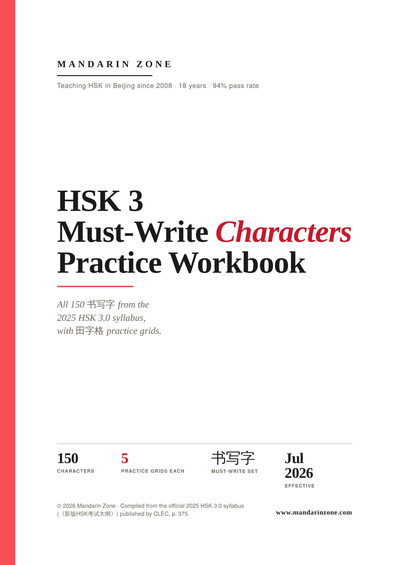
Free HSK 3 Study Resources
Frequently Asked Questions About the New HSK 3.0
What is the new HSK 3.0 and when does it take effect?
The new HSK 3.0 is the revised Chinese Proficiency Test framework released by the Center for Language Education and Cooperation (CLEC) based on the Chinese Proficiency Grading Standards for International Chinese Language Education (《国际中文教育中文水平等级标准》). The 2025 HSK 3.0 syllabus was published in November 2025 and officially takes effect on July 1, 2026, replacing the previous HSK 2.0 framework. Under the new structure, HSK expands from 6 to 9 levels, vocabulary requirements grow across every level, and the test now systematically links words, characters, syllables, grammar, and topics. From July 2026 onward, all HSK test sessions worldwide follow the new HSK 3.0 standard.
How many words are on the new HSK 3?
Under the 2025 HSK 3.0 syllabus, HSK 3 introduces 500 new vocabulary words at this level. Because HSK is cumulative, candidates sitting the new HSK 3 exam are expected to know 1,000 words in total — combining 300 from HSK 1 and 200 from HSK 2 with the 500 new HSK 3 additions. This is a significant increase from the old HSK 2.0, which required only 300 new words at level 3 and 600 cumulative across HSK 1–3. Of the 500 words now at HSK 3, approximately 245 carry over from the old HSK 2.0 syllabus while 255 are new additions under HSK 3.0 — roughly a 50/50 split.
What changed from old HSK 3 to the new HSK 3.0 syllabus?
The new HSK 3.0 made four major changes at level 3. First, vocabulary expanded from 300 new words to 500 — a 67% increase. Second, cumulative vocabulary (HSK 1–3) grew from 600 to 1,000 words. Third, HSK 3.0 introduces explicit character requirements: 150 must-write characters (书写字) and 284 recognition characters (认读字) at level 3 alone. Fourth, vocabulary is now organized under six standardized topic categories — Daily Life, Education, Workplace, Nature & Environment, Contemporary Society, and Culture & Tradition — with 22 second-level and 54 third-level subtopics. Roughly half of the 500 HSK 3 words are new additions; the other half carry over from HSK 2.0.
Where can I download the official 2025 HSK 3.0 syllabus?
The official 2025 HSK 3.0 syllabus (《新版HSK考试大纲》) is published by the Center for Language Education and Cooperation (CLEC) and Chinese Testing International (CTI). The full document is 406 pages and covers vocabulary, characters, syllables, grammar, topics, and sample test items for all nine levels. The syllabus is available through official CLEC channels and authorized partner publishers. For learners who specifically need the new HSK 3 vocabulary list, you can download Mandarin Zone's free HSK 3.0 vocabulary list above — covering all 500 new HSK 3 words with pinyin, English meanings, parts of speech, and example sentences drawn from real classroom use.
How long does it take to study for the new HSK 3?
CLEC suggests about 300–400 study hours from absolute beginner to new HSK 3 readiness under the 2025 HSK 3.0 syllabus. At Mandarin Zone, complete beginners studying part-time reach HSK 3 in 8–12 months at 5–7 hours per week. Learners who already passed HSK 2 typically need 4–6 months at the same pace to bridge to the expanded HSK 3.0 vocabulary. Heritage speakers and learners with prior Mandarin exposure often reach exam-ready in 2–3 months. Because new HSK 3 requires 1,000 cumulative words (up from 600 under HSK 2.0), expect roughly 30–40% more study time than the old HSK 2.0 syllabus required at this level.
What CEFR level is the new HSK 3?
Under the 2025 HSK 3.0 standard, HSK 3 corresponds roughly to the upper end of CEFR A2 and the entry point of CEFR B1 — sometimes described as "A2+" or "lower B1." A learner who passes the new HSK 3 can handle most routine daily-life situations in Chinese: ordering food, navigating public transport, basic shopping, simple medical visits, and basic conversation about familiar topics like family, hobbies, and work. They can read short authentic texts, write short messages and notes, and understand clear standard Mandarin in slow conversation. Note that the new HSK 3.0 maps slightly higher to CEFR than the old HSK 2.0 — the bar at level 3 has effectively been raised by the expanded 1,000-word requirement.
What can I do with a new HSK 3 certificate?
A new HSK 3 certificate is primarily a foundational credential. It qualifies you for admission to one-year preparatory Chinese language programs (汉语预科) at many Chinese universities, which then prepare you for degree-level study. Some Chinese Government Scholarship (CSC) tracks accept HSK 3 as a minimum, though degree-level scholarships usually require HSK 4 or higher. For employment, HSK 3 demonstrates working knowledge of conversational Chinese but is rarely a standalone job requirement — most employers seeking Chinese-speaking staff look for HSK 4 or HSK 5. Practically, HSK 3 confirms you can live in China, manage daily needs in Mandarin, and engage in basic workplace exchanges. For full university-specific requirements, see Mandarin Zone's HSK Requirements guide.
How many characters do I need to write for HSK 3.0?
Under the new HSK 3.0 syllabus, HSK 3 introduces 150 must-write characters (书写字) and 284 recognition characters (认读字) at this level alone. Across HSK 1–3 cumulative, candidates must write 250 characters by hand and recognize approximately 587 characters in reading. This is a major change from the old HSK 2.0, which did not separate writing and recognition requirements at level 3. Handwriting is tested directly in the new HSK 3 writing section, where candidates produce short answers and sentence-completion items. Knowing which characters to write versus only recognize is now a key planning question for HSK 3.0 prep.

Ready to Pass the New HSK 3.0?
Mandarin Zone has been preparing students for HSK in Beijing's Sanlitun district since 2008 — 18 years of focused HSK instruction. With a 94% pass rate across 5,000+ students from 40+ countries, our program is built for serious HSK 3 candidates.
- Small in-person classes in Beijing
- Live online classes (any timezone)
- Native teachers with HSK exam experience
- Weekly mock tests on the 2025 HSK 3.0 format
- Vocabulary, character writing & listening drills
- Personal study plans and exam strategy review