New HSK 2 Vocabulary List 2026: All 200 New Words with Pinyin, English & Example Sentences
Your complete word-by-word vocabulary list for the new HSK 2 exam — based on the official 2025 HSK 3.0 syllabus (《新版HSK考试大纲》) released by CLEC and effective July 1, 2026.
(HSK 1 + 2)
(HSK 1–2 shared)
Tasks
What "200 New Words" Really Means at HSK 2
The headline number "200" hides the real ask: 500 total words on the test. HSK 2 is the first cumulative level in the HSK system — HSK 1's 300 words are still fair game, in every section of the exam. Understanding this is the first step before you even look at the vocabulary list.
Pick your study path
You know the 300 HSK 1 words. Use the default vocab table view (200 new) and tackle them in the recommended study-order sequence.
Use the "+ Add HSK 1 (300 words)" toggle in the vocab list below to study the full cumulative pool. Don't skip HSK 1 vocabulary — it's tested.
Roughly half the new HSK 2 list moved down from old HSK 3+ — see where each word came from.
Cumulative vocabulary by level (new HSK 3.0)
Complete New HSK 2 Vocabulary List (All 200 New Words)
Every word below appears in the official 2025 HSK 3.0 syllabus published by CLEC. Each entry includes pinyin, part of speech, English meaning, and a beginner-friendly example sentence that uses only HSK 1 and HSK 2 vocabulary — tap the + button to expand the example. Use the filters to drill by topic or skill focus.
200 words shown
| # | Chinese | Pinyin | POS | English | Topic | MW | |
|---|---|---|---|---|---|---|---|
| 301 | 啊 | a | part. | (modal particle for agreement, emphasis) | 🔧 Grammar | ||
例句是啊,我也喜欢吃饺子。 PinyinShì a, wǒ yě xǐhuan chī jiǎozi. EnglishYes, I also like eating dumplings. | |||||||
| 302 | 爱好 | àihào | v./n. | hobby; to love (doing) | 🎨 Stuff | ✓ | |
例句我的爱好是看书。 PinyinWǒ de àihào shì kàn shū. EnglishMy hobby is reading. | |||||||
| 303 | 白色 | báisè | n. | white (color) | 🎨 Stuff | ||
例句她喜欢白色的衣服。 PinyinTā xǐhuan báisè de yīfu. EnglishShe likes white clothes. | |||||||
| 304 | 班↗ | bān | n./mw. | class; team | 🎨 Stuff | ||
例句我们班有二十个学生。 PinyinWǒmen bān yǒu èrshí ge xuésheng. EnglishOur class has twenty students. | |||||||
| 305 | 帮 | bāng | v. | to help | 🎭 Verbs | ||
例句你能帮我一下吗? PinyinNǐ néng bāng wǒ yíxià ma? EnglishCan you help me for a moment? | |||||||
| 306 | 帮忙 | bāngmáng | v. | to help; to do a favor | 🎭 Verbs | ||
例句谢谢你的帮忙。 PinyinXièxie nǐ de bāngmáng. EnglishThank you for your help. | |||||||
| 307 | 包 | bāo | v./n./mw. | bag; to wrap; (mw. for bags/packets) | 🎨 Stuff | ||
例句我的包在桌子上。 PinyinWǒ de bāo zài zhuōzi shàng. EnglishMy bag is on the table. | |||||||
| 308 | 本子 | běnzi | n. | notebook | 🎨 Stuff | ✓ | |
例句老师,我的本子在哪儿? PinyinLǎoshī, wǒ de běnzi zài nǎr? EnglishTeacher, where is my notebook? | |||||||
| 309 | 比 | bǐ | v./prep. | to compare; than (comparison marker) | 🔧 Grammar | ✓ | |
例句我比他高。 PinyinWǒ bǐ tā gāo. EnglishI am taller than him. | |||||||
| 310 | 笔↗ | bǐ | n./mw. | pen; (mw. for writing instruments) | 🎨 Stuff | ||
例句这是我新买的笔。 PinyinZhè shì wǒ xīn mǎi de bǐ. EnglishThis is the pen I just bought. | |||||||
| 311 | 别1 | bié | adv. | don't (imperative) | 🔧 Grammar | ||
例句别走,再坐一会儿。 PinyinBié zǒu, zài zuò yíhuìr. EnglishDon't leave, sit a little longer. | |||||||
| 312 | 不错 | búcuò | adj. | not bad; pretty good | 👨👩👧 People | ✓ | |
例句这个菜不错。 PinyinZhège cài búcuò. EnglishThis dish is pretty good. | |||||||
| 313 | 不好意思 | bù hǎoyìsi | adj. | sorry; embarrassed; excuse me | 👨👩👧 People | ✓ | |
例句不好意思,请再说一次。 PinyinBù hǎoyìsi, qǐng zài shuō yí cì. EnglishSorry, please say that again. | |||||||
| 314 | 长 | cháng | adj. | long; (of hair) long | 👨👩👧 People | ✓ | |
例句这条路很长。 PinyinZhè tiáo lù hěn cháng. EnglishThis road is very long. | |||||||
| 315 | 车站 | chēzhàn | n. | (bus/train) station | 🎨 Stuff | ||
例句车站离这儿不远。 PinyinChēzhàn lí zhèr bù yuǎn. EnglishThe station isn't far from here. | |||||||
| 316 | 出 | chū | v. | to go/come out; to produce; to issue | 🧭 Directional | ||
例句这个题是老师出的。 PinyinZhège tí shì lǎoshī chū de. EnglishThis question was set by the teacher. | |||||||
| 317 | 出国 | chūguó | v. | to go abroad | 🧭 Directional | ✓ | |
例句我想出国学习。 PinyinWǒ xiǎng chūguó xuéxí. EnglishI want to study abroad. | |||||||
| 318 | 出来 | chūlái | v. | to come out | 🧭 Directional | ✓ | |
例句老师从教室出来了。 PinyinLǎoshī cóng jiàoshì chū lái le. EnglishThe teacher came out of the classroom. | |||||||
| 319 | 出门 | chūmén | v. | to leave home; to go out | 🧭 Directional | ||
例句我每天八点出门。 PinyinWǒ měi tiān bā diǎn chūmén. EnglishI leave home at 8 every day. | |||||||
| 320 | 出去 | chūqù | v. | to go out | 🧭 Directional | ✓ | |
例句他出去买东西了。 PinyinTā chūqù mǎi dōngxi le. EnglishHe went out to buy things. | |||||||
| 321 | 床 | chuáng | n. | bed | 🎨 Stuff | ||
例句他还在床上睡觉。 PinyinTā hái zài chuáng shàng shuìjiào. EnglishHe's still sleeping in bed. | |||||||
| 322 | 词 | cí | n. | word; vocabulary item | 🎨 Stuff | ||
例句我今天学了五个新词。 PinyinWǒ jīntiān xué le wǔ ge xīn cí. EnglishI learned five new words today. | |||||||
| 323 | 次↗ | cì | mw./adj. | (mw. for occurrences) time; occasion | 🔧 Grammar | ||
例句我每年去一次北京。 PinyinWǒ měi nián qù yí cì Běijīng. EnglishI go to Beijing once a year. | |||||||
| 324 | 从↗ | cóng | prep./adv. | from (starting point) | 🔧 Grammar | ||
例句我是从中国来的。 PinyinWǒ shì cóng Zhōngguó lái de. EnglishI'm from China. | |||||||
| 325 | 从小 | cóngxiǎo | adv. | since childhood | 🔧 Grammar | ✓ | |
例句我从小就喜欢学中文。 PinyinWǒ cóngxiǎo jiù xǐhuan xué Zhōngwén. EnglishI've loved learning Chinese since I was a kid. | |||||||
| 326 | 错 | cuò | adj. | wrong; mistaken | 👨👩👧 People | ||
例句对不起,我错了。 PinyinDuìbuqǐ, wǒ cuò le. EnglishSorry, I was wrong. | |||||||
| 327 | 打1 | dǎ | v. | to hit; to play (a ball game); to make (a call) | 🎭 Verbs | ✓ | |
例句我们一起打篮球吧。 PinyinWǒmen yìqǐ dǎ lánqiú ba. EnglishLet's play basketball together. | |||||||
| 328 | 打车 | dǎchē | v. | to take a taxi | 🏙️ Modern | ✓ | |
例句我们打车去机场吧。 PinyinWǒmen dǎchē qù jīchǎng ba. EnglishLet's take a taxi to the airport. | |||||||
| 329 | 打开 | dǎkāi | v. | to open; to turn on | 🎭 Verbs | ✓ | |
例句请打开你的书。 PinyinQǐng dǎkāi nǐ de shū. EnglishPlease open your book. | |||||||
| 330 | 但↗ | dàn | conj./adv. | but; however | 🔧 Grammar | ||
例句我喜欢喝茶,但他喜欢喝咖啡。 PinyinWǒ xǐhuan hē chá, dàn tā xǐhuan hē kāfēi. EnglishI like tea, but he likes coffee. | |||||||
| 331 | 但是 | dànshì | conj. | but; however | 🔧 Grammar | ✓ | |
例句我想去,但是没有时间。 PinyinWǒ xiǎng qù, dànshì méiyǒu shíjiān. EnglishI want to go, but I don't have time. | |||||||
| 332 | 得 | de | part. | (particle: marks degree/capability of an action) | 🔧 Grammar | ||
例句他说得很好。 PinyinTā shuō de hěn hǎo. EnglishHe speaks (it) very well. | |||||||
| 333 | 地 | de | part. | (particle: turns adjective into adverb) | 🔧 Grammar | ✓ | |
例句他高兴地笑了。 PinyinTā gāoxìng de xiào le. EnglishHe laughed happily. | |||||||
| 334 | 等1↗ | děng | v./prep. | to wait; to wait for | 🔧 Grammar | ||
例句请等我一下。 PinyinQǐng děng wǒ yíxià. EnglishPlease wait for me a moment. | |||||||
| 335 | 地铁 | dìtiě | n. | subway; metro | 🏙️ Modern | ✓ | |
例句我每天坐地铁上班。 PinyinWǒ měi tiān zuò dìtiě shàng bān. EnglishI take the subway to work every day. | |||||||
| 336 | 点2↗ | diǎn | v./n./mw. | to order (food); a little; spot | 🎭 Verbs | ✓ | |
例句我们点几个菜吧。 PinyinWǒmen diǎn jǐ ge cài ba. EnglishLet's order a few dishes. | |||||||
| 337 | 懂 | dǒng | v. | to understand | 🎭 Verbs | ||
例句我不懂你的意思。 PinyinWǒ bù dǒng nǐ de yìsi. EnglishI don't understand what you mean. | |||||||
| 338 | 动 | dòng | v. | to move | 🎭 Verbs | ||
例句你别动,我给你拿。 PinyinNǐ bié dòng, wǒ gěi nǐ ná. EnglishDon't move, I'll get it for you. | |||||||
| 339 | 饭馆 | fànguǎn | n. | restaurant | 🎨 Stuff | ||
例句这家饭馆的菜很好吃。 PinyinZhè jiā fànguǎn de cài hěn hǎochī. EnglishThe food at this restaurant is delicious. | |||||||
| 340 | 飞 | fēi | v. | to fly | 🏙️ Modern | ||
例句鸟在天上飞。 PinyinNiǎo zài tiān shàng fēi. EnglishBirds are flying in the sky. | |||||||
| 341 | 高 | gāo | adj./n. | tall; high | 👨👩👧 People | ||
例句这家酒店很高。 PinyinZhè jiā jiǔdiàn hěn gāo. EnglishThis hotel is very tall. | |||||||
| 342 | 高中 | gāozhōng | n. | senior high school | 🎨 Stuff | ✓ | |
例句我哥哥在上高中。 PinyinWǒ gēge zài shàng gāozhōng. EnglishMy older brother is in senior high. | |||||||
| 343 | 告诉 | gàosu | v. | to tell; to inform | 🎭 Verbs | ||
例句请告诉我你的名字。 PinyinQǐng gàosu wǒ nǐ de míngzi. EnglishPlease tell me your name. | |||||||
| 344 | 个子 | gèzi | n. | height; stature | 👨👩👧 People | ✓ | |
例句他的个子很高。 PinyinTā de gèzi hěn gāo. EnglishHe's quite tall. | |||||||
| 345 | 跟↗ | gēn | prep./conj./n./v. | with; and; to follow | 🔧 Grammar | ||
例句我跟朋友一起去。 PinyinWǒ gēn péngyou yìqǐ qù. EnglishI'm going with friends. | |||||||
| 346 | 公交车 | gōngjiāochē | n. | (public) bus | 🏙️ Modern | ||
例句我每天坐公交车上学。 PinyinWǒ měi tiān zuò gōngjiāochē shàng xué. EnglishI take the bus to school every day. | |||||||
| 347 | 过 | guò | v. | to pass; to cross; to spend (time) | 🔧 Grammar | ✓ | |
例句时间过得真快。 PinyinShíjiān guò de zhēn kuài. EnglishTime passes really fast. | |||||||
| 348 | 过来 | guòlái | v. | to come over (here) | 🧭 Directional | ✓ | |
例句请你过来一下。 PinyinQǐng nǐ guòlái yíxià. EnglishPlease come over for a moment. | |||||||
| 349 | 过年 | guònián | v. | to celebrate the new year | 🎭 Verbs | ✓ | |
例句今年我回家过年。 PinyinJīnnián wǒ huí jiā guònián. EnglishThis year I'm going home for new year. | |||||||
| 350 | 过去1 | guòqù | v. | to go past; to go over | 🧭 Directional | ✓ | |
例句我现在过去找你。 PinyinWǒ xiànzài guòqù zhǎo nǐ. EnglishI'll come find you right now. | |||||||
| 351 | 过 | guo | part. | (aspect particle: have done before) | 🔧 Grammar | ✓ | |
例句我去过北京两次。 PinyinWǒ qù guo Běijīng liǎng cì. EnglishI've been to Beijing twice. | |||||||
| 352 | 还是 | háishi | adv./conj. | or (in questions); still | 🔧 Grammar | ✓ | |
例句你想喝茶还是咖啡? PinyinNǐ xiǎng hē chá háishi kāfēi? EnglishDo you want tea or coffee? | |||||||
| 353 | 黑色 | hēisè | n. | black (color) | 🎨 Stuff | ||
例句我有一只黑色的狗。 PinyinWǒ yǒu yì zhī hēisè de gǒu. EnglishI have a black dog. | |||||||
| 354 | 红茶 | hóngchá | n. | black tea (lit. red tea) | 🎨 Stuff | ✓ | |
例句请给我一杯红茶。 PinyinQǐng gěi wǒ yì bēi hóngchá. EnglishPlease give me a cup of black tea. | |||||||
| 355 | 红色 | hóngsè | n. | red (color) | 🎨 Stuff | ||
例句她最喜欢红色。 PinyinTā zuì xǐhuan hóngsè. EnglishShe likes red the most. | |||||||
| 356 | 后面 | hòumiàn | n. | behind; at the back | 🧭 Directional | ✓ | |
例句学校在医院后面。 PinyinXuéxiào zài yīyuàn hòumiàn. EnglishThe school is behind the hospital. | |||||||
| 357 | 花1 | huā | v. | to spend (money or time) | 🎨 Stuff | ||
例句我花了一百块钱。 PinyinWǒ huā le yì bǎi kuài qián. EnglishI spent a hundred yuan. | |||||||
| 358 | 花2↗ | huā | n./adj. | flower | 🎨 Stuff | ||
例句这些花真漂亮。 PinyinZhèxiē huā zhēn piàoliang. EnglishThese flowers are really beautiful. | |||||||
| 359 | 画 | huà | v./n. | to draw, to paint; a painting | 🎨 Stuff | ||
例句她在画画儿。 PinyinTā zài huà huàr. EnglishShe's drawing/painting. | |||||||
| 360 | 坏 | huài | adj. | bad; broken | 👨👩👧 People | ||
例句我的手机坏了。 PinyinWǒ de shǒujī huài le. EnglishMy phone is broken. | |||||||
| 361 | 回来 | huílái | v. | to come back; to return | 🧭 Directional | ✓ | |
例句爸爸什么时候回来? PinyinBàba shénme shíhou huílái? EnglishWhen will Dad come back? | |||||||
| 362 | 回去 | huíqù | v. | to go back | 🧭 Directional | ✓ | |
例句时间不早了,我要回去了。 PinyinShíjiān bù zǎo le, wǒ yào huíqù le. EnglishIt's getting late, I have to go back. | |||||||
| 363 | 机场 | jīchǎng | n. | airport | 🏙️ Modern | ||
例句去机场要多长时间? PinyinQù jīchǎng yào duō cháng shíjiān? EnglishHow long does it take to get to the airport? | |||||||
| 364 | 机票 | jīpiào | n. | plane ticket | 🏙️ Modern | ||
例句我已经买了机票。 PinyinWǒ yǐjīng mǎi le jīpiào. EnglishI've already bought the plane ticket. | |||||||
| 365 | 记得 | jìde | v. | to remember | 🎭 Verbs | ||
例句你还记得我吗? PinyinNǐ hái jìde wǒ ma? EnglishDo you still remember me? | |||||||
| 366 | 间↗ | jiān | mw./n. | (mw. for rooms); between | 🔧 Grammar | ✓ | |
例句我家有三间房。 PinyinWǒ jiā yǒu sān jiān fáng. EnglishMy home has three rooms. | |||||||
| 367 | 教 | jiāo | v. | to teach | 🎭 Verbs | ||
例句她教我们中文。 PinyinTā jiāo wǒmen Zhōngwén. EnglishShe teaches us Chinese. | |||||||
| 368 | 教室 | jiàoshì | n. | classroom | 🎨 Stuff | ||
例句我们的教室很大。 PinyinWǒmen de jiàoshì hěn dà. EnglishOur classroom is very big. | |||||||
| 369 | 介绍 | jièshào | v. | to introduce | 🎭 Verbs | ||
例句我来介绍一下,这是我的朋友。 PinyinWǒ lái jièshào yíxià, zhè shì wǒ de péngyou. EnglishLet me introduce — this is my friend. | |||||||
| 370 | 进 | jìn | v. | to enter; to go in | 🧭 Directional | ||
例句请进。 PinyinQǐng jìn. EnglishPlease come in. | |||||||
| 371 | 近 | jìn | adj. | near; close | 🧭 Directional | ||
例句我家离学校很近。 PinyinWǒ jiā lí xuéxiào hěn jìn. EnglishMy home is very close to school. | |||||||
| 372 | 进来 | jìnlái | v. | to come in | 🧭 Directional | ✓ | |
例句外面冷,快进来。 PinyinWàimiàn lěng, kuài jìnlái. EnglishIt's cold outside, come in quickly. | |||||||
| 373 | 进去 | jìnqù | v. | to go in | 🧭 Directional | ✓ | |
例句门开着,你进去吧。 PinyinMén kāi zhe, nǐ jìnqù ba. EnglishThe door is open, you can go in. | |||||||
| 374 | 经常 | jīngcháng | adv. | often; frequently | 🔧 Grammar | ||
例句我经常去那家饭馆。 PinyinWǒ jīngcháng qù nà jiā fànguǎn. EnglishI often go to that restaurant. | |||||||
| 375 | 酒店 | jiǔdiàn | n. | hotel | 🏙️ Modern | ||
例句我们住在这家酒店。 PinyinWǒmen zhù zài zhè jiā jiǔdiàn. EnglishWe're staying at this hotel. | |||||||
| 376 | 就↗ | jiù | adv./prep. | then; right away; just | 🔧 Grammar | ||
例句我吃完饭就走。 PinyinWǒ chī wán fàn jiù zǒu. EnglishI'll leave right after I finish eating. | |||||||
| 377 | 咖啡 | kāfēi | n. | coffee | 🎨 Stuff | ||
例句早上我喜欢喝咖啡。 PinyinZǎoshang wǒ xǐhuan hē kāfēi. EnglishI like to drink coffee in the morning. | |||||||
| 378 | 开始 | kāishǐ | v./n. | to start; to begin | 🎭 Verbs | ||
例句电影几点开始? PinyinDiànyǐng jǐ diǎn kāishǐ? EnglishWhat time does the movie start? | |||||||
| 379 | 开学 | kāixué | v. | (school) to start a new term | 🎭 Verbs | ✓ | |
例句我们下个月开学。 PinyinWǒmen xià ge yuè kāixué. EnglishOur new term starts next month. | |||||||
| 380 | 考 | kǎo | v. | to take a test; to examine | 🎭 Verbs | ||
例句明天我们考中文。 PinyinMíngtiān wǒmen kǎo Zhōngwén. EnglishTomorrow we have a Chinese test. | |||||||
| 381 | 考试 | kǎoshì | v./n. | exam; test; to take a test | 🎭 Verbs | ||
例句我下周有一个考试。 PinyinWǒ xià zhōu yǒu yí ge kǎoshì. EnglishI have a test next week. | |||||||
| 382 | 可能 | kěnéng | adj./n./v. | maybe; possibly; possible | 🔧 Grammar | ✓ | |
例句他可能不来了。 PinyinTā kěnéng bù lái le. EnglishHe might not come. | |||||||
| 383 | 裤子 | kùzi | n. | trousers; pants | 🎨 Stuff | ✓ | |
例句这条裤子太长了。 PinyinZhè tiáo kùzi tài cháng le. EnglishThese pants are too long. | |||||||
| 384 | 快 | kuài | adj./adv. | fast; quick; quickly | 👨👩👧 People | ||
例句他跑得很快。 PinyinTā pǎo de hěn kuài. EnglishHe runs very fast. | |||||||
| 385 | 快乐 | kuàilè | adj. | happy | 👨👩👧 People | ||
例句我今天很快乐。 PinyinWǒ jīntiān hěn kuàilè. EnglishI'm very happy today. | |||||||
| 386 | 快要 | kuàiyào | adv. | about to; soon | 🔧 Grammar | ✓ | |
例句快要下雨了。 PinyinKuàiyào xià yǔ le. EnglishIt's about to rain. | |||||||
| 387 | 篮球 | lánqiú | n. | basketball | 🎨 Stuff | ||
例句我喜欢看篮球。 PinyinWǒ xǐhuan kàn lánqiú. EnglishI like watching basketball. | |||||||
| 388 | 累 | lèi | adj./v. | tired | 👨👩👧 People | ||
例句今天工作很累。 PinyinJīntiān gōngzuò hěn lèi. EnglishWork was tiring today. | |||||||
| 389 | 离 | lí | v. | (distance) from; to leave | 🧭 Directional | ||
例句学校离我家不远。 PinyinXuéxiào lí wǒ jiā bù yuǎn. EnglishThe school isn't far from my home. | |||||||
| 390 | 里面 | lǐmiàn | n. | inside | 🧭 Directional | ||
例句包里面有什么? PinyinBāo lǐmiàn yǒu shénme? EnglishWhat's inside the bag? | |||||||
| 391 | 楼 | lóu | n. | building; floor | 🎨 Stuff | ||
例句我家在五楼。 PinyinWǒ jiā zài wǔ lóu. EnglishMy home is on the fifth floor. | |||||||
| 392 | 路 | lù | n. | road; way | 🎨 Stuff | ||
例句你认识这条路吗? PinyinNǐ rènshi zhè tiáo lù ma? EnglishDo you know this road? | |||||||
| 393 | 路上 | lùshang | n. | on the way | 🧭 Directional | ✓ | |
例句我在路上看到了他。 PinyinWǒ zài lùshang kàn dào le tā. EnglishI saw him on the way. | |||||||
| 394 | 旅游 | lǚyóu | v. | to travel; tourism | 🏙️ Modern | ||
例句我喜欢去中国旅游。 PinyinWǒ xǐhuan qù Zhōngguó lǚyóu. EnglishI like to travel to China. | |||||||
| 395 | 绿茶 | lǜchá | n. | green tea | 🎨 Stuff | ✓ | |
例句我每天喝一杯绿茶。 PinyinWǒ měi tiān hē yì bēi lǜchá. EnglishI drink a cup of green tea every day. | |||||||
| 396 | 绿色↗ | lǜsè | n./adj. | green (color) | 🎨 Stuff | ||
例句这件衣服是绿色的。 PinyinZhè jiàn yīfu shì lǜsè de. EnglishThis piece of clothing is green. | |||||||
| 397 | 慢 | màn | adj. | slow; slowly | 👨👩👧 People | ||
例句请你说慢一点。 PinyinQǐng nǐ shuō màn yìdiǎn. EnglishPlease speak a little slower. | |||||||
| 398 | 没意思 | méi yìsi | adj. | boring; not interesting | 👨👩👧 People | ✓ | |
例句这本书很没意思。 PinyinZhè běn shū hěn méi yìsi. EnglishThis book is very boring. | |||||||
| 399 | 每↗ | měi | pron./adv. | every; each | 🔧 Grammar | ||
例句我每天学中文。 PinyinWǒ měi tiān xué Zhōngwén. EnglishI study Chinese every day. | |||||||
| 400 | 门 | mén | n. | door; gate | 🎨 Stuff | ||
例句请关上门。 PinyinQǐng guān shàng mén. EnglishPlease close the door. | |||||||
| 401 | 门口 | ménkǒu | n. | doorway; entrance | 🎨 Stuff | ✓ | |
例句我在学校门口等你。 PinyinWǒ zài xuéxiào ménkǒu děng nǐ. EnglishI'll wait for you at the school entrance. | |||||||
| 402 | 门票 | ménpiào | n. | entrance ticket; admission ticket | 🎨 Stuff | ||
例句门票多少钱? PinyinMénpiào duōshǎo qián? EnglishHow much is the entrance ticket? | |||||||
| 403 | 面1↗ | miàn | suf./v./n./mw. | (suffix in directional words: -side, -face) | 🔧 Grammar | ||
例句上面的字我看不懂。 PinyinShàngmiàn de zì wǒ kàn bu dǒng. EnglishI can't read the characters above. | |||||||
| 404 | 名 | míng | n./mw. | (given) name; (mw. for people) | 🔧 Grammar | ✓ | |
例句我们班有二十名学生。 PinyinWǒmen bān yǒu èrshí míng xuésheng. EnglishOur class has twenty students. | |||||||
| 405 | 拿 | ná | v. | to take; to hold | 🎭 Verbs | ||
例句请帮我拿一下书。 PinyinQǐng bāng wǒ ná yíxià shū. EnglishPlease hold the book for me. | |||||||
| 406 | 那么 | nàme | pron./conj. | so; like that; in that way | 🔧 Grammar | ✓ | |
例句他那么忙,没时间看电视。 PinyinTā nàme máng, méi shíjiān kàn diànshì. EnglishHe's so busy, he has no time to watch TV. | |||||||
| 407 | 那样 | nàyàng | pron. | like that; that way | 🔧 Grammar | ✓ | |
例句别那样说话。 PinyinBié nàyàng shuōhuà. EnglishDon't talk like that. | |||||||
| 408 | 奶茶 | nǎichá | n. | milk tea | 🎨 Stuff | ✓ | |
例句我想喝一杯奶茶。 PinyinWǒ xiǎng hē yì bēi nǎichá. EnglishI want a cup of milk tea. | |||||||
| 409 | 奶奶 | nǎinai | n. | grandma (paternal) | 👨👩👧 People | ||
例句奶奶今年八十岁了。 PinyinNǎinai jīnnián bāshí suì le. EnglishGrandma is eighty this year. | |||||||
| 410 | 男孩儿 | nánháir | n. | boy | 👨👩👧 People | ✓ | |
例句那个男孩儿是我弟弟。 PinyinNàge nánháir shì wǒ dìdi. EnglishThat boy is my younger brother. | |||||||
| 411 | 鸟 | niǎo | n. | bird | 🎨 Stuff | ||
例句天上有很多鸟。 PinyinTiān shàng yǒu hěn duō niǎo. EnglishThere are many birds in the sky. | |||||||
| 412 | 女孩儿 | nǚháir | n. | girl | 👨👩👧 People | ✓ | |
例句那个女孩儿是谁? PinyinNàge nǚháir shì shéi? EnglishWho is that girl? | |||||||
| 413 | 旁边 | pángbiān | n. | next to; beside | 🧭 Directional | ✓ | |
例句他坐在我旁边。 PinyinTā zuò zài wǒ pángbiān. EnglishHe sits next to me. | |||||||
| 414 | 跑 | pǎo | v. | to run | 🎭 Verbs | ||
例句我跑得比他快。 PinyinWǒ pǎo de bǐ tā kuài. EnglishI run faster than him. | |||||||
| 415 | 跑步 | pǎobù | v. | to run; jogging | 🎭 Verbs | ||
例句跑步对身体好。 PinyinPǎobù duì shēntǐ hǎo. EnglishRunning is good for your health. | |||||||
| 416 | 票 | piào | n. | ticket | 🎨 Stuff | ||
例句电影票多少钱? PinyinDiànyǐng piào duōshǎo qián? EnglishHow much is a movie ticket? | |||||||
| 417 | 妻子 | qīzi | n. | wife | 👨👩👧 People | ✓ | |
例句他的妻子是医生。 PinyinTā de qīzi shì yīshēng. EnglishHis wife is a doctor. | |||||||
| 418 | 起来 | qǐlái | v. | to get up; to stand up | 🧭 Directional | ✓ | |
例句我每天七点起来。 PinyinWǒ měi tiān qī diǎn qǐlái. EnglishI get up at 7 every day. | |||||||
| 419 | 前面 | qiánmiàn | n. | in front; ahead | 🧭 Directional | ||
例句前面有一家饭馆。 PinyinQiánmiàn yǒu yì jiā fànguǎn. EnglishThere's a restaurant up ahead. | |||||||
| 420 | 晴 | qíng | adj. | (weather) sunny; clear | 🎨 Stuff | ||
例句明天是晴天。 PinyinMíngtiān shì qíngtiān. EnglishTomorrow will be sunny. | |||||||
| 421 | 球 | qiú | n. | ball | 🎨 Stuff | ||
例句孩子们在玩球。 PinyinHáizimen zài wán qiú. EnglishThe kids are playing with a ball. | |||||||
| 422 | 让↗ | ràng | v./prep. | to let; to make (someone do) | 🔧 Grammar | ||
例句妈妈让我去买菜。 PinyinMāma ràng wǒ qù mǎi cài. EnglishMom asked me to go buy groceries. | |||||||
| 423 | 肉 | ròu | n. | meat | 🎨 Stuff | ||
例句我不爱吃肉。 PinyinWǒ bú ài chī ròu. EnglishI don't like to eat meat. | |||||||
| 424 | 商场 | shāngchǎng | n. | shopping mall | 🏙️ Modern | ||
例句我们去商场买东西吧。 PinyinWǒmen qù shāngchǎng mǎi dōngxi ba. EnglishLet's go to the mall to shop. | |||||||
| 425 | 上来 | shànglái | v. | to come up | 🧭 Directional | ✓ | |
例句请你上来看一下。 PinyinQǐng nǐ shànglái kàn yíxià. EnglishPlease come up and take a look. | |||||||
| 426 | 上面 | shàngmiàn | n. | above; on top | 🧭 Directional | ✓ | |
例句书在桌子上面。 PinyinShū zài zhuōzi shàngmiàn. EnglishThe book is on top of the table. | |||||||
| 427 | 上去 | shàngqù | v. | to go up | 🧭 Directional | ✓ | |
例句楼上有人,我们上去看看。 PinyinLóu shàng yǒu rén, wǒmen shàngqù kànkan. EnglishThere's someone upstairs, let's go up and look. | |||||||
| 428 | 上网 | shàngwǎng | v. | to go online | 🏙️ Modern | ✓ | |
例句他每天都上网。 PinyinTā měi tiān dōu shàngwǎng. EnglishHe goes online every day. | |||||||
| 429 | 身体 | shēntǐ | n. | body; health | 👨👩👧 People | ||
例句你的身体好吗? PinyinNǐ de shēntǐ hǎo ma? EnglishAre you in good health? | |||||||
| 430 | 生日 | shēngrì | n. | birthday | 🎨 Stuff | ✓ | |
例句今天是我妈妈的生日。 PinyinJīntiān shì wǒ māma de shēngrì. EnglishToday is my mom's birthday. | |||||||
| 431 | 时↗ | shí | n./mw. | (o'clock) hour; time | 🎨 Stuff | ✓ | |
例句我学了三个小时。 PinyinWǒ xué le sān ge xiǎoshí. EnglishI studied for three hours. | |||||||
| 432 | 事情 | shìqing | n. | matter; affair; thing | 🎨 Stuff | ||
例句我今天有很多事情。 PinyinWǒ jīntiān yǒu hěn duō shìqing. EnglishI have a lot of things to do today. | |||||||
| 433 | 手 | shǒu | n. | hand | 👨👩👧 People | ||
例句我的手很冷。 PinyinWǒ de shǒu hěn lěng. EnglishMy hands are cold. | |||||||
| 434 | 手表 | shǒubiǎo | n. | (wrist) watch | 🎨 Stuff | ||
例句我买了一块新手表。 PinyinWǒ mǎi le yí kuài xīn shǒubiǎo. EnglishI bought a new watch. | |||||||
| 435 | 书包 | shūbāo | n. | schoolbag; backpack | 🎨 Stuff | ✓ | |
例句我的书包是新的。 PinyinWǒ de shūbāo shì xīn de. EnglishMy schoolbag is new. | |||||||
| 436 | 舒服 | shūfu | adj. | comfortable; (feel) well | 👨👩👧 People | ||
例句今天我不太舒服。 PinyinJīntiān wǒ bú tài shūfu. EnglishI don't feel very well today. | |||||||
| 437 | 送 | sòng | v. | to give (as gift); to send; to see off | 🎭 Verbs | ||
例句他送了我一本书。 PinyinTā sòng le wǒ yì běn shū. EnglishHe gave me a book as a gift. | |||||||
| 438 | 虽然 | suīrán | conj. | although; even though | 🔧 Grammar | ||
例句虽然下雨,但是我还是去了。 PinyinSuīrán xià yǔ, dànshì wǒ háishi qù le. EnglishAlthough it was raining, I still went. | |||||||
| 439 | 所以 | suǒyǐ | conj. | so; therefore | 🔧 Grammar | ✓ | |
例句今天没考试,所以我很高兴。 PinyinJīntiān méi kǎoshì, suǒyǐ wǒ hěn gāoxìng. EnglishThere's no test today, so I'm happy. | |||||||
| 440 | 疼↗ | téng | adj./v. | to hurt; sore; painful | 👨👩👧 People | ||
例句我的头很疼。 PinyinWǒ de tóu hěn téng. EnglishMy head really hurts. | |||||||
| 441 | 踢 | tī | v. | to kick | 🎭 Verbs | ||
例句我喜欢踢足球。 PinyinWǒ xǐhuan tī zúqiú. EnglishI like to play soccer. | |||||||
| 442 | 题 | tí | n. | question; problem (in a test) | 🎨 Stuff | ||
例句这个题我不懂。 PinyinZhège tí wǒ bù dǒng. EnglishI don't understand this question. | |||||||
| 443 | 条↗ | tiáo | mw./n. | (mw. for long thin objects: roads, pants, fish) | 🔧 Grammar | ||
例句这条鱼很大。 PinyinZhè tiáo yú hěn dà. EnglishThis fish is very big. | |||||||
| 444 | 跳舞 | tiàowǔ | v. | to dance | 🎭 Verbs | ||
例句她跳舞跳得很好。 PinyinTā tiàowǔ tiào de hěn hǎo. EnglishShe dances very well. | |||||||
| 445 | 头↗ | tóu | n./mw./adj. | head | 👨👩👧 People | ||
例句他点了点头。 PinyinTā diǎn le diǎn tóu. EnglishHe nodded his head. | |||||||
| 446 | 外国 | wàiguó | n. | foreign country | 🎨 Stuff | ✓ | |
例句他喜欢看外国电影。 PinyinTā xǐhuan kàn wàiguó diànyǐng. EnglishHe likes watching foreign movies. | |||||||
| 447 | 外面 | wàimiàn | n. | outside | 🧭 Directional | ||
例句外面很冷,多穿点。 PinyinWàimiàn hěn lěng, duō chuān diǎn. EnglishIt's cold outside, dress warmly. | |||||||
| 448 | 完 | wán | v. | to finish; to complete | 🎭 Verbs | ||
例句我已经吃完了。 PinyinWǒ yǐjīng chī wán le. EnglishI've already finished eating. | |||||||
| 449 | 万 | wàn | num. | ten thousand | 🏙️ Modern | ||
例句这个手机要一万块。 PinyinZhège shǒujī yào yí wàn kuài. EnglishThis phone costs 10,000 yuan. | |||||||
| 450 | 往 | wǎng | v./prep. | toward; to (direction) | 🔧 Grammar | ||
例句请往前走。 PinyinQǐng wǎng qián zǒu. EnglishPlease walk forward. | |||||||
| 451 | 网上 | wǎngshang | n. | online; on the internet | 🏙️ Modern | ✓ | |
例句我在网上买了一本书。 PinyinWǒ zài wǎngshang mǎi le yì běn shū. EnglishI bought a book online. | |||||||
| 452 | 忘 | wàng | v. | to forget | 🎭 Verbs | ||
例句我忘了他的名字。 PinyinWǒ wàng le tā de míngzi. EnglishI forgot his name. | |||||||
| 453 | 位 | wèi | mw. | (polite mw. for people) | 🔧 Grammar | ||
例句这位老师很有名。 PinyinZhè wèi lǎoshī hěn yǒumíng. EnglishThis teacher is very famous. | |||||||
| 454 | 为什么 | wèi shénme | pron. | why | 🔧 Grammar | ✓ | |
例句你为什么不来? PinyinNǐ wèi shénme bù lái? EnglishWhy aren't you coming? | |||||||
| 455 | 希望 | xīwàng | v. | to hope; hope | 🎭 Verbs | ||
例句我希望你能来。 PinyinWǒ xīwàng nǐ néng lái. EnglishI hope you can come. | |||||||
| 456 | 洗 | xǐ | v. | to wash | 🎭 Verbs | ||
例句饭前要洗手。 PinyinFàn qián yào xǐ shǒu. EnglishWash your hands before meals. | |||||||
| 457 | 洗手间 | xǐshǒujiān | n. | bathroom; restroom | 🎨 Stuff | ✓ | |
例句请问,洗手间在哪儿? PinyinQǐng wèn, xǐshǒujiān zài nǎr? EnglishExcuse me, where's the restroom? | |||||||
| 458 | 下来 | xiàlái | v. | to come down | 🧭 Directional | ✓ | |
例句妈妈,快下来吃饭! PinyinMāma, kuài xiàlái chī fàn! EnglishMom, come down quickly to eat! | |||||||
| 459 | 下面 | xiàmiàn | n. | below; underneath | 🧭 Directional | ✓ | |
例句猫在桌子下面。 PinyinMāo zài zhuōzi xiàmiàn. EnglishThe cat is under the table. | |||||||
| 460 | 下去 | xiàqù | v. | to go down | 🧭 Directional | ✓ | |
例句你先下去,我等一会儿来。 PinyinNǐ xiān xiàqù, wǒ děng yíhuìr lái. EnglishYou go down first, I'll come in a moment. | |||||||
| 461 | 小孩儿 | xiǎoháir | n. | child; kid | 👨👩👧 People | ✓ | |
例句这个小孩儿真可爱。 PinyinZhège xiǎoháir zhēn kě'ài. EnglishThis child is really cute. | |||||||
| 462 | 小时候 | xiǎoshíhou | n. | (when) young; childhood | 👨👩👧 People | ✓ | |
例句我小时候很喜欢看书。 PinyinWǒ xiǎoshíhou hěn xǐhuan kàn shū. EnglishWhen I was little, I loved reading. | |||||||
| 463 | 笑 | xiào | v. | to laugh; to smile | 🎭 Verbs | ||
例句她笑得很高兴。 PinyinTā xiào de hěn gāoxìng. EnglishShe laughed happily. | |||||||
| 464 | 姓 | xìng | n./v. | surname; to be surnamed | 👨👩👧 People | ||
例句我姓王。 PinyinWǒ xìng Wáng. EnglishMy surname is Wang. | |||||||
| 465 | 姓名 | xìngmíng | n. | full name | 👨👩👧 People | ✓ | |
例句请写下你的姓名。 PinyinQǐng xiě xià nǐ de xìngmíng. EnglishPlease write down your full name. | |||||||
| 466 | 颜色 | yánsè | n. | color | 🎨 Stuff | ||
例句你喜欢什么颜色? PinyinNǐ xǐhuan shénme yánsè? EnglishWhat color do you like? | |||||||
| 467 | 眼睛 | yǎnjing | n. | eye | 👨👩👧 People | ||
例句她的眼睛很大。 PinyinTā de yǎnjing hěn dà. EnglishShe has big eyes. | |||||||
| 468 | 药 | yào | n. | medicine | 🎨 Stuff | ||
例句记得吃药。 PinyinJìde chī yào. EnglishRemember to take your medicine. | |||||||
| 469 | 药店 | yàodiàn | n. | pharmacy; drugstore | 🎨 Stuff | ||
例句药店就在前面。 PinyinYàodiàn jiù zài qiánmiàn. EnglishThe pharmacy is just ahead. | |||||||
| 470 | 爷爷 | yéye | n. | grandpa (paternal) | 👨👩👧 People | ||
例句我爷爷八十多岁了。 PinyinWǒ yéye bāshí duō suì le. EnglishMy grandpa is over eighty. | |||||||
| 471 | 一会儿↗ | yíhuìr | 数量/adv. | a moment; a little while | 🔧 Grammar | ✓ | |
例句请等一会儿。 PinyinQǐng děng yíhuìr. EnglishPlease wait a moment. | |||||||
| 472 | 已经 | yǐjīng | adv. | already | 🔧 Grammar | ||
例句他已经回家了。 PinyinTā yǐjīng huí jiā le. EnglishHe has already gone home. | |||||||
| 473 | 一起 | yìqǐ | adv. | together | 🔧 Grammar | ✓ | |
例句我们一起吃饭吧。 PinyinWǒmen yìqǐ chī fàn ba. EnglishLet's eat together. | |||||||
| 474 | 意思 | yìsi | n. | meaning | 🎨 Stuff | ||
例句这个词是什么意思? PinyinZhège cí shì shénme yìsi? EnglishWhat does this word mean? | |||||||
| 475 | 阴 | yīn | adj. | (weather) overcast; cloudy | 🎨 Stuff | ||
例句今天天气很阴。 PinyinJīntiān tiānqì hěn yīn. EnglishThe weather is overcast today. | |||||||
| 476 | 因为 | yīnwèi | prep./conj. | because | 🔧 Grammar | ✓ | |
例句因为下雨,所以我没去。 PinyinYīnwèi xià yǔ, suǒyǐ wǒ méi qù. EnglishBecause it was raining, I didn't go. | |||||||
| 477 | 游 | yóu | v. | to swim | 🎭 Verbs | ||
例句他每天去游泳。 PinyinTā měi tiān qù yóuyǒng. EnglishHe goes swimming every day. | |||||||
| 478 | 游泳 | yóuyǒng | v. | to swim; swimming | 🎭 Verbs | ||
例句我不会游泳。 PinyinWǒ bú huì yóuyǒng. EnglishI can't swim. | |||||||
| 479 | 有意思 | yǒu yìsi | adj. | interesting | 👨👩👧 People | ✓ | |
例句这本书真有意思。 PinyinZhè běn shū zhēn yǒu yìsi. EnglishThis book is really interesting. | |||||||
| 480 | 有时 | yǒushí | adv. | sometimes | 🔧 Grammar | ✓ | |
例句他有时来,有时不来。 PinyinTā yǒushí lái, yǒushí bù lái. EnglishSometimes he comes, sometimes he doesn't. | |||||||
| 481 | 右 | yòu | n. | right (direction) | 🧭 Directional | ||
例句请往右走。 PinyinQǐng wǎng yòu zǒu. EnglishPlease walk to the right. | |||||||
| 482 | 右边 | yòubian | n. | the right side | 🧭 Directional | ✓ | |
例句学校在医院的右边。 PinyinXuéxiào zài yīyuàn de yòubian. EnglishThe school is to the right of the hospital. | |||||||
| 483 | 鱼 | yú | n. | fish | 🎨 Stuff | ||
例句我喜欢吃鱼。 PinyinWǒ xǐhuan chī yú. EnglishI like to eat fish. | |||||||
| 484 | 远 | yuǎn | adj. | far | 🧭 Directional | ||
例句我家离这儿很远。 PinyinWǒ jiā lí zhèr hěn yuǎn. EnglishMy home is far from here. | |||||||
| 485 | 运动 | yùndòng | v./n. | sport; to exercise | 🎨 Stuff | ||
例句运动对身体好。 PinyinYùndòng duì shēntǐ hǎo. EnglishExercise is good for your health. | |||||||
| 486 | 站1 | zhàn | n. | (transport) station; stop | 🎨 Stuff | ||
例句下一站是北京。 PinyinXià yí zhàn shì Běijīng. EnglishThe next stop is Beijing. | |||||||
| 487 | 丈夫 | zhàngfu | n. | husband | 👨👩👧 People | ||
例句她的丈夫是中国人。 PinyinTā de zhàngfu shì Zhōngguórén. EnglishHer husband is Chinese. | |||||||
| 488 | 这么 | zhème | pron. | so; like this; in this way | 🔧 Grammar | ✓ | |
例句你怎么这么累? PinyinNǐ zěnme zhème lèi? EnglishWhy are you so tired? | |||||||
| 489 | 这样 | zhèyàng | pron. | like this; this way | 🔧 Grammar | ✓ | |
例句你可以这样做。 PinyinNǐ kěyǐ zhèyàng zuò. EnglishYou can do it this way. | |||||||
| 490 | 着 | zhe | part. | (aspect particle: ongoing state) | 🔧 Grammar | ||
例句门开着呢。 PinyinMén kāi zhe ne. EnglishThe door is open (right now). | |||||||
| 491 | 正↗ | zhèng | adv./adj. | right now; just; in the middle of | 🔧 Grammar | ||
例句我正在吃饭。 PinyinWǒ zhèng zài chī fàn. EnglishI'm eating right now. | |||||||
| 492 | 周↗ | zhōu | n./mw. | week | 🏙️ Modern | ||
例句下周我去北京。 PinyinXià zhōu wǒ qù Běijīng. EnglishNext week I'm going to Beijing. | |||||||
| 493 | 准备 | zhǔnbèi | v. | to prepare; to plan | 🎭 Verbs | ||
例句我准备明天去机场。 PinyinWǒ zhǔnbèi míngtiān qù jīchǎng. EnglishI plan to go to the airport tomorrow. | |||||||
| 494 | 自己 | zìjǐ | pron. | self; oneself | 🔧 Grammar | ||
例句我自己做饭。 PinyinWǒ zìjǐ zuò fàn. EnglishI cook for myself. | |||||||
| 495 | 走 | zǒu | v. | to walk; to leave | 🎭 Verbs | ||
例句时间不早了,我们走吧。 PinyinShíjiān bù zǎo le, wǒmen zǒu ba. EnglishIt's getting late, let's go. | |||||||
| 496 | 走路 | zǒulù | v. | to walk (as transport) | 🎭 Verbs | ||
例句我每天走路上班。 PinyinWǒ měi tiān zǒulù shàng bān. EnglishI walk to work every day. | |||||||
| 497 | 足球 | zúqiú | n. | soccer; football | 🎨 Stuff | ||
例句我哥哥喜欢看足球。 PinyinWǒ gēge xǐhuan kàn zúqiú. EnglishMy older brother likes watching soccer. | |||||||
| 498 | 最 | zuì | adv. | most; -est | 🔧 Grammar | ||
例句我最喜欢吃面条。 PinyinWǒ zuì xǐhuan chī miàntiáo. EnglishI like noodles the most. | |||||||
| 499 | 左 | zuǒ | n. | left (direction) | 🧭 Directional | ||
例句请往左走。 PinyinQǐng wǎng zuǒ zǒu. EnglishPlease walk to the left. | |||||||
| 500 | 左边 | zuǒbian | n. | the left side | 🧭 Directional | ✓ | |
例句我家在学校的左边。 PinyinWǒ jiā zài xuéxiào de zuǒbian. EnglishMy home is on the left side of the school. | |||||||
Studying skipped-HSK-1? Combine this with our New HSK 1 Vocabulary List 2026 to cover all 500 cumulative words. Or toggle "+ Add HSK 1" above to overlay both lists.
Why Exactly These 200 Words?
The new syllabus didn't pick 200 random words. It targeted six specific pedagogical gaps left by HSK 1. Once you see the buckets, you'll understand why this list looks the way it does — and where the biggest payoffs for your study time live.
Grammar tools 43 words · 22%
Small words that unlock HSK 1's sentence ceiling. HSK 1 taught you 300 nouns and verbs but only basic 主谓宾 sentences. These 43 turn vocabulary into language.
Comparison: 比, 最, 这么, 那么 · Cause/effect: 因为, 所以 · Concession: 虽然, 但是 · Aspect: 着, 过, 已经 · Modal: 可能, 快要, 让 · Measure: 次, 条, 间, 位, 名
Directional & spatial 32 words · 16%
Completes the motion + location system HSK 1 left half-finished. With HSK 1 you could say "go"; with these you can say "go up / down / in / out / back / over."
Motion verbs (8 pairs): 出来/出去, 进来/进去, 上来/上去, 下来/下去, 过来/过去, 回来/回去, 起来 · Location: 前面/后面/里面/外面/上面/下面/旁边 · Direction: 左/右/左边/右边 · Distance: 近/远/离
Modern daily life 13 words · 7%
Small bucket but disproportionately useful — words reflecting how people actually live today. Most of what you'll say living in modern China.
Transit: 地铁, 公交车, 机场, 机票, 打车, 飞 · Internet: 网上, 上网 · Services: 商场, 酒店 · Travel: 旅游, 万 · Time: 周
People, body & description 29 words · 15%
Describe and compare yourself, your family, your physical state. The "talking about people" toolkit.
Body: 身体, 手, 头, 眼睛 · Family: 妻子, 丈夫, 奶奶, 爷爷 · People: 男孩儿, 女孩儿, 小孩儿, 小时候 · Description: 高, 长, 累, 疼, 舒服, 快, 慢, 远, 近, 坏 · Reactions: 不错, 不好意思, 有意思, 没意思
Activities & verbs 32 words · 16%
Verbs of doing — sports, hobbies, daily actions, school activities.
Sport/leisure: 跑/跑步, 游/游泳, 跳舞, 踢, 篮球, 足球, 运动, 爱好 · Daily: 打开, 拿, 让, 送, 完, 忘, 笑, 洗 · School: 教, 考, 考试, 开始, 开学, 准备, 介绍 · Help/move: 帮, 帮忙, 走, 走路, 出门, 过年
Stuff & nuance 51 words · 26%
The widest bucket — concrete nouns, colors, food, school items, weather. Easiest to learn (they map directly to things you can see), best left for late-stage review.
Colors: 颜色, 白色, 红色, 黑色, 绿色 · Drinks: 红茶, 绿茶, 奶茶, 咖啡 · Food: 肉, 鱼, 饭馆 · School: 班, 教室, 高中, 题, 词, 笔, 本子, 书包 · Things: 包, 床, 门, 门口, 门票, 票, 鸟, 球, 药, 药店, 手表 · Weather: 晴, 阴 · More: 事情, 楼, 路, 路上, 站, 车站, 时, 生日, 裤子, 洗手间
⭐ Recommended study order (highest-leverage path)
200 words can feel overwhelming if you tackle them alphabetically. After 18 years of teaching this level at Mandarin Zone Beijing, this is the sequence we use — designed to maximize return on study time:
Biggest leverage. The day you learn 因为/所以/虽然/但是/比 you can immediately produce complex sentences. Drill these first, even though they're the most abstract.
Second-highest leverage. Once you can say 出来/进去/上去/下来, your basic motion vocabulary doubles overnight.
High practical density. Anything you say about yourself, your family, or how you feel uses these.
Daily-use coverage — sports, hobbies, transit, internet. The "actually deployable" words.
Save for last. Concrete nouns are the easiest words to learn, so they're the best "review fuel" near exam time.
Why Only 200? The "Consolidation Level" Thesis
If HSK 1 doubled from 150 to 300, why does HSK 2 only grow from 150 to 200? Is HSK 2 getting easier?
No. HSK 2 got harder — but the difficulty moved. Here's what the syllabus designers were optimizing for.
Cumulative progression across HSK 3.0 (new vs old)
| Level | Old HSK 2.0 | New HSK 3.0 | Change |
|---|---|---|---|
| HSK 1 (cumulative) | 150 | 300 | ↑ +100% (doubled) |
| ⭐ HSK 2 (cumulative) | 300 | 500 | ↑ +67% (slow build) ← why? |
| HSK 3 (cumulative) | 600 | 1,000 | ↑ +67% |
| HSK 4 (cumulative) | 1,200 | 2,000 | ↑ +67% |
Three reasons HSK 2 holds back
The new exam added a handwriting section (10 questions, ~10 min). The 100 must-write characters are shared with HSK 1 — not 100 per level. Loading 300 new words on top of a brand-new motor skill would overwhelm learners. The syllabus held vocab growth flat to give space to consolidate handwriting.
Of the 200 new HSK 2 words, 43 (22%) are grammar tools. These are disproportionately powerful — 因为/所以/着/过/比/已经 each unlocks an entire sentence pattern. The 200 word count understates the actual capability gain.
Vocabulary doesn't "stop" here — it gets pushed to HSK 3, which jumps +500. This level is the breather between "HSK 1 was easy" and "HSK 3 is real." Most successful HSK 3 students point to this period of consolidation.
Where Did These 200 Words Come From?
Surprise: only one of the 200 new HSK 2 words is genuinely new vocabulary. Everything else existed in the old syllabus — they've just been reorganized. Here's the breakdown, audited by Mandarin Zone against the 2010-era HSK 2.0 word lists (May 2026):
Three insights from this data
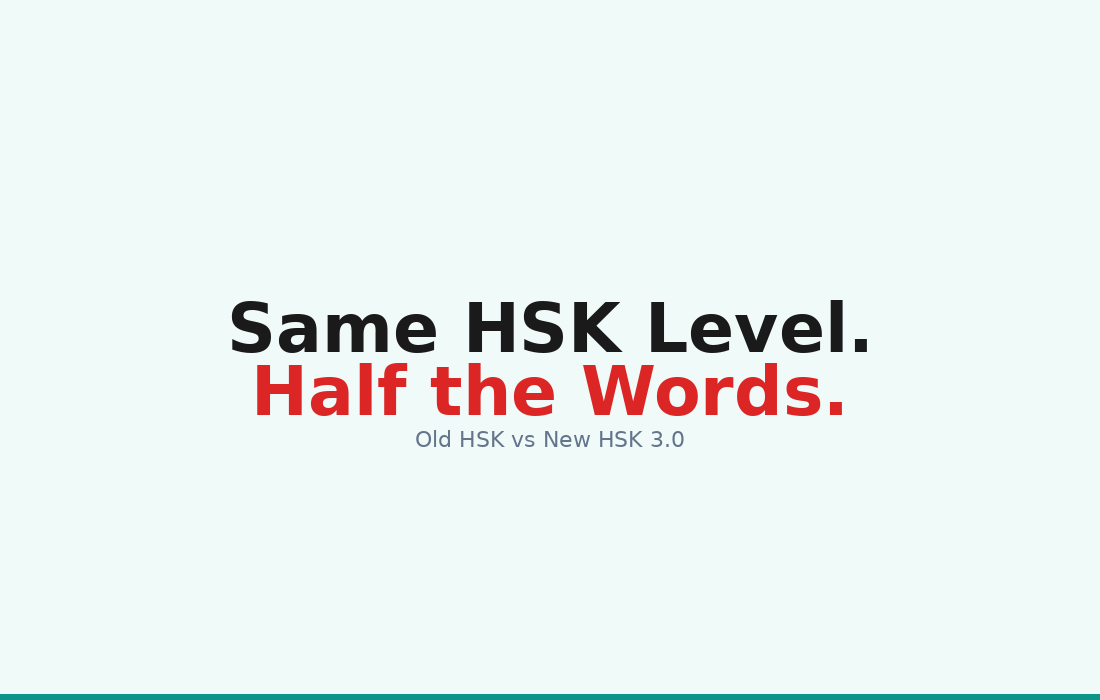
~49% of new HSK 2 vocab is words that used to be at HSK 3 or higher. Words like 爱好, 帮, 跟, 拿, 黑色, 红色, 头, 飞, 篮球, 自己 — all old HSK 3.
The implication: the difficulty ceiling went up, even though only 50 more new words were added. If you're studying with an old HSK 2 textbook, you're under-preparing by about 100 words.
That word: 奶茶 (nǎichá) — milk tea. Reflects modern Chinese daily life. Other "new-looking" words like 没意思, 路上, 小孩儿 are compound forms built from old HSK characters.
The new HSK 3.0 is a re-organization, not a vocabulary explosion.
If you already passed old HSK 2: you know roughly 43% of the new list automatically, but you'll need to study about 115 entries that moved down from HSK 3+ plus compound forms plus the one new word.
Use the "⬇ Moved down from old HSK 3+" filter in §02 to see them.
How Many Characters Do You Need to Write and Read?
The biggest news at this level isn't the 200 new words — it's the brand-new writing section. The old HSK 2 had none. For the first time, you must handwrite Chinese characters on the exam.
The new HSK 3.0 syllabus formally splits characters into two jobs:
- 书写字 (Must-write): you reproduce these by hand on the test
- 认读字 (Recognition): you only need to read these on sight
Understanding which is which is the single biggest planning question at this level.
HSK 1 + 2 combined
at HSK 2
(HSK 1 + 2)
1+ must-write char
6A · The 100 must-write characters (书写字)
Why one combined list? HSK 3.0 recognizes that handwriting Chinese is the slowest beginner skill. Rather than splitting between two levels, HSK 1 and HSK 2 share one 100-character must-write list, letting beginners build muscle memory on the highest-frequency characters first. From HSK 3 onward, each level adds its own dedicated must-write list (HSK 3 alone adds 150 more).
The 100 characters (in syllabus order)
Source: 《新版HSK考试大纲》, "HSK(一级)~(二级)书写字" (combined list, p.374).
6B · The 125 new recognition characters (认读字)
At this level, you must read an additional 125 characters (beyond HSK 1's 246), for a cumulative recognition target of 371 characters. These don't need to be handwritten — they appear in the listening transcripts and reading passages, and you need to recognize their meaning.
Recognition vs. writing — the working principle: anywhere a character is "in the wild" (signs, menus, your textbook), you should recognize it on sight. But for the test's writing section, only the 100 must-write characters appear as test targets.
Pinyin support: like at HSK 1, the reading section prints pinyin above every character — so 100% character recognition isn't strictly required to pass; the must-write knowledge is the harder bar.
The 125 new recognition characters are introduced through the vocab words themselves — you don't drill them in isolation. As you study the 200 vocab entries, each new character you encounter is one of those 125.
6C · What the writing section actually looks like
The fastest way to defuse writing-section anxiety is to see the questions. The new writing section has 10 items in 2 parts, takes about 10 minutes, and only tests characters from the 100 must-write list — with pinyin always supplied.
Complete the character
Items 51–55You see a word with one character missing a component, plus the pinyin. You write in the missing part to form the correct character.
Write the missing character
Items 56–60A sentence has a blank with the pinyin written above it. You handwrite the correct character from memory.
For full test-day logistics, scoring details, and the complete writing-section walkthrough, see our Complete New HSK 2 Guide. Need guided handwriting coaching with weekly mock tests on the official 2025 HSK 2 format? Our HSK 2 program at Mandarin Zone covers it.
📅 Book a Free Placement Call →7 Sentence Patterns the New HSK 2 Vocabulary Unlocks
HSK 1 vocabulary lets you produce isolated phrases — "你好", "谢谢", "我喜欢XX". the 200 new words let you produce complex sentences — comparisons, reasons, contrasts, completed actions. Here are the 7 patterns that the 200 new words unlock, each with 3 example sentences using only HSK 1+2 vocab.
Comparison: A 比 B + adj.
Use 比 (bǐ) to compare two things on some quality. The structure is rigid: subject + 比 + comparison-target + adjective. Don't add 很 / 非常 in this pattern — they're forbidden inside 比 sentences.
| Example | Pinyin | English |
|---|---|---|
| 我比他高。 | Wǒ bǐ tā gāo. | I'm taller than him. |
| 公交车比地铁慢。 | Gōngjiāochē bǐ dìtiě màn. | The bus is slower than the subway. |
| 中文比英文有意思。 | Zhōngwén bǐ Yīngwén yǒu yìsi. | Chinese is more interesting than English. |
Cause & effect: 因为... 所以...
A fixed pair: 因为 (yīnwèi) introduces the reason, 所以 (suǒyǐ) introduces the result. Both halves are typically used together at HSK 2 (you can drop one in advanced Chinese).
| Example | Pinyin | English |
|---|---|---|
| 因为下雨,所以我没去。 | Yīnwèi xià yǔ, suǒyǐ wǒ méi qù. | Because it rained, I didn't go. |
| 因为我累了,所以早点回家。 | Yīnwèi wǒ lèi le, suǒyǐ zǎo diǎn huí jiā. | Because I'm tired, I went home early. |
| 因为是妈妈的生日,所以我们一起吃饭。 | Yīnwèi shì māma de shēngrì, suǒyǐ wǒmen yìqǐ chī fàn. | Because it's Mom's birthday, we're eating together. |
Concession: 虽然... 但是...
虽然 (suīrán) = "although"; 但是 (dànshì) = "but". Together they signal "X is true, but Y is also true." Like 因为/所以, the pair is usually deployed together at this level.
| Example | Pinyin | English |
|---|---|---|
| 虽然累,但是很高兴。 | Suīrán lèi, dànshì hěn gāoxìng. | Although tired, I'm happy. |
| 虽然下雨,但是我还是去了。 | Suīrán xià yǔ, dànshì wǒ háishi qù le. | Although it rained, I still went. |
| 虽然他个子高,但是跑得不快。 | Suīrán tā gèzi gāo, dànshì pǎo de bù kuài. | Although he's tall, he doesn't run fast. |
Experiential aspect: V + 过
过 (guo) marks an action you've experienced in your life (or never experienced). It doesn't say when — just that it's part of your history. Often pairs with a frequency like 两次, 一次.
| Example | Pinyin | English |
|---|---|---|
| 我去过北京两次。 | Wǒ qù guo Běijīng liǎng cì. | I've been to Beijing twice. |
| 你看过这本书吗? | Nǐ kàn guo zhè běn shū ma? | Have you read this book? |
| 他没吃过这个菜。 | Tā méi chī guo zhège cài. | He hasn't tried this dish. |
Ongoing state: V + 着
着 (zhe) marks a static, continuing state — not an active progress. 门开着 = the door is in an open state; 他正在开门 = he is actively opening the door. Compare with 正在 in §09 confusions.
| Example | Pinyin | English |
|---|---|---|
| 门开着呢。 | Mén kāi zhe ne. | The door is open (right now). |
| 他坐着看书。 | Tā zuò zhe kàn shū. | He's reading while sitting. |
| 我等着你呢。 | Wǒ děng zhe nǐ ne. | I'm waiting for you. |
Result complement: V + 完 / 懂 / 到
Add a result word right after the verb to specify how the action ended. 完 = finished; 懂 = understood; 到 = arrived/got. The new HSK 2 introduces this pattern formally.
| Example | Pinyin | English |
|---|---|---|
| 我吃完饭了。 | Wǒ chī wán fàn le. | I've finished eating. |
| 我听懂了。 | Wǒ tīng dǒng le. | I understood (what was said). |
| 我在路上看到了他。 | Wǒ zài lùshang kàn dào le tā. | I saw him on the way. |
Imminent: 快要... 了
快要 (kuàiyào) … 了 = "about to..." It marks an action that will happen very soon. The 了 at the end is required.
| Example | Pinyin | English |
|---|---|---|
| 快要下雨了。 | Kuàiyào xià yǔ le. | It's about to rain. |
| 我快要回家了。 | Wǒ kuàiyào huí jiā le. | I'm about to head home. |
| 电影快要开始了。 | Diànyǐng kuàiyào kāishǐ le. | The movie's about to start. |
Which Words Get Confused Most? (5 Pairs)
After teaching this level to thousands of students at our Sanlitun teaching center since 2008, these are the 5 word pairs that trip people up most. Every pair is strictly within the HSK 1–2 vocabulary range — no HSK 3+ leakage — so you can master them at this level.
了 vs 过
Both are aspect particles, but they answer different questions. 了 = "the action happened (at a specific time)"; 过 = "the action ever happened (in your life)." HSK 1 introduced 了; HSK 2 introduces 过.
| Word | Function | Example |
|---|---|---|
| 了le | Completed action, often at a specific past time | 我昨天吃了饺子。 Wǒ zuótiān chī le jiǎozi. I ate dumplings yesterday. |
| 过guo | "Ever experienced" — life history, no specific time | 我吃过饺子。 Wǒ chī guo jiǎozi. I've eaten dumplings (before). |
着 vs 正在
Both mark ongoing time, but they describe different kinds. 着 = a state that continues (static); 正在 = an action currently in progress (dynamic). The English "is X-ing" maps to 正在; "is in state X" maps to 着.
| Word | Function | Example |
|---|---|---|
| 着zhe | Static state that continues (the result of an action persists) | 门开着。 Mén kāi zhe. The door is open. (state) |
| 正在zhèngzài | Active progress (something happening right now) | 他正在开门。 Tā zhèngzài kāi mén. He's (in the act of) opening the door. |
因为... 所以... vs 虽然... 但是...
Both are fixed pairs that join two clauses. 因为/所以 = cause and effect (the second follows from the first). 虽然/但是 = concession (the second contrasts with the first). Never mix the halves: 因为 goes with 所以, 虽然 goes with 但是.
| Pair | Function | Example |
|---|---|---|
| 因为...所以... | Cause → effect | 因为下雨,所以我没去。 Because it rained, I didn't go. |
| 虽然...但是... | "X is true, but Y is also true" | 虽然下雨,但是我还是去了。 Although it rained, I still went. |
一会儿 vs 一下
Both make a verb sound brief and casual, but they describe different things. 一会儿 (yíhuìr) = "for a short period of time" (duration). 一下 (yíxià) = "once, briefly" (a single attempt or try).
| Word | Function | Example |
|---|---|---|
| 一会儿yíhuìr | A short while (duration) | 请等一会儿。 Please wait a moment. |
| 一下yíxià | Once, briefly (a quick try) | 请等我一下。 Wait for me (one moment). |
真 vs 太...了
Both intensify adjectives, but the flavor differs. 真 = "really" (simple, neutral). 太...了 = "too" / "extremely" (often with a complaining or impressed tone).
| Word | Function | Example |
|---|---|---|
| 真zhēn | Plain emphasis (neutral) | 这个菜真好吃! This dish is really tasty! |
| 太...了tài... le | Excessive — usually complaining or impressed | 这个菜太贵了! This dish is too expensive! |
These 5 confusions account for roughly 60% of the grammar errors we see at this level in mock tests. Our small-class HSK 2 program at Mandarin Zone walks through every distinction with native-speaker drills, weekly mock tests on the 2025 HSK 2 format, and personal feedback from teachers with 10+ years of experience.
📅 Book a Free Placement Call →Free Downloads
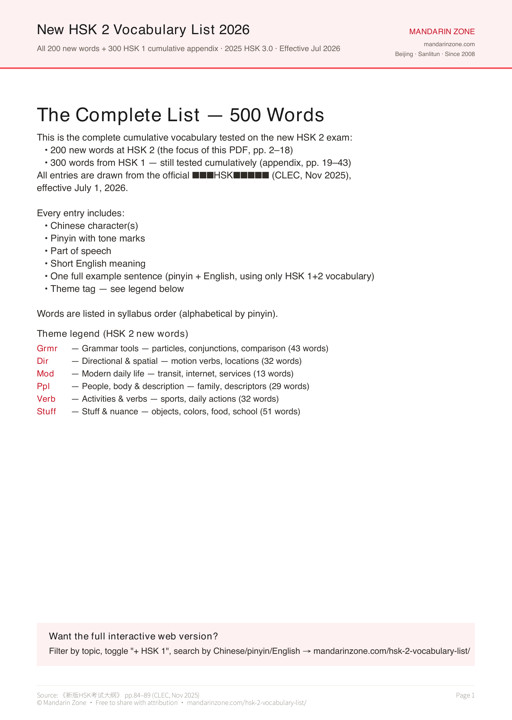
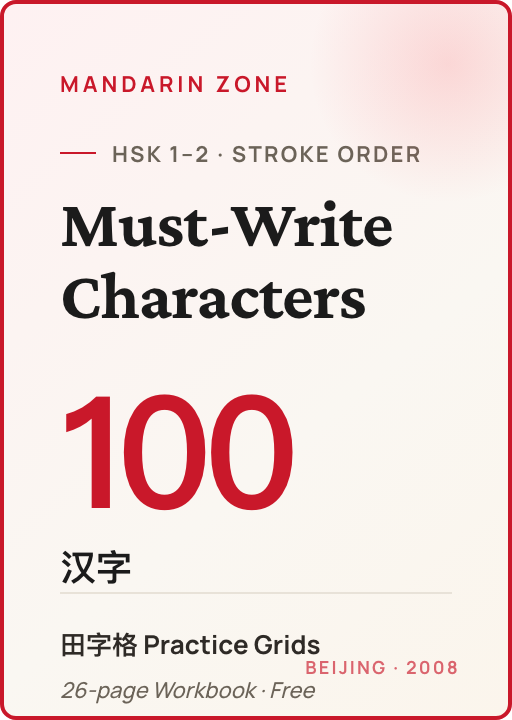
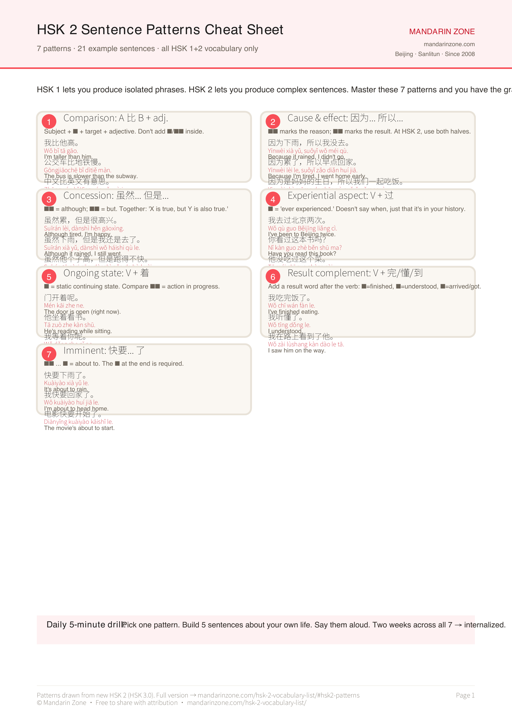
More Free Study Resources
Frequently Asked Questions About the New HSK 2
For learners who skipped HSK 1
I never took HSK 1 — can I jump to HSK 2?
Yes. The HSK has no prerequisites — you can register for any level that matches your ability, and many learners take HSK 2 as their first-ever HSK exam. But be aware: HSK 2 is cumulative, so all 500 words (HSK 1's 300 + the 200 new) are fair game on the test, not just the 200. Use the "+ Add HSK 1 (300 words)" toggle in §02 to study both lists side by side.
How much HSK 1 vocabulary do I really need to know?
All 300. HSK 1 vocabulary appears in every section of HSK 2 — listening, reading, and writing. The 100 must-write characters are also entirely grounded in HSK 1's character set. If you skipped HSK 1, treat the 300-word HSK 1 list as the floor; your real study target is 500 words, not 200.
I learned ~500 random Chinese words on apps like Duolingo — am I HSK 2 ready?
Probably not directly. HSK is syllabus-specific; popular language-app vocab overlaps about 30–40% with the official HSK 1+2 list. Run through the cumulative 500-word list in §02 (use the "+ Add HSK 1" toggle), mark the unknowns, then focus on the gaps. A free placement test with one of our teachers will give you a definitive answer.
Will I really have to handwrite characters on the test?
Yes. The writing section is a 10-question handwriting test using the 100 must-write characters shared between HSK 1 and HSK 2. It can't be skipped or typed. The good news: it's only ~10 minutes of the exam, pinyin is always supplied, and the 100 characters are high-frequency basics (你, 我, 是, 不, 一, 二, 三 …). See §06C for actual sample questions.
For old HSK 2.0 graduates
I have an old HSK 2 certificate — is it still valid?
Yes. HSK certificates do not expire — your old HSK 2 cert is permanently valid. Re-test only if you specifically want the new 2026-syllabus version on your record (some universities and employers may begin to prefer the new cert from late 2026 onward, but the old one remains a recognized proficiency proof).
What's actually different between old and new HSK 2 vocabulary?
See §05 for the full breakdown. Headline: about 49% of new HSK 2 vocab moved down from old HSK 3+, and only ~43% are direct carryovers from old HSK 1–2. So an old HSK 2 holder needs to study roughly 115 new entries to be ready for the new HSK 2. Use the "⬇ Moved down from old HSK 3+" toggle in §02 to see them.
For HSK 1 graduates
I just passed HSK 1 — what's the fastest order to learn the 200 new words?
See §03 closing for the full recommended order. Short version: grammar tools first (43 words like 比, 因为, 所以, 虽然, 着, 过) — they're the most abstract but unlock the most sentence patterns. Then directional system (32 words), people + body (29), verbs + modern (45), and stuff/nouns last (51) as exam-time review fuel.
For K-12 students and parents
Is HSK 2 appropriate for a 10-year-old?
Yes. HSK 2 is widely used as a year-end goal in primary-school Mandarin programs worldwide. The vocabulary is concrete (colors, body parts, simple verbs), there is no speaking section, and pinyin is supplied throughout the reading section. The writing section requires fine motor control — most children 8+ handle it fine after a few weeks of stroke-order practice. For very young learners (ages 5–7), HSK 1 is the more appropriate first goal.
Do schools accept HSK 2 certificates?
Yes for proficiency benchmarking. Most international Mandarin programs, IB schools, and bilingual programs recognize this cert as a clear A2-level proficiency proof for primary and middle-school years. For university admissions in China, however, HSK 4+ is the typical threshold — HSK 2 is a foundational milestone, not an admissions credential. See our HSK Requirements at Chinese Universities guide for level-by-level thresholds.
For heritage learners
I'm a heritage speaker — do I really need to study the must-write characters?
Yes, if you want the cert. The writing section is the same exam for all candidates. Heritage learners who grew up speaking Mandarin often skip character writing in childhood — but the HSK 2 writing section specifically requires handwriting 10 characters from the 100-character list. The good news: the 100 characters overlap heavily with characters you'd already recognize from family conversations and short messages, so most heritage candidates only need stroke-order practice, not character recognition.
For practical / in-China learners
Can I survive in China with just HSK 2 vocabulary?
Yes for basic survival. With the cumulative 500-word base you can: order food, ask directions, take a taxi or subway, handle simple shopping, describe how you feel (sick, tired, happy), and have short conversations about family, work, study, hobbies, and weather. What you can't yet do: read WeChat messages fluently, follow Chinese TV/news, or hold nuanced conversation. For that, you'll want HSK 3–4 territory — see our HSK 3 vocabulary list as your next step.
For everyone
Are the example sentences in this list strictly HSK-2-only?
Yes — every example sentence uses only cumulative HSK 1+2 vocabulary (498 words, 371 unique CJK characters), validated programmatically. We deliberately exclude common-but-out-of-syllabus characters like 用 / 重 / 难 / 带 / 马 / 心 that beginners encounter elsewhere. This means every sentence here is actually deployable at your level.
How accurate is the "moved-down from old HSK 3" data in §05?
The numbers come from a Mandarin Zone hand-audit (May 2026) against the 2010-era HSK 2.0 syllabus and our pre-2026 archive. The broad finding (~half moved down from HSK 3+, only 1 genuinely new word) is robust. Per-word level estimates have a "medium" confidence flag on about 38% of entries — these may be off by one level. For the blog's purpose (showing the magnitude of the reorganization), the estimates are reliable; for precise per-word claims, we recommend cross-checking against a published authoritative source.
Where can I download the PDF version?
Three places on this page: (1) the green callout near the top of the article, (2) §10 Downloads for the full set including the must-write workbook and sentence-pattern cheat sheet, and (3) the link card at the top of §11.

Ready to Pass the New HSK 2?
Mandarin Zone has been preparing students for HSK in Beijing's Sanlitun district since 2008 — 18 years of focused HSK instruction. With a 90% pass rate across 5,000+ students from 40+ countries, our track is built around the 2026 syllabus: the cumulative 500-word vocabulary in topic clusters, the new grammar step-up, structured handwriting coaching for the writing section, and weekly mock tests on the official 2025 format.
- Small in-person classes in Beijing
- Live online classes (any timezone)
- Native teachers with HSK exam experience
- Structured handwriting coaching for the new writing section
- Weekly mock tests on the 2025 exam format
- Personal study plan covering all 500 cumulative words