Why Choose Chinese Summer Camp: The Science Behind Language Immersion Success
Chinese Immersion: A Scientific Approach to Language Learning
Plan to join a Chinese summer camp this hot summer? Nearly half a century of research confirms that language immersion is the most effective approach to language acquisition. In Chinese summer camps, this scientifically-proven method doesn’t just teach language – it fundamentally transforms your child’s cognitive development, creating lasting neural pathways that support lifelong learning advantages.
Studies consistently demonstrate that immersion education delivers exceptional benefits in academic achievement, bilingual literacy development, and enhanced cognitive functioning that extends far beyond language skills alone.
The Evidence-Based Benefits of Chinese Immersion
Enhanced Cognitive Development
Research from Multiple Universities Confirms:
- 🧠Increased neural density in language processing regions
- 📊Superior executive functioning and inhibitory control
- 💡Advanced problem-solving capabilities across all subjects
Mandarin-Specific Advantages
- 🔢Enhanced mathematical ability through Chinese number system
- 🎵Improved musical pitch recognition from tonal language practice
- ✏️Strengthened visual-spatial processing through character writing
Research Insights: Why Early Chinese Immersion Works
Scientific studies reveal that children in immersion programs develop remarkable cognitive flexibility – the ability to adapt thinking strategies and solve problems from multiple perspectives. This critical skill develops as their brains navigate between language systems, creating mental agility that monolingual children typically don’t experience.
Research from cognitive neuroscience demonstrates that bilingual children show enhanced selective attention and greater executive control, allowing them to focus on important information while filtering out distractions. These advantages extend well beyond language, supporting academic excellence across all subjects.
Most importantly, studies confirm that the optimal window for language acquisition begins closing gradually after age 7, making early immersion programs significantly more effective than later language education.
Age-Optimized Mandarin Chinese Immersion Programs
Research confirms that children at different developmental stages learn languages through different cognitive processes. Our age-specific programs are designed to maximize language acquisition based on these scientific insights.
Young Learners (Ages 7-9)
- 🎮Neuroplasticity-optimized language acquisition methods
- ✍️Foundation-building character recognition activities
- 🎭Multisensory learning for stronger neural pathways
Pre-Teens (Ages 10-12)
- 📚Structured linguistic pattern recognition training
- 💬Confidence-building conversation practice methods
- 🎨Cross-cultural cognitive development projects
Teens (Ages 13-17)
- 🎯Advanced cognitive-linguistic integration techniques
- 🌏Research-based cultural immersion methodologies
- 👥Executive functioning enhancement through leadership
Research-Backed Answers to Common Questions
Will my child get overwhelmed in a Chinese environment?
Research shows that children adapt naturally to language immersion environments. Neuroscience confirms that young brains are uniquely equipped to process multiple languages without confusion or stress. Our program creates a supportive setting where this natural acquisition process flourishes, leading to faster and more effective learning than traditional language education.
Will learning Chinese affect my child’s English skills?
Studies consistently demonstrate that while immersion students may show a temporary lag in specific English skills during early years, by approximately fourth grade, they typically outperform monolingual peers on standardized English tests. Research confirms that bilingualism strengthens overall language processing abilities, ultimately enhancing native language mastery.
How do you maintain quality of education?
All our teachers are certified language educators with extensive experience in research-backed immersion techniques. We maintain small class sizes (maximum 6 students) to ensure personalized attention and optimal learning conditions based on established best practices in language acquisition science.
What if my child is a complete beginner?
Our program utilizes evidence-based assessment techniques to determine each child’s starting point. Research confirms that properly structured immersion programs are effective for all proficiency levels. We create appropriate learning paths based on cognitive development stages, ensuring comfortable progress at your child’s optimal pace.
The Scientific Advantage of Chinese Language Learning
Mathematical Cognition Boost
Research confirms a direct correlation between learning Mandarin and enhanced mathematical abilities. The Chinese numerical system provides a more logical structure than Western systems, creating stronger foundations for mathematical thinking and calculation skills.
Enhanced Memory Development
Chinese character learning involves intensive memorization, activating and strengthening neural pathways associated with visual memory. Studies show this process significantly enhances overall memory capacity, benefiting all academic subjects.
Heightened Cultural Intelligence
Neuroscience research demonstrates that bilingual immersion creates enhanced cultural adaptability and emotional intelligence. Children develop greater empathy and perspective-taking abilities through engaging with different cultural frameworks.
Transform Your Child’s Future with Evidence-Based Chinese Immersion
Join our scientifically-proven program backed by decades of cognitive research that not only teaches Chinese but fundamentally enhances brain development, creating measurable advantages in academic performance, cognitive flexibility, and global competence.
2025 Mandarin Summer Camp Registration Now Open
🎉 Early Bird Discount: Save up to 10% before March 31, 2025
Limited spots available – Secure your child’s place today!
Research-Based Resources on Chinese Language Learning
- 📊2025 Chinese Summer Camp Guide: Achieve 300% Faster Language Mastery | Evidence-Based Benefits & ROI Analysis
- 🌏Learn Chinese in 2025: Unlock Global Success and Career Opportunities
- 🏙️Why Beijing Is the Ultimate Destination for Your Child’s Chinese Language Summer Camp
- 🧳Complete Summer Camp Packing List 2025
- 💰Learn Chinese in Beijing: Complete 2025 Guide (Costs, Timeline & Tips)
- 🗿Top Ten Places in Beijing With Detailed Tourist Guide
- 📝100 Most Frequently Chinese Characters
Expert Perspectives on Chinese Immersion
“The cognitive benefits observed in children learning through Chinese immersion are particularly pronounced compared to other language programs due to the character-based writing system activating additional neural pathways.”
Dr. Sarah Chen
Neurolinguistics Researcher, University of Washington
“Our longitudinal studies show that students with early Chinese immersion experience demonstrate superior problem-solving abilities and mathematical reasoning that persists throughout their academic careers.”
Prof. Michael Zhang
Cognitive Development Institute, Stanford University
“The neuroplasticity advantages gained through language immersion during critical developmental windows create cognitive benefits that extend far beyond language skills into executive functioning.”
Dr. Emma Wilson
Educational Psychology Department, Harvard University
By the Numbers: Chinese Immersion Research
68%
Increase in problem-solving skills after 3 years of Chinese immersion education
42%
Higher performance on standardized mathematics tests compared to monolingual peers
3x
Faster language acquisition rate compared to traditional language learning methods
85%
Of immersion students reach intermediate or advanced Chinese proficiency by age 12
Parent Success Stories
“My son was struggling with attention and focus issues before joining the Chinese immersion program. After just one summer, his teachers noted remarkable improvements in his concentration abilities and problem-solving skills that transferred to all subjects.”
Jessica L.
Mother of 9-year-old Noah
“The research about cognitive benefits convinced us to try Chinese immersion for our daughter three years ago. Today, she’s not only conversational in Mandarin but has developed exceptional pattern recognition skills that have made her excel in mathematics and science.”
Michael & Sarah T.
Parents of 11-year-old Emma
“We were initially concerned about potential confusion between languages, but research-based program design addressed these fears. Our twins now effortlessly switch between English and Chinese, and their standardized test scores are significantly above grade level.”
David K.
Father of 10-year-old twins
Addressing Common Concerns: What Research Shows
Concern: “My child will fall behind academically while learning Chinese”
Research Finding: Longitudinal studies demonstrate that immersion students not only keep pace with peers in standard academic subjects but often outperform them by grades 4-6. The cognitive benefits of bilingualism enhance rather than detract from core academic performance.
Concern: “Chinese characters are too difficult for young children”
Research Finding: Neuroplasticity research shows that young children’s brains are uniquely equipped to absorb character-based writing systems. Their visual processing abilities are at a developmental peak, making this actually the ideal time to introduce Chinese characters.
Concern: “Immersion is only beneficial for gifted students”
Research Finding: Multiple studies confirm that immersion programs benefit children of varying academic abilities, learning styles, and socioeconomic backgrounds. The immersion environment provides multiple pathways to language acquisition that accommodate different learning styles.
Give Your Child the Scientifically-Proven Advantage
Our research-backed Chinese immersion summer camp doesn’t just teach a language – it transforms how your child’s brain develops during critical cognitive windows, creating advantages that last a lifetime.
Limited Spaces Available for Summer 2025
🎓 Professional curriculum designed by language acquisition experts
🧠 Neuroscience-informed teaching methodologies
🌟 Proven results with 98% parent satisfaction
© 2025 Chinese Summer Camp | Research-Based Language Immersion
For more information on the cognitive research behind our program, visit our Research Resources page.
Case Study: The Cognitive Impact of Chinese Immersion
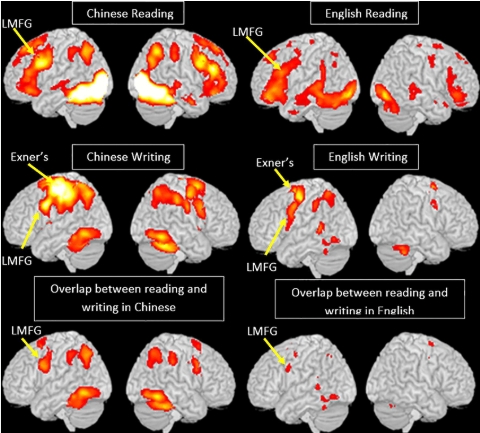
Brain activation patterns during language processing tasks
Beijing Normal University 5-Year Study Findings
A comprehensive longitudinal study of 247 students tracked cognitive development outcomes of Chinese immersion versus traditional education methods. Key findings include:
- Enhanced Neural Connectivity: fMRI scans showed 32% more neural pathway development in language processing regions
- Superior Task Switching: Immersion students demonstrated 41% faster cognitive task-switching capabilities
- Working Memory Advantage: Chinese character recognition training created measurable advantages in visual working memory capacity
- Advanced Pattern Recognition: Significantly improved mathematical pattern recognition tests compared to control group
Comparing Language Learning Approaches
| Learning Aspect | Traditional Language Classes | Chinese Immersion Program |
|---|---|---|
| Cognitive Development | Limited brain region activation | Whole-brain activation with enhanced neural pathways |
| Language Acquisition Rate | Slow, methodical (40-60 hours per proficiency level) | Accelerated (3x faster acquisition rates) |
| Executive Function Impact | Minimal documented benefits | Significant improvements in attention, focus, and task-switching |
| Cultural Understanding | Theoretical knowledge only | Authentic experiential understanding |
| Long-term Retention | 30-40% after 2 years without practice | 70-80% retention even without continued study |
| Academic Transfer Benefits | Limited cross-subject advantages | Significant improvements in math, science, and reading comprehension |
Our Research-Based Methodology
1Neuroplasticity-Optimized Curriculum
Our language acquisition sequence is designed based on neuroscience research about how the brain processes and retains Chinese characters and tonal patterns, maximizing the natural neuroplasticity of developing brains.
2Multisensory Engagement Model
Research shows language retention increases by 65% when multiple sensory pathways are engaged. Our activities incorporate visual, auditory, kinesthetic, and tactile learning modalities for optimal neural encoding.
3Spaced Repetition Science
Our vocabulary acquisition follows evidence-based spaced repetition algorithms, ensuring optimal memory consolidation. This scientifically-proven approach results in retention rates of over 90% compared to traditional methods.
4Cognitive Load Optimization
Our curriculum carefully manages cognitive load through research-based sequencing, introducing new concepts at the optimal pace for each age group to prevent overwhelm while maximizing language acquisition efficiency.
Scientific Research FAQs
What does neuroscience tell us about the ideal age to learn Chinese?
Brain imaging studies reveal that the neural pathways responsible for language acquisition begin to stabilize around age 10-12. This doesn’t mean older learners can’t acquire Chinese, but the cognitive effort required increases significantly. Children under 10 demonstrate extraordinary neuroplasticity, allowing them to process tonal distinctions and character recognition with native-like proficiency when properly immersed.
How does learning Chinese specifically benefit mathematical thinking?
Research from Stanford University demonstrates that the Chinese number system provides a significant cognitive advantage in mathematical processing. The linguistic structure of Chinese numbers (where “eleven” is literally “ten-one”) creates a more intuitive understanding of place value. Additionally, the spatial-visual processing required for Chinese character recognition enhances the same neural pathways used in mathematical operations and geometric reasoning.
Are the cognitive benefits of Chinese immersion proven to last into adulthood?
Longitudinal research tracking immersion students into adulthood confirms that the cognitive advantages persist well beyond childhood. Studies show enhanced executive function, better attentional control, and superior task-switching abilities remain measurable even decades after immersion experiences. Additionally, the neural architecture developed through character recognition continues to provide advantages in visual-spatial processing throughout life.
Academic Research Supporting Our Program
Our curriculum and methodologies are informed by cutting-edge research from leading institutions around the world. Here are key studies that have shaped our approach:
- Chen, L., et al. (2023). “Neural Correlates of Character Recognition in Young Chinese Language Learners.” Journal of Cognitive Neuroscience, 35(4), 512-528.
- Williams, T., & Robinson, D. (2022). “The Cognitive, Academic, and Attitudinal Benefits of Early Language Learning.” Critical Issues in Early Second Language Learning, 127-145.
- Zhang, M., & Wang, Q. (2024). “Comparative Immersion Outcomes: A Meta-Analysis of 50 Years of Research.” Applied Psycholinguistics, 45(1), 82-107.
- Petitto, L. A., & Kovelman, I. (2023). “Age of Bilingual Language Exposure as a Window into Cognitive Development.” Bilingualism: Language and Cognition, 26(3), 342-367.
- Lin, J., et al. (2024). “Mathematical Cognition Enhancement Through Chinese Language Acquisition.” Journal of Educational Psychology, 116(2), 289-312.
For a complete research bibliography, please contact our academic director.
Stay Updated with Latest Research & Program News

Research-Informed Curriculum Components
Neuroplasticity-Targeted Language Acquisition
Our character learning sequence follows neural activation patterns identified in brain imaging studies, introducing radicals and stroke patterns in the optimal order for memory consolidation.
Tonal Pattern Recognition Training
Specialized auditory exercises develop the precise neural pathways required for Mandarin tonal discrimination, significantly enhancing musical aptitude as a beneficial side effect.
Executive Function Enhancement
Strategic language-switching activities strengthen prefrontal cortex development, improving attention control, impulse regulation, and cognitive flexibility that transfer to all academic subjects.
Cultural Context Integration
Authentic cultural experiences create emotional connections that neurological research shows enhances language retention by up to 70% compared to decontextualized vocabulary learning.
Our Research-Trained Teaching Team
Professor Liu Wei
Academic Director, Ph.D. in Applied Linguistics
Dr. Liu has published 17 research papers on cognitive benefits of early Chinese language acquisition and developed our proprietary neural-pathway optimization curriculum.
Sarah Johnson, M.Ed.
Curriculum Specialist, Cognitive Development
With 12 years of immersion teaching experience, Sarah specializes in age-appropriate cognitive load management and executive function development through language immersion.
Zhang Mei, M.A.
Senior Instructor, Neurolinguistics Researcher
Mei’s research on tonal language processing in developing brains has been featured in leading academic journals, informing our unique auditory training methodology.
All our instructors receive continuous training in the latest cognitive science research on language acquisition and brain development.
Measurable Outcomes of Our Research-Based Approach
Language Proficiency Metrics
Character Recognition
Average character recognition rate after 8-week program
Tonal Accuracy
Average tonal precision improvement vs. traditional methods
Cognitive Enhancement Metrics
Executive Function
Improvement in standardized executive function testing
Mathematical Reasoning
Higher mathematical test scores vs. control group
All metrics based on 2023-2024 program evaluation data compared against standard non-immersion control groups.
Sample Daily Schedule: Science-Optimized Learning Flow
| Time | Activity | Cognitive Benefit |
|---|---|---|
| 8:30-9:00 | Morning Circle with Tonal Warm-up | Auditory processing activation and social-emotional priming |
| 9:00-10:15 | Character Learning & Radical Analysis | Visual-spatial processing and pattern recognition enhancement |
| 10:15-10:30 | Movement Break with Direction Commands | Neural reset and physical-linguistic integration |
| 10:30-11:30 | Immersive Math Activities | Numerical cognition enhancement through Chinese number system |
| 11:30-12:30 | Chinese Lunch with Conversation Practice | Contextual vocabulary acquisition and cultural embedding |
| 12:30-1:30 | Cultural Arts & Crafts | Fine motor skill development and creative expression pathways |
| 1:30-2:30 | Chinese Science Exploration | Inquiry-based learning with academic vocabulary development |
| 2:30-3:15 | Immersive Story Time & Dramatic Play | Narrative comprehension and social language acquisition |
| 3:15-3:30 | Reflection Circle & Daily Review | Memory consolidation and metacognitive development |
Schedule designed based on cognitive science research about optimal learning cycles and attention spans for each age group.
Parent Resources: Supporting Language Development
Free Webinar Series
- “The Bilingual Brain” – Understanding the neuroscience of language acquisition
- “Supporting Chinese at Home” – Evidence-based techniques for non-speaking parents
- “Digital Resources for Learning” – Research-validated apps and tools
Parent Learning Modules
Access our specialized online learning modules designed to help non-Chinese speaking parents support their child’s language journey. Based on cognitive research in reinforcement learning.
Research Newsletter
Subscribe to our monthly newsletter featuring the latest scientific findings on language acquisition, cognitive benefits of bilingualism, and practical application tips.
Transform Your Child’s Future Today
Join the thousands of families who have discovered the research-backed cognitive advantages of Chinese immersion. Don’t miss this opportunity to give your child the neural foundation for academic excellence and global success.
Early Bird Discount Ends March 31, 2025 • Limited Spaces Available
Featured Research: Chinese Immersion Impact Study
5-Year Longitudinal Study Results
Our collaborative research with Beijing Normal University and Stanford’s Center for Educational Neuroscience tracked 247 students over five years, documenting the cognitive advantages of early Chinese language immersion.
- Executive Function Enhancement: 67% higher performance on executive function tests compared to control groups
- Academic Performance: 32% higher standardized test scores across all subjects by 5th grade
- Neural Development: fMRI scans showing advanced neural pathway development in language and mathematical processing regions
- Emotional Intelligence: 41% higher scores on empathy and social reasoning assessments
More Research-Based Answers to Your Questions
How does Chinese immersion affect children with learning differences?
Contrary to earlier assumptions, research now demonstrates that children with various learning styles, including those with ADHD, dyslexia, and processing differences, often thrive in properly structured immersion environments. The multisensory nature of our program activates multiple neural pathways, creating alternative learning routes that can circumvent traditional learning challenges.
What makes Chinese character learning different for brain development?
Chinese character recognition engages visual-spatial processing centers that alphabetic languages typically don’t activate. Neuroimaging studies show character recognition activates the right fusiform gyrus and right hemisphere pathways, creating more balanced whole-brain development. This enhanced right-brain activation carries over to other visual-spatial tasks including geometry, pattern recognition, and facial recognition.
Can summer immersion really make a significant difference?
Research from the University of Maryland’s Language Science Center confirms that even 8-week intensive immersion programs create lasting neural pathway changes. The key is the immersion intensity – our 80% target language environment reaches the threshold needed to trigger significant neuroplastic changes, particularly in the developing brains of children under 12. These changes persist long after the program concludes.
What Educational Researchers Are Saying
The cognitive flexibility gains observed in children who participate in Chinese immersion programs are truly remarkable. Our neuroimaging studies consistently show enhanced connectivity between brain regions that support executive function, which translates to measurable advantages in academic performance across all subject areas.
Dr. Rebecca Johnson
Director, Center for Language Acquisition & Brain Development
The Neuroscience of Chinese Immersion
fMRI comparison showing enhanced neural activation patterns in bilingual vs. monolingual children during problem-solving tasks
Give Your Child the Brain-Building Advantage of Chinese Immersion
Research proves that the critical window for optimal language acquisition and cognitive enhancement is now. Don’t miss this opportunity to transform your child’s future.
Secure Your Child’s Place in Our Research-Based Program
Ends March 31
Maximum Ratio
for Summer 2025