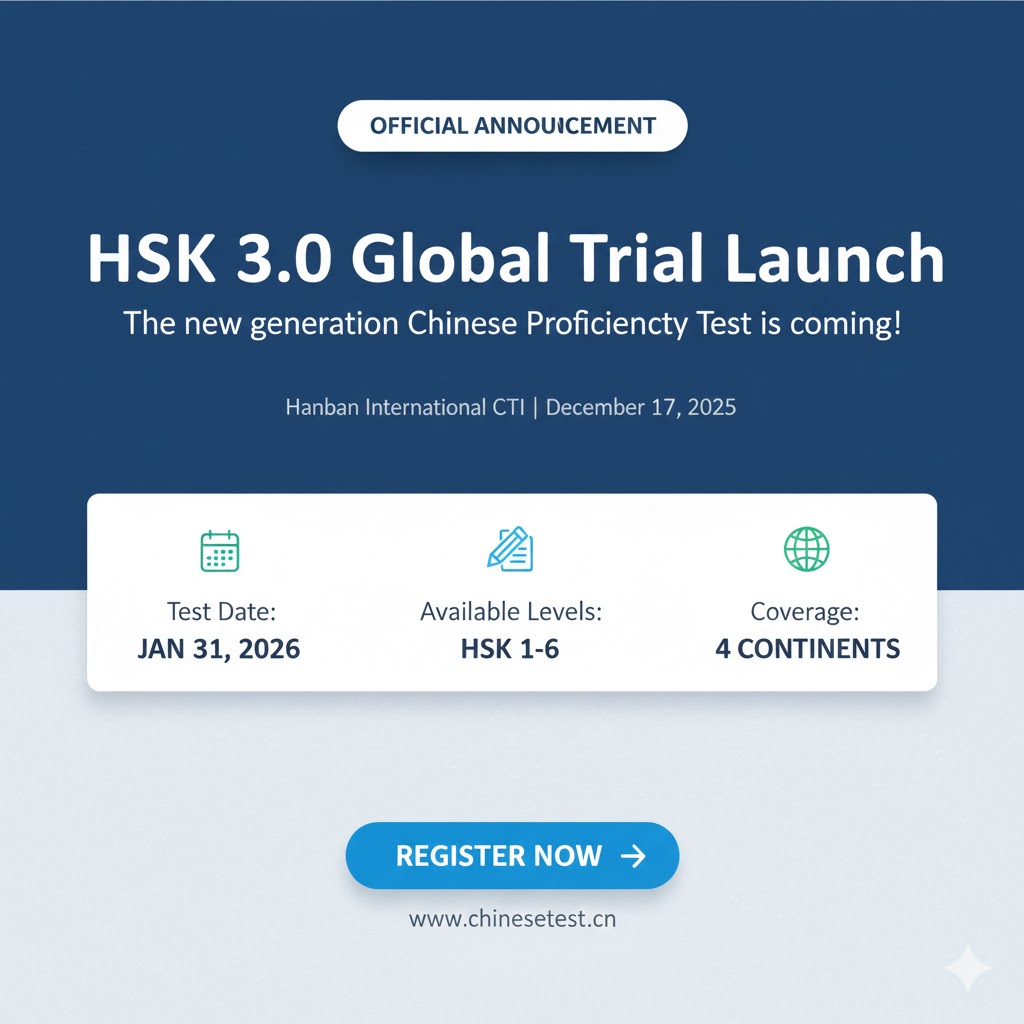
HSK 3.0 Is Coming: What Chinese Learners Need to Know
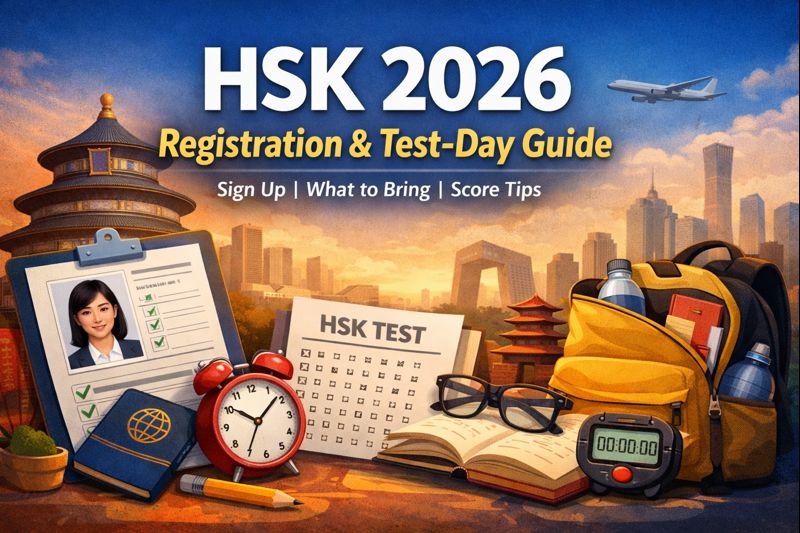
HSK 3.0 will be officially launched worldwide on December 13, 2026. If you are learning Chinese, preparing for the HSK exam, planning to study in China, or simply want to understand your Chinese proficiency level, this is an important update to know about.
The new HSK introduces a major upgrade to the Chinese Proficiency Test, including a new Three Stages, Nine Levels framework and changes to the skills and content assessed in the exam.

So, what exactly is HSK 3.0, and what does it mean for Chinese language learners?
What Is HSK 3.0?
The HSK (Hanyu Shuiping Kaoshi) is the internationally recognized Chinese language proficiency test for non-native Chinese speakers.
HSK 3.0 updates the existing testing system to provide a more comprehensive assessment of Chinese proficiency. Instead of the traditional six-level framework, the new system uses three stages and nine levels, covering elementary, intermediate, and advanced Chinese proficiency.
The new HSK is designed to provide a more comprehensive assessment of Chinese proficiency and practical language skills.
When Will HSK 3.0 Start?
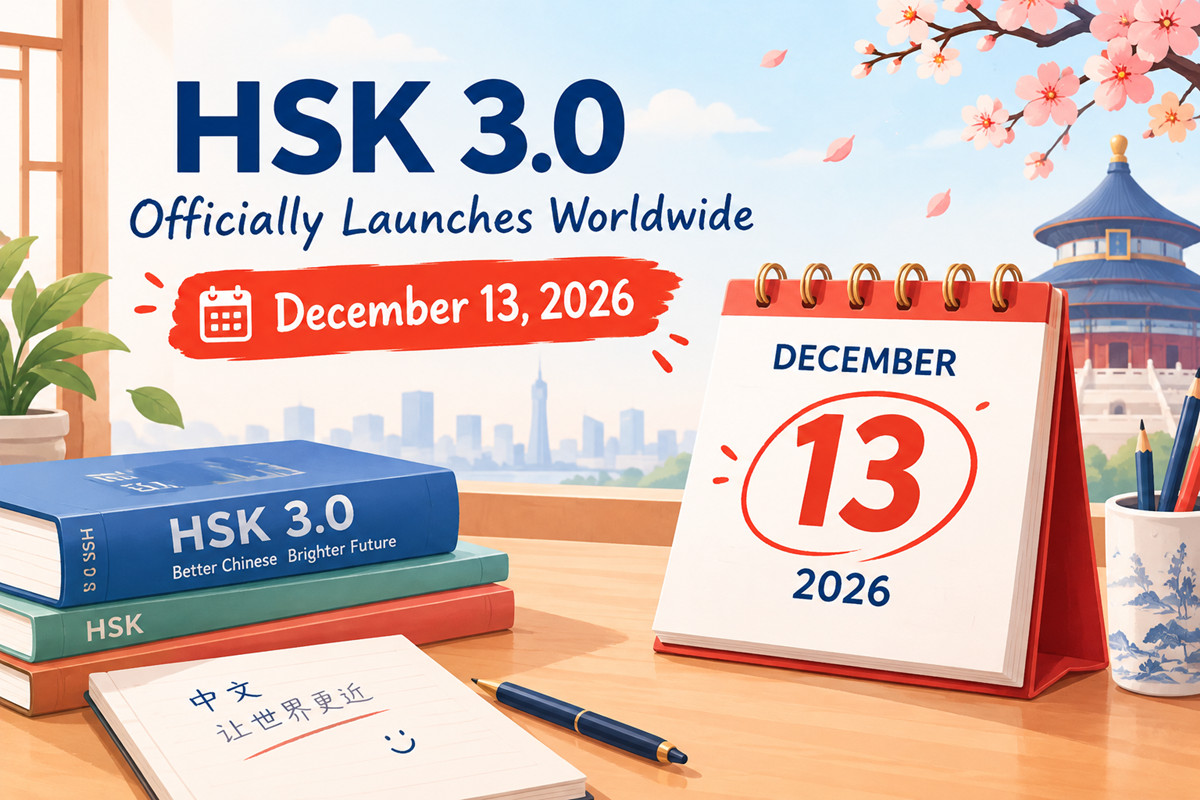
The official worldwide launch date for HSK 3.0 is December 13, 2026.
According to the official announcement, the December 13, 2026 test will be available in both paper-based and internet-based formats, depending on the test center. Registration deadlines are currently listed as:
- Paper-based: November 16, 2026
- Internet-based: December 3, 2026
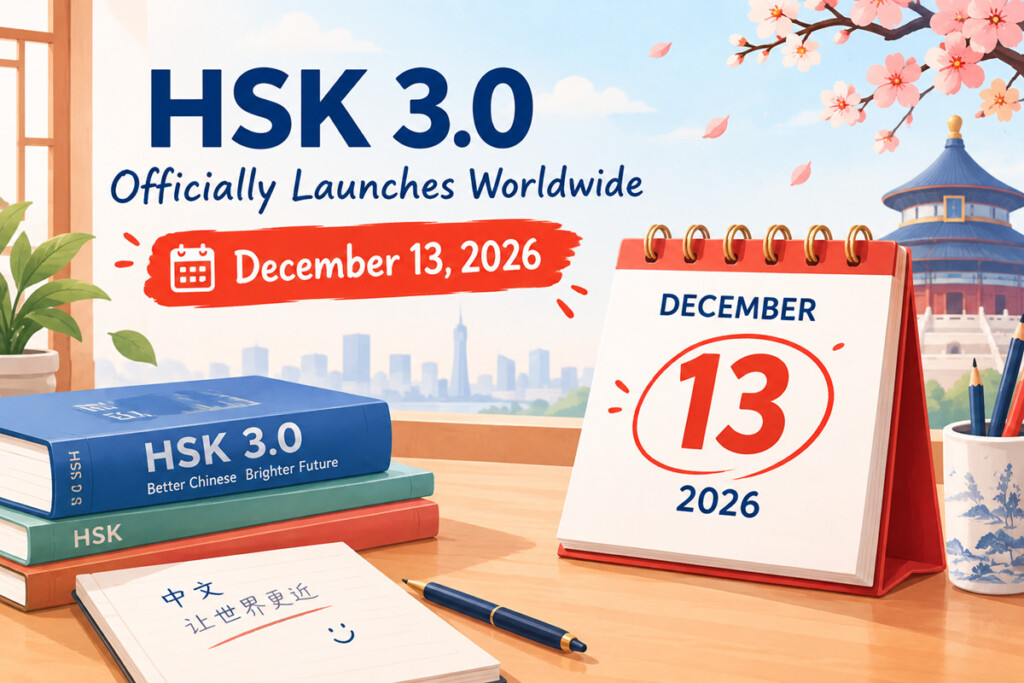
Students should check their local test center for the available test format and registration details.
What Are the New HSK Levels?
One of the biggest changes in the new HSK is the move from the traditional six-level system to a Three Stages, Nine Levels framework:
- Elementary: Levels 1–3
- Intermediate: Levels 4–6
- Advanced: Levels 7–9
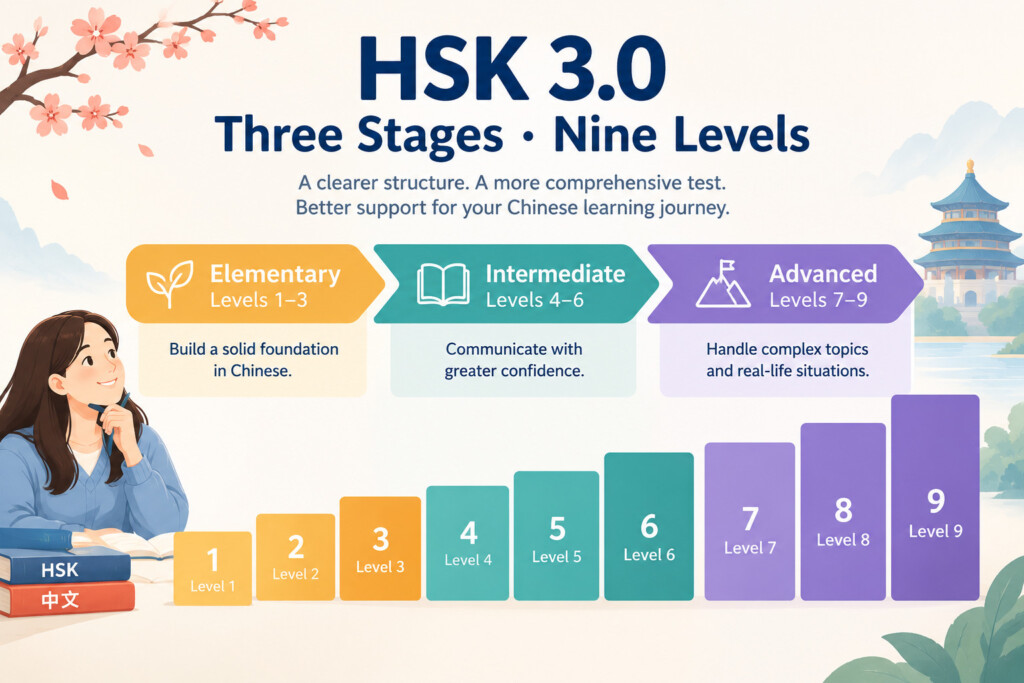
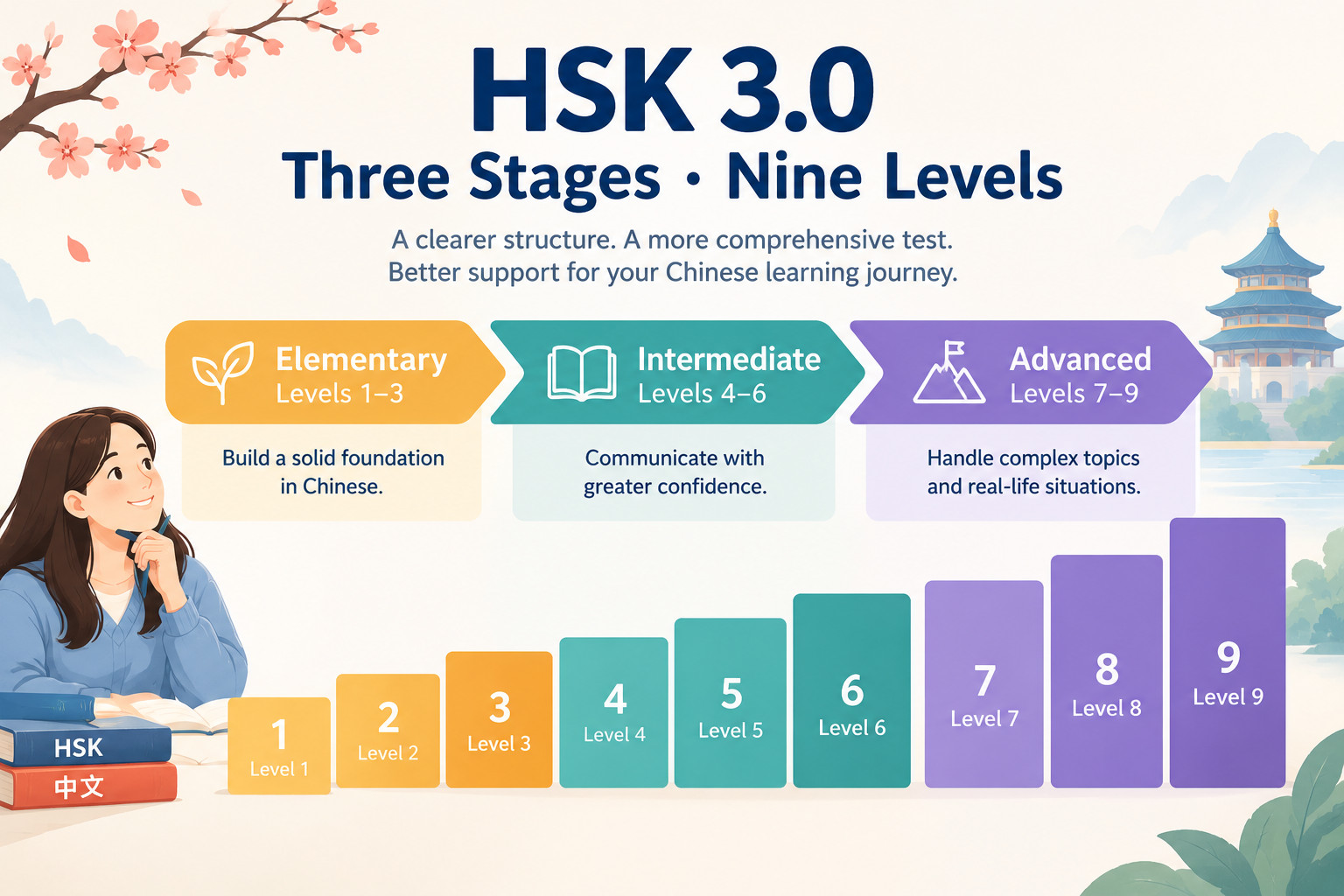
The new structure provides a more detailed way to describe Chinese proficiency, from beginner to advanced.
What Skills Does HSK 3.0 Test?
The new HSK expands the focus beyond simply knowing vocabulary and grammar.
It assesses five areas:
- Listening
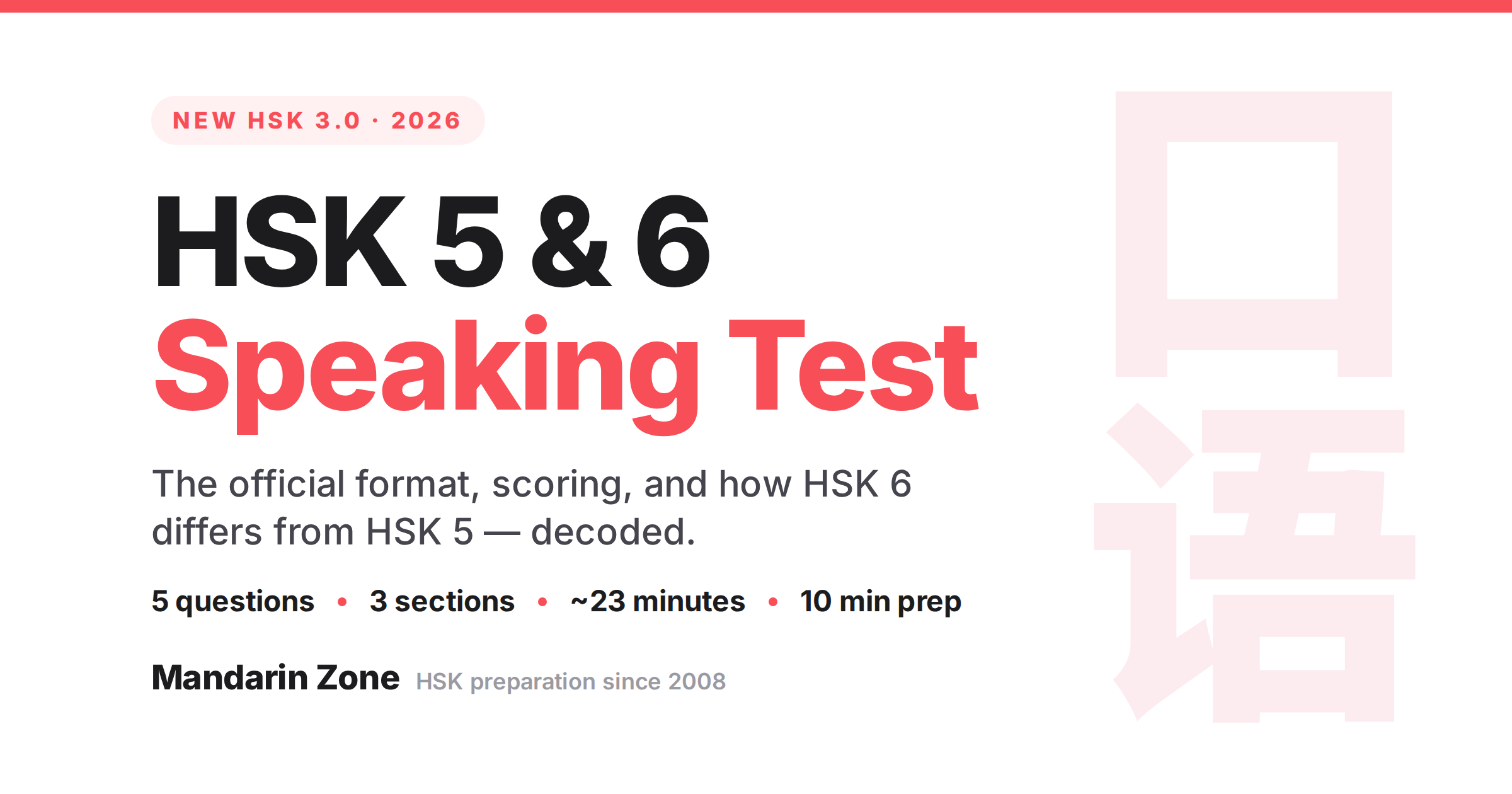
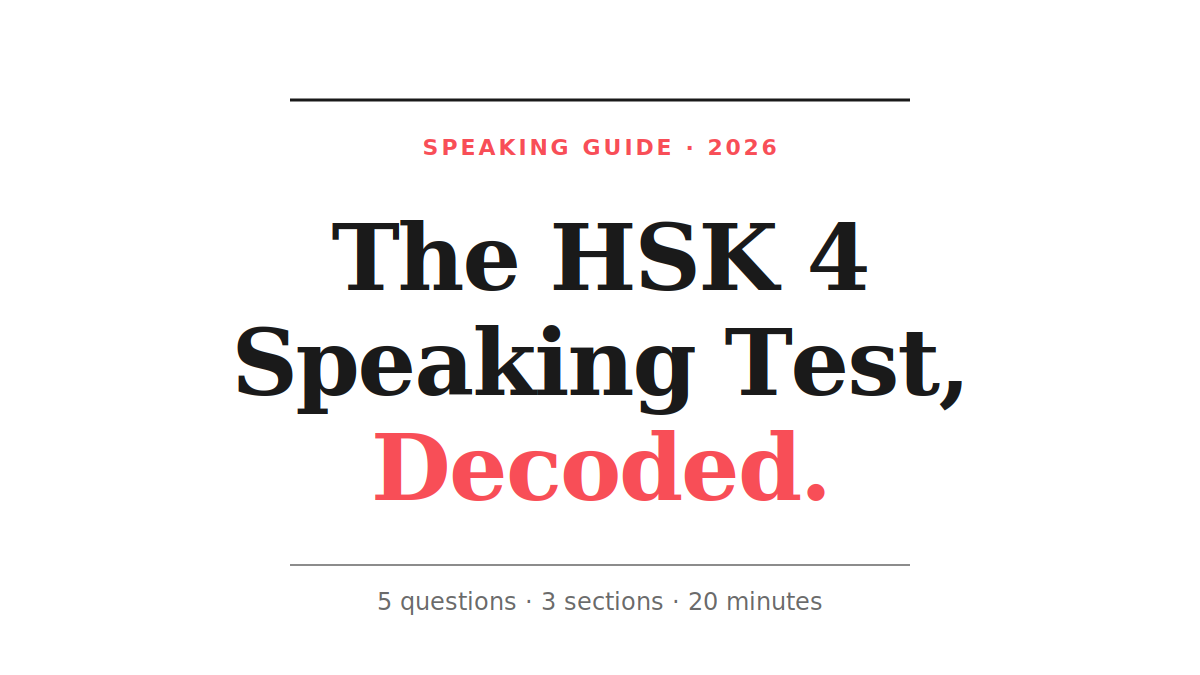
- Speaking
- Reading
- Writing
- Translation at advanced levels
The official HSK 3.0 framework also includes tasks, topics, vocabulary, grammar, and Chinese characters, giving learners clearer information about what they need to be able to do in Chinese.
For students, this means that developing real communication skills is increasingly important when preparing for the HSK exam.
HSK 3.0 vs. HSK 2.0: What Has Changed?
The most important change is the move from the traditional six-level HSK system to the new nine-level framework.
| HSK 2.0 | HSK 3.0 |
|---|---|
| 6 levels | 9 levels |
| Four main language skills | Broader five-skill assessment |
| Traditional framework | Three Stages, Nine Levels |
| Existing test system | Updated test structure |
The new HSK also introduces adjustments to:
- Question types
- Number of questions
- Test duration
- Listening speed
- Language skills assessed
The official system describes these changes as part of a broader upgrade of the Chinese proficiency assessment.
For students who have already studied for HSK 1–6, it is therefore important to understand which HSK system their future exam will use.
How Can You Prepare for the New HSK?
If you plan to take the HSK 3.0 exam, start by identifying your current level and target level. Focus on developing practical Chinese skills, not just memorizing vocabulary.
- Build vocabulary through real conversations and everyday contexts.
- Practice listening and speaking regularly to improve communication skills.
- Read and write Chinese to strengthen comprehension, characters, and grammar.
- Use official HSK 3.0 materials to become familiar with the syllabus, question types, and test requirements.
Regular practice across these skills can help you prepare for the new HSK while improving your real-life Chinese communication.
Frequently Asked Questions About HSK 3.0
1. When will HSK 3.0 officially launch?
HSK 3.0 will be officially launched worldwide on December 13, 2026.
2. How many levels are there in the New HSK?
The new system uses three stages and nine levels, covering elementary, intermediate, and advanced Chinese proficiency.
3. What skills does HSK 3.0 test?
The new framework assesses listening, speaking, reading, writing, and translation at advanced levels.
4. Where can I find official HSK 3.0 information?
The official Chinese Test Service Website provides the latest information about HSK 3.0, including the syllabus, sample questions, competency profile, and test dates.
5. What is the difference between HSK 2.0 and HSK 3.0?
HSK 2.0 uses a six-level system, while HSK 3.0 introduces three stages and nine levels, with a broader assessment of Chinese language skills.
6. Can I prepare for HSK 3.0 before December 2026?
Yes. Students can already use the official HSK 3.0 syllabus and sample materials to become familiar with the new framework and begin preparing.
Learn Chinese in Beijing and Prepare for HSK

At Mandarin Zone in Beijing, we combine structured Chinese learning with practical communication practice.
Our Chinese courses are designed for international students at different levels, from complete beginners to advanced learners. Students can work on Chinese speaking, listening, reading, writing, vocabulary, grammar, and HSK preparation while using Mandarin in everyday situations.
Whether your goal is to pass the HSK exam, improve your Chinese speaking skills, study in China, or communicate more confidently in Mandarin, a clear study plan can help you make steady progress.
Ready to prepare for HSK 3.0?
Explore our Chinese courses in Beijing and build the practical communication skills you need for your next stage of Mandarin learning.