If you’re an American planning to learn Chinese in Beijing or Shanghai, you’ve probably read a dozen articles saying “both cities are great, it depends on your preference.”
That’s not helpful.
Here’s our honest take: If you want to learn Mandarin Chinese properly, Beijing is the better choice.
We’ve been teaching Chinese to international students in Beijing since 2008. We’ve seen what works and what doesn’t. Below, we’ll explain exactly why Beijing gives you an advantage — with real numbers, not vague comparisons.
📍 Quick Summary: Beijing vs Shanghai for Learning Chinese
Choose Beijing if you want:
- Standard Mandarin (普通话)
- Lower living costs
- Traditional Chinese culture
- Best language universities
Choose Shanghai if you want:
- Modern international city
- Business/finance focus
- More Western amenities
- Coastal location
1. Why Beijing Is Best for Learning Standard Mandarin Chinese
Here’s something most “Beijing vs Shanghai” articles don’t explain clearly:
Mandarin Chinese (普通话 Pǔtōnghuà) is literally based on the Beijing dialect.
When the Chinese government standardized the national language in the 1950s, they used Beijing pronunciation as the foundation. This means:
🗣️ In Beijing
Local people speak Mandarin (with some 儿化音 “er” sounds). What you hear on the street = what you learn in class.
🗣️ In Shanghai
Local people often speak Shanghainese (上海话) — a completely different dialect. What you hear on the street ≠ what you learn in class.

Beijing hutong — every street conversation is Mandarin practice
What This Means for Your Learning
In Beijing, every taxi ride, every restaurant order, every street conversation is listening practice. Your classroom learning reinforces your real-life experience.
In Shanghai, you might study Mandarin for 4 hours in class, then step outside and hear a language you don’t understand. That disconnect slows your progress.
“You’re learning Mandarin, not Shanghainese. Beijing is where Mandarin lives.”
What About the Beijing “儿化音” (Er Sound)?
You might have heard that Beijing people add “er” (儿) to the end of words. This is true — but it’s not a problem:
- The “er” sound is considered standard Mandarin (just a bit more than other regions)
- You’ll learn to understand it, but you don’t have to use it yourself
- It’s much easier to adapt to than learning a completely different dialect
2. Cost of Learning Chinese: Beijing vs Shanghai (2026)
Shanghai is one of the most expensive cities in Asia. Beijing is expensive too, but noticeably cheaper. Here’s a real comparison:
| Monthly Expense | Beijing | Shanghai | You Save |
|---|---|---|---|
| Private room (shared apt) | $400-600 | $600-900 | $200-300 |
| Food & dining | $300-400 | $400-500 | $100 |
| Transportation | $30-50 | $40-60 | $10 |
| Entertainment | $100-200 | $150-250 | $50 |
| TOTAL | $830-1,250 | $1,190-1,710 | $360-460/mo |
Over 3 months, Beijing saves you $1,000-1,400
That’s a round-trip flight back to the US, or an extra month of classes.
Note: Tuition fees at private language schools are similar in both cities ($200-400/week for group classes). The real difference is living costs.
3. AP Chinese Prep: Why a Chinese Summer Camp in Beijing Makes the Difference
If you’re a high school student preparing for the AP Chinese exam, or a parent looking for ways to help your child score a 5, this section is for you.
The Problem with “Textbook Chinese”
The AP Chinese exam tests four skills: listening, reading, writing, and speaking. The speaking section includes a Cultural Presentation — where you must talk about Chinese culture or compare Chinese and American traditions.
Here’s what examiners hear:
❌ Student who only studied in the US:
“I read in my textbook that the Forbidden City has 9,999 rooms. Chinese people eat dumplings during Spring Festival…”
Sounds like reciting Wikipedia.
✅ Student who spent a summer in Beijing:
“When I visited the Forbidden City, our guide told us a story about the emperor… I celebrated Spring Festival with my host family and we made dumplings together…”
Sounds authentic and personal.
Examiners can tell the difference immediately.
What 2-4 Weeks in Beijing Gives You
🎧 Real Listening Practice
Taxi drivers, restaurant staff, street vendors — real Chinese at real speed, not classroom recordings.
🗣️ Speaking Confidence
When you HAVE to use Chinese to order food or ask directions, you develop real-world communication skills.
🏯 Cultural Material
The Forbidden City, Great Wall, hutongs, temples — firsthand experiences you can describe vividly in your exam.
✍️ Writing Stories
Real experiences = real stories to write about. No more making things up.

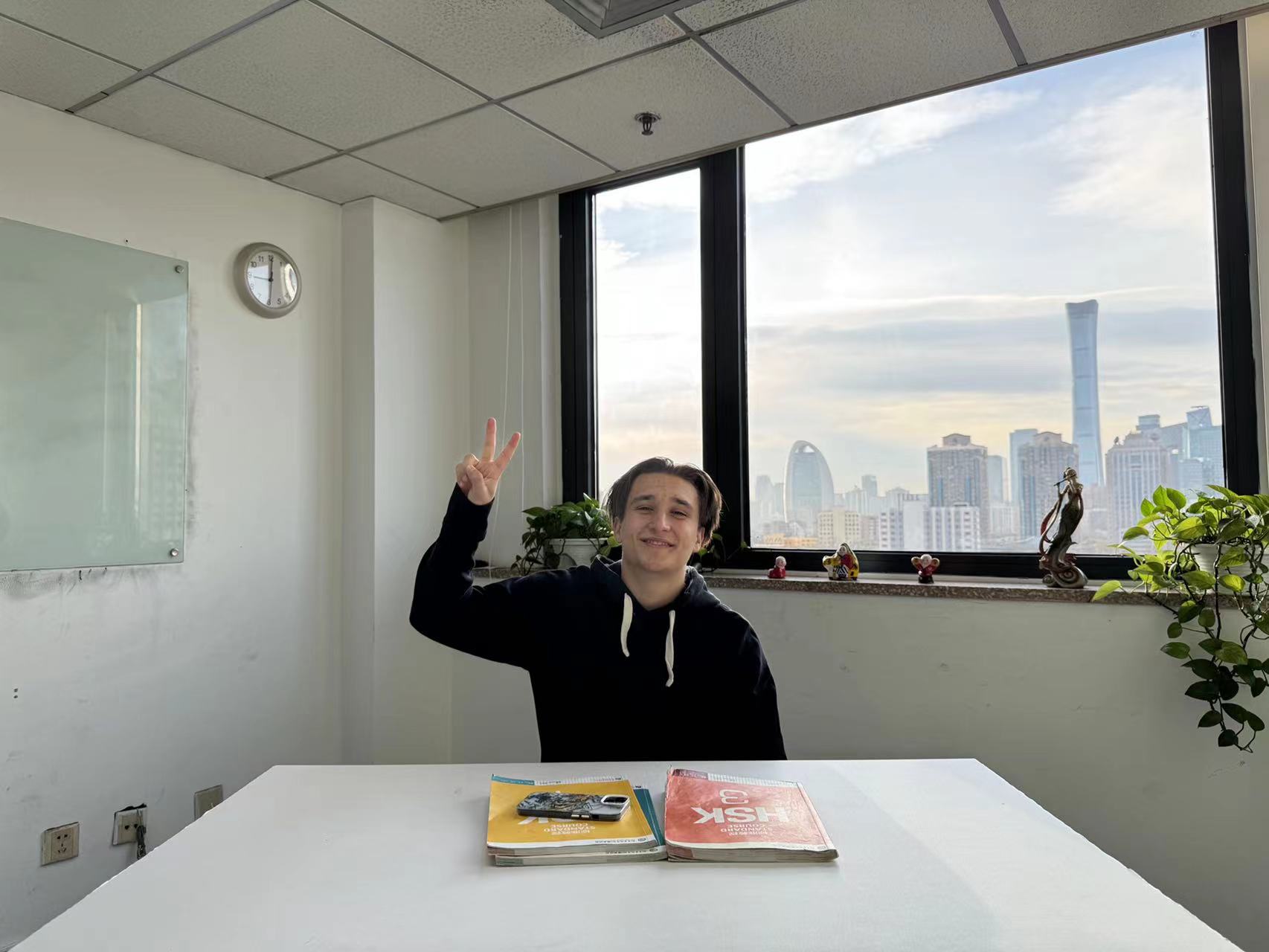
International students in a Beijing Chinese class — real immersion, real progress
“The AP exam tests culture, not just language. Culture can’t be memorized from a textbook — it has to be experienced.”
4. Best Chinese Language Schools and Universities in Beijing
Beijing is to Chinese language learning what Boston is to American higher education. The concentration of resources here is unmatched:
🏛️ Beijing Language and Culture University (BLCU)
The only university in China dedicated entirely to teaching Chinese to foreigners. The “Harvard of Chinese language learning.”
🏛️ Peking University & Tsinghua University
China’s top two universities, both with excellent Chinese language programs for international students.
🏫 Private Language Schools
Dozens of established schools offering flexible schedules, small classes, and personalized instruction — including Mandarin Zone.

Beijing Language and Culture University — the world’s top institution for Chinese language education
HSK Exam Preparation
Beijing is also the best place to prepare for the HSK (Chinese Proficiency Test). The test was developed here, the official test centers are abundant, and teachers deeply understand the exam format and scoring.
If you’re planning to study at a Chinese university or work in China, you’ll likely need HSK certification. View 2026 HSK test dates →
5. American Community in Beijing: Your Home Base
Moving to China can feel overwhelming. But Beijing has a well-established expat community that makes the transition easier — especially for Americans.
Sanlitun & the Embassy District
The Sanlitun area (三里屯) is the heart of international Beijing:
- U.S. Embassy — just minutes away for any consular services you need
- International restaurants & cafes — when you need a taste of home
- Expat community events — networking, language exchange, social gatherings
- Western supermarkets — familiar products when you need them
- International hospitals — English-speaking medical care
📍 Mandarin Zone is located in this area — Room 1208, Tongguang Building, in the Chaoyang District embassy area. Our students have easy access to both full Chinese immersion AND the support of an international community.
“You’ll be immersed in Chinese, but you won’t feel lost.”
6. Chinese Cultural Immersion: Learn Chinese in Beijing’s Historic Heart
Language and culture are inseparable. Understanding Chinese culture helps you understand the language — and Beijing offers cultural depth that Shanghai simply can’t match.
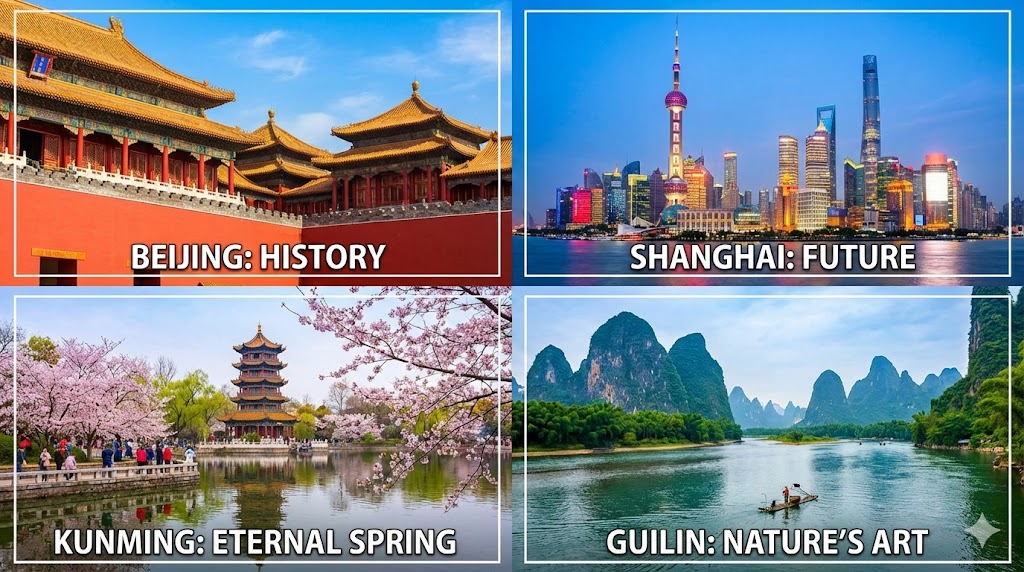
🏯 Beijing: China’s Soul
- The Forbidden City — 600 years of imperial history
- The Great Wall — China’s most iconic landmark
- Hutongs — traditional alleyways with authentic local life
- Temple of Heaven — where emperors prayed for good harvests
- Summer Palace — imperial gardens and lakes
🏙️ Shanghai: China’s Future
- The Bund — colonial-era waterfront
- Pudong skyline — modern skyscrapers
- French Concession — European architecture
- Yu Garden — classical garden (smaller scale)
- Nanjing Road — shopping district

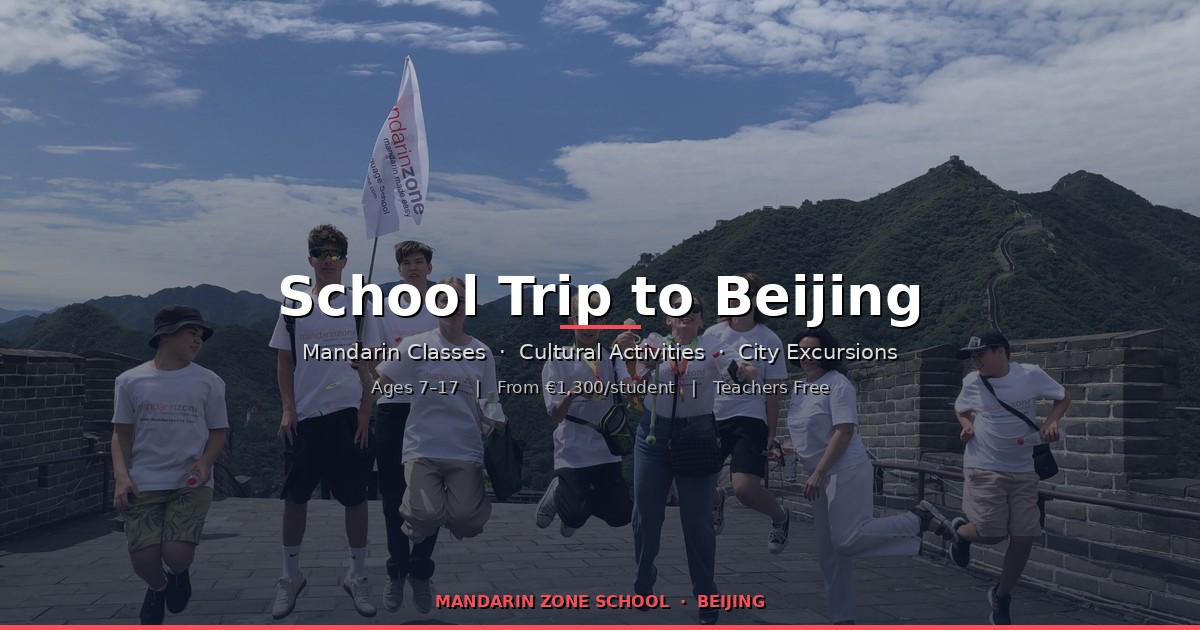
The Great Wall — experience the culture behind the language
Both cities are fascinating. But if you’re learning Chinese, you want to understand the culture that shaped the language. That culture lives in Beijing.
“Shanghai shows you China’s future. Beijing shows you China’s soul.”
7. Getting Started: Practical Information
Best Time to Come
How Long Should You Study?
| Duration | Best For | Expected Progress |
|---|---|---|
| 2-4 weeks | Summer intensive, AP prep, business travelers | Significant boost in speaking confidence |
| 1-3 months | Serious learners, gap semester | 1-2 HSK levels improvement |
| 6-12 months | Gap year, career changers | Conversational to professional fluency |
Visa Options
Most Americans studying Chinese in Beijing use one of these options:
- L Visa (Tourist) — For short-term study (up to 60-90 days). Easy to obtain, no invitation letter needed since 2024.
- X2 Visa (Short-term Student) — For study programs up to 180 days. Requires enrollment at an accredited university.
- Already in China? — If you’re working or living in Beijing, you can study part-time on your existing visa.
Note: Visa policies change. Always check the latest requirements with the Chinese embassy before traveling.
Ready to Learn Chinese in Beijing?
Mandarin Zone has helped over 5,000 international students since 2008.
Get a free consultation and personalized study plan.
📍 Room 1208, Tongguang Building, Sanlitun Embassy Area, Beijing
📞 +86 10 65380023 | +86 13521680097

About Mandarin Zone
Founded in 2008, Mandarin Zone is a Chinese language school in Beijing’s Sanlitun embassy area. We offer personalized Chinese courses for all levels, HSK exam preparation, and flexible scheduling for working professionals and students. Our experienced teachers have helped over 5,000 students from 40+ countries.
📚 Related Resources
- Complete Guide: Cost of Learning Chinese in Beijing (2025)
- HSK Test Dates 2026
- CSCA Exam Guide (For University Applicants)
- Chinese Camps in Beijing
- HSK 3/4 Pass Guarantee: Pass or Learn Free Until You Do
- Why Beijing Is the Ultimate Destination for Your Child’s Chinese Language Summer Camp
- HSK Requirements for China’s Top 39 Universities [2025 Complete Guide]